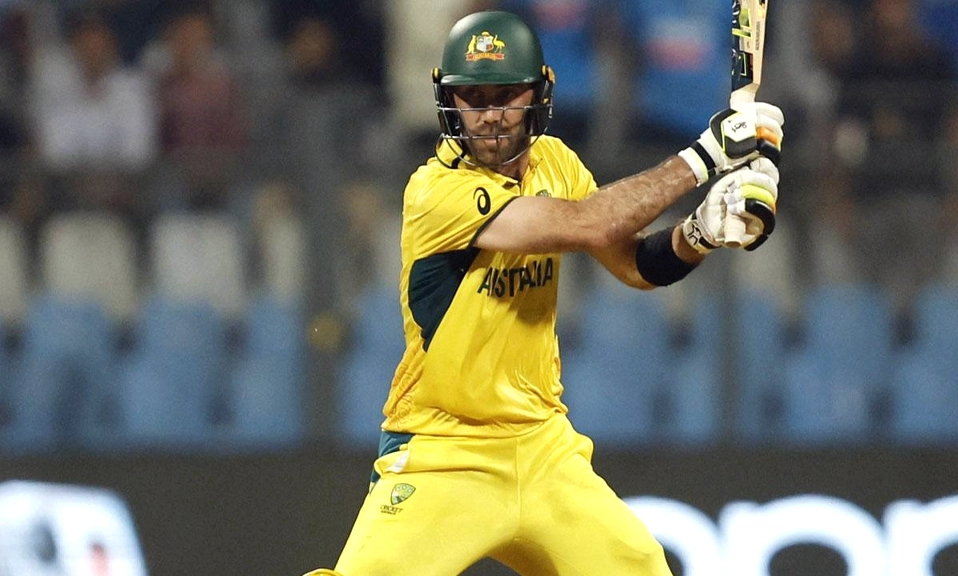
Glenn Maxwell has retired from international cricket, bringing down the curtain on a 14-year career that redefined what was possible in Australian white-ball cricket. The 38-year-old, who had already stepped away from ODIs in 2025, confirmed on November 2, 2026, that he will no longer represent Australia in T20 internationals or for Victoria in state cricket. He leaves behind a legacy as one of the most destructive and innovative players the game has ever seen—and a question that Australian selectors have been grappling with for over a year: how do you replace the irreplaceable?
Maxwell will continue to play franchise T20 cricket, having extended his contract with the Melbourne Stars through the 2027-28 season. But his departure from the international stage marks the end of an era, and it leaves a significant void in Australia’s middle order ahead of the 2027 ODI World Cup.
The Career: Three World Cups and a Legacy of Innovation
Maxwell’s international record is a testament to his unique role in the Australian team. Across 286 matches—149 ODIs, 130 T20Is, and seven Tests—he scored 7,226 runs and took 136 wickets. In ODIs, he scored 3,990 runs at a strike rate of 126.7; in T20Is, he made 2,897 runs at a strike rate of 154.4, making him Australia’s third-highest run-scorer in the format. He won two ODI World Cups (2015 and 2023) and one T20 World Cup (2021).
But statistics only tell part of the story. Maxwell’s defining innings—his 201 not out against Afghanistan in the 2023 World Cup, played on one leg after suffering severe cramps—became the stuff of legend. His 145 not out from 65 balls against Sri Lanka in 2016, and his five T20I centuries (tied with Rohit Sharma for the most in the format) cemented his reputation as a once-in-a-generation talent.
Tributes poured in from across the cricket world. Former Australian captain Aaron Finch led the chorus: “Without doubt one of the most destructive players the game has ever seen and easily one of the most innovative of our generation. Some of the things you’ve done on a cricket field have been absolutely ridiculous… you’ve changed the way the game is played and inspired so many along the way”. Darren Lehmann praised his “innovative, fearless cricket,” and Shikhar Dhawan called it a “wonderful international career”.
The Gap: A Finisher Like No Other
Maxwell’s retirement—first from ODIs in 2025, now from all international cricket—leaves Australia without a middle-order finisher of his calibre. His ability to score at a strike rate above 150 in the death overs, bowl useful off-spin, and field brilliantly made him a unique asset in white-ball cricket. Replacing him is not about finding one player who can do everything he did. It is about finding a combination of players who can collectively fill the void.
The selectors have been planning for this moment. As early as May 2026, head coach Andrew McDonald acknowledged that “the need to find a replacement for Glenn Maxwell [was] high on the agenda” and that Australia would trial different players in different roles on the road to the 2027 World Cup.
The Candidates: Who Steps Up?
Cameron Green: The Frontrunner
Cameron Green has emerged as the most likely candidate to take on Maxwell’s finishing role. McDonald has backed Green to fill the position, saying he has “the ability to play high up the order and low” and “does have some power”.
Green made a 47-ball century against South Africa in August 2025, demonstrating his ability to accelerate late in an innings. He was part of the 2023 ODI World Cup winning squad but played only three matches, with Australia preferring a specialist batter in the knockout stages. The 2027 World Cup in South Africa and Zimbabwe represents his opportunity to cement a place as a genuine all-round finisher.
McDonald’s vision for Green is clear: “With the absence of Glenn Maxwell we had that conversation… We’ll look at different ways to play in the journey to the 2027 World Cup and where he fits exactly in that”.
The Supporting Cast: Inglis, Carey, Labuschagne, and Renshaw
Beyond Green, Australia have a pool of middle-order options. Josh Inglis, Alex Carey, Marnus Labuschagne, and Matt Renshaw have all been mentioned as contenders for roles alongside Green. Each brings different strengths: Inglis is a powerful striker, Carey is a proven finisher in ODIs, Labuschagne offers stability, and Renshaw provides flexibility.
The challenge for McDonald and the selectors is to find the right balance—a player who can absorb pressure when wickets fall and accelerate when the situation demands it. Maxwell could do both, often in the same innings. No single replacement can replicate that.
Tim David: The Wildcard
Tim David would be the closest like-for-like replacement in terms of raw power, but he has not made himself available for ODI cricket in the short term. Selectors remain hopeful that his stance may change as the World Cup approaches. If David does make himself available, he would add a dimension of explosive hitting that few others in Australian cricket can match.
Glenn Maxwell’s retirement
marks the end of a remarkable chapter in Australian cricket. He was a player who could change a game in an over, who batted with a fearlessness that inspired a generation, and who won three World Cups in the process. His absence will be felt most acutely in the middle order, where his ability to accelerate, improvise, and finish innings was unmatched.
Australia’s response will not be to find another Maxwell—because there isn’t one. The selectors will instead look to Cameron Green to take on the finishing role, supported by a flexible middle order that includes Inglis, Carey, Labuschagne, and Renshaw. The 2027 World Cup will be the first major test of whether that combination can fill the void.
Maxwell, meanwhile, will continue to entertain in franchise leagues, where his talents remain undiminished. His international career is over, but his influence on the way the game is played will endure. As Aaron Finch put it, he “changed the way the game is played”. Replacing that is not a selection problem. It is an impossibility.