In 2026, you can get into a car with no driver, no steering wheel, and it will take you to the airport. Waymo does it 150,000 times a week in Phoenix, San Francisco, LA, and Austin.
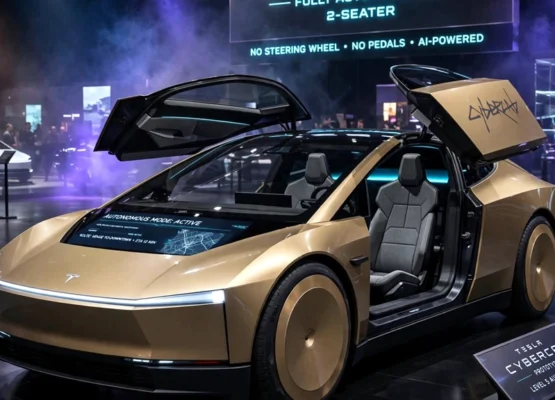
You can also buy a brand new Tesla that says “Full Self-Driving” on the window sticker — and you legally have to keep your hands near the wheel and eyes on the road the entire time.
Both are called “self-driving.” Only one is.
So how much can you actually trust them? Let’s cut through the marketing.
What’s Actually on the Road in 2026?
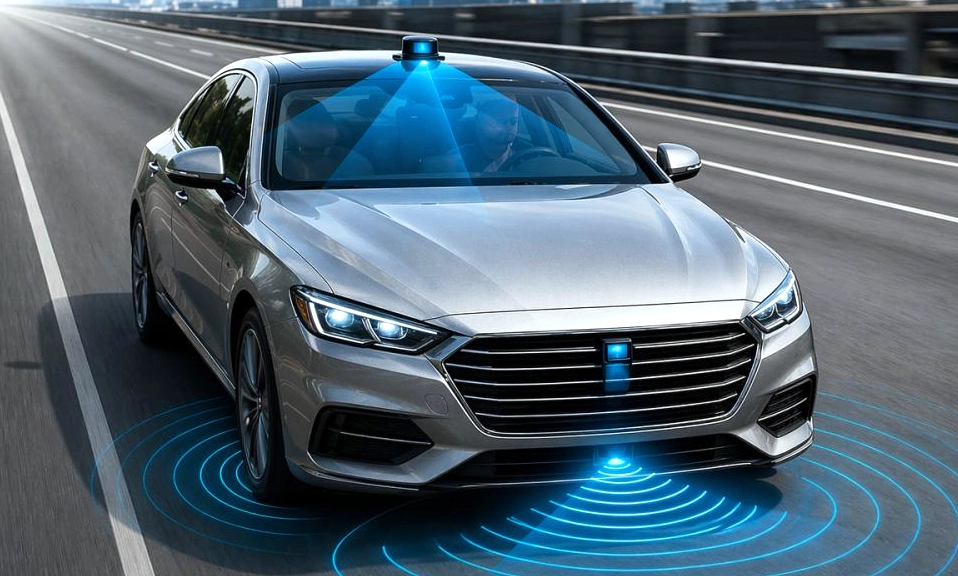
Self-driving cars in 2026 exist commercially as robotaxis — fully autonomous vehicles operating in defined cities with no human driver on board.
That’s Level 4. True autonomy, but geofenced. They only work where they’ve mapped every curb, traffic light, and pothole in 3D.
- Waymo: No driver, 5 cities, 24/7. The most trusted. They’ve driven 40+ million fully autonomous miles.
- Cruise: Back after the 2023 pause, now only in 3 cities with safety drivers at night
- Baidu Apollo, Pony.ai: In China, huge fleets
What you can buy at a dealership:
Yes — self-driving systems in modern electric cars can significantly improve safety, especially on highways. However, nearly all consumer EVs in 2026 operate at SAE Level 2 automation, meaning the driver must remain attentive and legally responsible.
- Tesla FSD (Supervised) v13: Level 2+. Very impressive on city streets, but still requires you to be responsible. Despite the ‘Full Self-Driving’ branding, the system has not achieved Level 4 autonomy.
- Ford BlueCruise, GM Super Cruise, BMW Highway Assistant: Level 2+ hands-free on highways only. Eyes must stay on road.
- Mercedes Drive Pilot: Level 3 in traffic jams up to 40mph in California/Nevada — you can legally look away, but only in traffic jams.
Quick Tip: If the car requires steering-wheel input checks or driver monitoring, it is not fully autonomous.
In short: No production car in 2026 is fully self-driving. The cars with the most advanced ADAS features (Level 2 and Level 2+) are safe when the driver stays engaged.
Do People Trust Them? No.
The tech got better. Trust didn’t.
Aussie Autonomous Vehicle Trust Falls to 17.5% in 2026 Savvy Survey — Savvy’s 2026 EV Sentiments Survey found that worries surrounding self-driving cars have actually grown over the past three years, with the number of people who don’t trust or feel comfortable with it having grown from one in five (22.2%) in 2023 to one in three (34.4%) this year. Additionally, more than one in four (28.1%) reported that they have some doubts about it, leaving the total number with concerns at 62.5%.
In the US, same story:
AAA‘s 2026 Automated Vehicle survey found that 61% of US drivers report being afraid to ride in a fully self-driving car, while only 14% say they would trust riding in one.
Confidence in Self-Driving Vehicles Remains Stalled as Safety Concerns and Trust Gaps Persist, JD Power Finds. Awareness of fully automated, self-driving vehicles continues to grow, but consumer confidence in the technology is not keeping pace. Consumer understanding of AVs improves in 2026, with 58% of consumers correctly identifying full automation, up from 43% in 2024.
Trust varies significantly depending on the use case. While 54 percent of consumers expressed high trust in autonomous vehicles performing tasks such as food pickup, only 31 percent were comfortable with the technology transporting children. Meanwhile, just 16 percent said they were comfortable sharing the road with fully autonomous semi-trucks.
Translation: We’re okay with a robot bringing us tacos. We’re not okay with it driving our kids to school or sharing a highway with an 80,000-pound robot truck.
Where You Can Actually Trust Them (And Where You Can’t)
You can trust them more than a tired human driver here:
- Highway cruising in daylight: Super Cruise and BlueCruise have fewer crashes than humans on divided highways. They don’t get sleepy. Great for long interstate slogs.
- Robotaxis in mapped cities (Phoenix, SF): Statistically, Waymo has 85% fewer injury crashes than human drivers in same areas (per Waymo 2026 safety report). They are paranoid, slow, and obey every rule.
- Traffic jams: Mercedes Drive Pilot Level 3 in stop-and-go is genuinely less stressful. It won’t rear-end.
You absolutely cannot trust them here yet:
- Construction zones, bad weather, unmapped roads: The #1 failure mode. If cones are moved, lines missing, heavy rain/snow covering lane markers — systems disengage or guess wrong.
- City streets with jaywalkers, bikes, kids: Tesla FSD is impressive, but still makes human-like mistakes — rolling stops, hesitating at 4-way, misreading a cyclist’s hand signal.
- Anywhere that needs human intuition: School zones, police waving you around, a mattress in the middle of road. Humans understand context. AI still doesn’t.
Self-driving EVs assist you — they do not replace you.
The Trust Checklist: Should YOU Use It?
Ask these 3 questions before you take your hands off (even if car says you can):
1. What level is it really?
- Level 2 / 2+ = You drive, car helps. You are legally liable. Trust = like cruise control, but smarter. Don’t sleep.
- Level 3 (Mercedes traffic jam only) = Car drives, but you must take back in 10 seconds when asked. Trust = okay for traffic jam, not for Netflix.
- Level 4 robotaxi (Waymo) = Car drives, no human needed, in that city. Trust = higher than human in that zone, but only in that zone.
2. Would you trust a 16-year-old student driver in this situation?
If answer is no (blizzard, flooded road, chaotic intersection), don’t trust the AI either. It’s about as good as a careful student, not a 20-year veteran.
3. What’s the fallback?
Tesla: You. Immediately.
Super Cruise: You, after 5-second warning.
Mercedes Level 3: Car will stop in lane if you don’t respond.
Waymo: Car calls remote support and stops safely. No you needed.
So, How Much Can You Trust Them in 2026?
Here’s my honest answer after driving all of them:
Trust them like you trust autopilot on a plane, not like you trust a chauffeur.
- On a plane, autopilot flies 90% of cruise perfectly — safer than human. But you still want two pilots up front for takeoff, landing, turbulence, and when that weird warning light comes on.
- In a car, self-driving is amazing at the boring, predictable 90% — highway, traffic jam, sunny mapped suburb. It will save you from fatigue crash.
- For the unpredictable 10% — kid chasing ball, unmarked detour, snowstorm — you are still the pilot.
Level 4 consumer vehicles are expected to emerge in limited form by late 2026 to 2028. Personally-owned fully autonomous vehicles available for retail purchase are still not here.
Until then, the most dangerous thing is over-trust. The car says “Full Self-Driving” but the fine print says “Supervised.” Your brain hears the first, forgets the second.
That said:
- Buying a new EV? Yes, get the best ADAS — it will prevent a crash. But don’t pay $8,000 extra for FSD thinking you can text. You can’t.
- In SF, Phoenix, LA? Yes, take a Waymo. Statistically safer than an Uber with a human who might be checking his phone.
- Want to nap while your car drives you across the country? No. Not in 2026. Maybe 2029.
The tech is real. The robotaxi revolution is real. The “buy a car and it drives itself while you sleep” revolution is still marketing.
Would you ride in a car with no driver today? Be honest — and if not, what would it take for you to trust it?