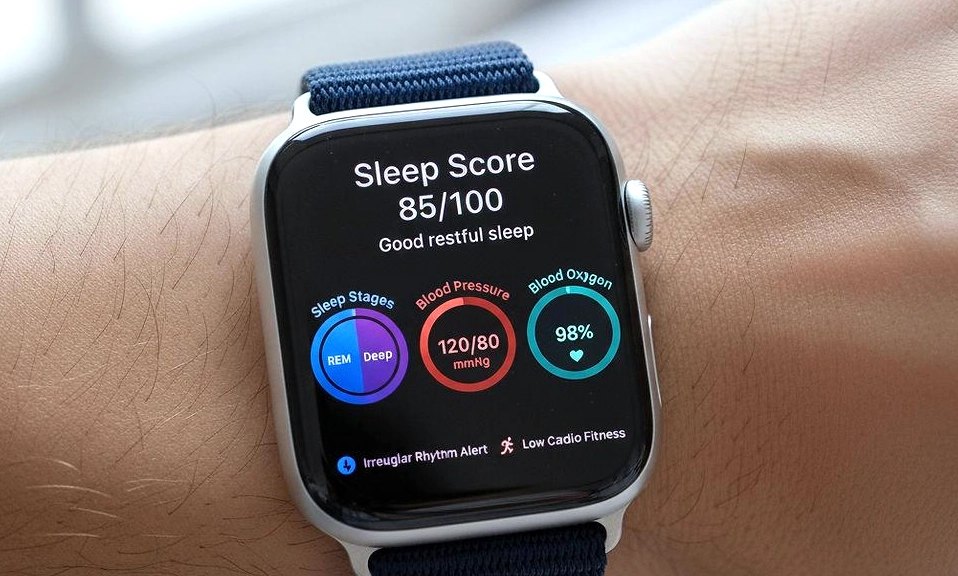
Your smartwatch is not a step counter with a heart-rate sensor bolted on. It is a medical-grade screening tool, a sleep lab on your wrist, and a fitness coach that never sleeps. Most people glance at their steps, their calories, and maybe their heart rate once in a while. But buried in the health app are seven metrics that can tell you more about your body than a yearly physical—and you’re probably ignoring them.
Here’s what they are, why they matter, and how to start paying attention.
1. Heart Rate Variability (HRV): The Window Into Your Nervous System
Step count tells you how much you moved. HRV tells you how ready you are to move.
Heart rate variability is the tiny fluctuation in the time between your heartbeats. A high HRV means your body is relaxed, recovered, and ready to perform. A low HRV means your sympathetic nervous system—your “fight or flight” response—is dominant, which can indicate stress, fatigue, illness, or overtraining.
Most smartwatches track HRV overnight, and the overnight figure is the most useful. A single reading tells you very little. But when you look at your HRV baseline—the range you consistently sit in over weeks—the data becomes powerful. A sudden drop below your baseline is an early warning sign. It can predict burnout, flag an oncoming illness, or tell you that you need a rest day before you feel like you do.
How to use it: Track your HRV nightly and build a baseline over 4-6 weeks. When it drops significantly, ask yourself what changed: stress at work, poor sleep, alcohol, travel, or illness. Don’t panic over a single night. Look at the trend.
2. Resting Heart Rate: The Most Underrated Recovery Metric
Resting heart rate is exactly what it sounds like: your heart rate when you’re completely at rest, usually measured during sleep. A lower RHR generally indicates better cardiovascular fitness. But the real value is in the trend.
A consistent, stable RHR is a sign that your body is recovering well. A gradual rise over several days or weeks can indicate accumulated fatigue, stress, dehydration, or an impending illness. A sudden spike can mean you drank too much, slept poorly, or caught a cold before you even felt symptoms.
For athletes, RHR is one of the most reliable markers of overtraining. When it starts creeping up, it’s time to back off.
How to use it: Check your RHR every morning. Learn your baseline. If it’s 5-7 beats per minute above your normal for more than two days in a row, treat it as a signal to prioritize rest and recovery.
3. Sleep Stages: Not Just Quantity, But Quality
Most people look at their total sleep time and stop there. But the quality of that sleep matters just as much as the quantity.
Modern smartwatches break sleep into stages: light, deep, and REM. Deep sleep is when your body repairs itself physically—releasing growth hormone, consolidating muscle, and clearing metabolic waste. REM sleep is when your brain processes emotions, consolidates memories, and regulates mood. A night of 8 hours with very little deep or REM sleep can leave you feeling as groggy as a 5-hour night.
Deep sleep typically accounts for 13-23% of total sleep in adults, and REM for 20-25%. If your watch shows you’re consistently falling short on deep sleep, it can point to issues like alcohol consumption (which suppresses deep sleep), late-night screen use, or an uncomfortable sleeping environment.
How to use it: Don’t obsess over a single night. Look at your averages over a week. If deep sleep is consistently low, try cutting alcohol, lowering your bedroom temperature, and keeping a consistent sleep schedule.
4. Blood Oxygen (SpO2): The Silent Signal
Blood oxygen saturation measures how much oxygen your red blood cells are carrying. For most healthy people, it stays in the 95-100% range. But tracking it—especially during sleep—can reveal issues you didn’t know you had.
Wearables increasingly use SpO2 monitoring to detect conditions like sleep apnea, a disorder where breathing repeatedly stops and starts during sleep. Sleep apnea is underdiagnosed and linked to cardiovascular disease, daytime fatigue, and poor cognitive performance. If your watch shows repeated dips in blood oxygen during the night, it’s worth discussing with a doctor.
SpO2 tracking can also be useful at high altitudes or when you’re sick with a respiratory illness.
How to use it: Check your overnight SpO2 trend. Occasional dips are normal. Repeated, significant drops (below 90%) that correspond with movement or snoring are a red flag worth investigating.
5. VO2 Max: The Longevity Metric
VO2 max is the maximum amount of oxygen your body can utilize during intense exercise. It is, by many measures, the single best predictor of long-term cardiovascular health and all-cause mortality. Higher VO2 max means a stronger heart, more efficient lungs, and better endurance.
Most smartwatches estimate VO2 max from your workouts—usually a run or a brisk walk—by combining heart rate data with speed and distance. The estimate is not as accurate as a lab test, but it’s consistent enough to track over time.
The good news is that VO2 max is highly trainable. Even in middle age, consistent aerobic exercise can improve it by 10-15% or more.
How to use it: Don’t worry about the absolute number. Use it as a baseline and track how it changes with your training. If it’s stagnant, you may need to add more intense intervals or longer steady-state cardio to your routine.
6. Stress Score: The “Always-On” Warning System
Many wearables now calculate a daily stress score based on HRV, heart rate, and other signals. The exact algorithm varies by brand—Garmin’s “Stress Score,” Fitbit’s “Stress Management Score,” and Apple’s mindfulness-based approach all work slightly differently—but the principle is the same: they attempt to quantify how much physiological stress your body is under.
A high stress score doesn’t necessarily mean you feel stressed. It can reflect physical stress from exercise, poor sleep, dehydration, or illness. The value of the metric is in the pattern. If your stress score is consistently high, it’s a sign that your body is not recovering—and that can have serious long-term consequences for your health.
How to use it: Look for patterns rather than day-to-day fluctuations. A week of high stress scores, even if you feel fine, is worth responding to with more rest, better sleep hygiene, and stress-management practices.
7. Workout Recovery Time: The “Don’t Overdo It” Metric
After a hard workout, your watch may tell you how long you should wait before training that muscle group or system again. This “recovery time” metric is usually calculated from heart rate data and the intensity of your workout.
Recovery time is one of the most actionable metrics on your wrist. Most people train by feel, and by feel, most people underestimate how much recovery they need. The result is chronic fatigue, plateaued performance, and increased injury risk.
Following the recovery time recommendation doesn’t mean you can’t exercise—light movement, mobility work, and active recovery are still fine. It means you shouldn’t hammer the same system again until your body has adapted to the previous stress.
How to use it: Treat the recovery time as a minimum, not a maximum. If your watch says 48 hours, that means 48 hours before your next hard session for that system. Use the time for low-intensity movement and let your body catch up.
Your smartwatch is not
a gimmick. It is one of the most powerful tools you own for understanding your body. But the value of that tool is not in the data it collects—it’s in what you do with it.
You don’t need to track every metric every day. Start with one or two that align with your goals. If you’re an athlete, focus on HRV, resting heart rate, and recovery time. If you’re concerned about long-term health, pay attention to VO2 max, sleep stages, and SpO2. If you’re feeling burnt out, the stress score and HRV are your guides.
The most important thing is to establish a baseline. Wear your watch consistently for a few weeks, and learn what “normal” looks like for you. Then, when something changes, you’ll notice. And that early notice—that small window of awareness—is where the real power lies.