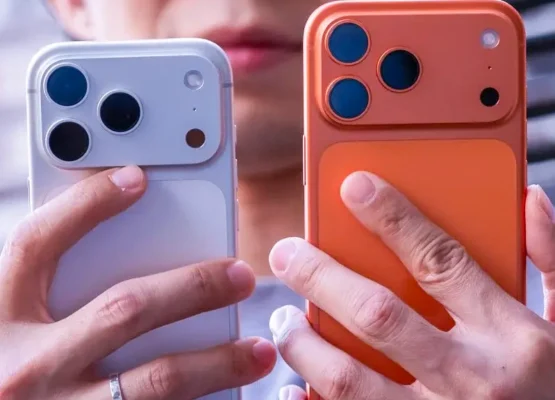
The tech world has been unusually busy this year. From a 2nm iPhone to a foldable that finally rivals Samsung, from a gaming tablet with a 240Hz OLED screen to a smart ring that lets you pay without your phone — here are the 10 devices that are genuinely reshaping what phones, tablets and wearables can do.
The pace of hardware innovation in 2026 has been remarkable. Apple finally entered the foldable market with the iPhone Duo, Samsung pushed foldables further with a new 4:3 form factor, and a wave of Chinese manufacturers brought batteries, displays and cameras that make last year’s flagships look dated. Meanwhile, the tablet market is being reinvented by gaming-focused devices and AI-native platforms, and wearables are moving from fitness tracking to payments, health insights and AI assistants.
Here are the 10 devices defining the year.
1. iPhone 18 Pro — The 2nm Leap
Apple’s iPhone 18 Pro and Pro Max, announced September 9, 2026, are built around the A20 Pro chip — the first smartphone processor manufactured on TSMC’s 2-nanometer process. The 6-core CPU and 7-core GPU deliver up to 40% faster graphics performance than the previous generation, with memory bandwidth up 50%.
But the headline feature is the camera. The 48MP main sensor sits behind six laser-cut blades that form a variable aperture, widening to f/1.48 in low light and narrowing for greater depth of field. Apple also introduced Reference Image, which cryptographically signs sensor data at the pixel level so a photograph can be verified as camera-captured rather than AI-generated.
The Dynamic Island has been redesigned to occupy less space, and a vapor chamber with three times more surface area supports up to 40% sustained performance gains. Battery life reaches 36 hours of video playback on the Pro and 45 hours on the Pro Max.
Why it matters: The 2nm chip and variable aperture camera represent a genuine generational leap, not an incremental update. The Reference Image feature is a first-of-its-kind response to the AI-generated content problem.
2. Samsung Galaxy Z Fold8 Ultra — The Foldable Standard
Samsung’s Galaxy Z Fold8 Ultra, launched August 7, 2026, is the company’s most refined foldable yet. It features a 200-megapixel camera with HDR photography, a 5,000mAh battery, and 45W fast charging through a dual-pass charging structure.
The standard Galaxy Z Fold8 adopts a new 4:3 aspect ratio when unfolded — the first Samsung foldable with this design — optimized for gaming and video immersion. Its cover screen uses a 10:16 ratio for everyday tasks like messaging and browsing. The Fold8’s camera system includes approximately 50MP main and ultra-wide lenses, with a new MyFanCam feature that automatically tracks a selected subject in video and reframes it for social media.
Why it matters: Samsung has been the benchmark for foldables for seven years. The Fold8 Ultra and Fold8 show the form factor has genuinely matured — the 4:3 ratio is a meaningful design decision, not a spec-sheet upgrade.
3. Xiaomi 18 Fold — The Passport-Style Challenger
Xiaomi’s first passport-style foldable, the Xiaomi 18 Fold, was announced in September 2026 and immediately positioned itself as a Galaxy Z Fold 8 rival. It features a 5.38-inch outer display and a 7.58-inch inner display with a 2:1 aspect ratio that’s close to standard paper proportions.
Powering it is Xiaomi’s in-house XRING O3 chip — a 3nm processor with a 10-core CPU clocked at 4.35GHz and a 16-core GPU. The camera system is a triple array: a 200MP main sensor, a 50MP 3.5x telephoto, and a 50MP ultra-wide. The battery is a 6,000mAh dual-cell design with 20% silicon content, supporting 67W wired and 50W wireless charging.
Why it matters: Xiaomi is the first manufacturer to seriously challenge Samsung’s foldable dominance with a device that offers more camera versatility and a larger battery. The XRING O3 chip also signals Xiaomi’s ambition to reduce reliance on Qualcomm.
4. OnePlus 16 — The Battery King
The OnePlus 16, officially revealed in September 2026, is defined by one extraordinary number: a 9,000mAh battery. That’s more than double the capacity of most flagship phones. The rated capacity is 8,780mAh, achieved through silicon-carbon battery technology.
The display is a 6.78-inch panel with a 185Hz refresh rate — the highest of any mainstream smartphone. Performance comes from the Snapdragon 8 Elite Extreme Gen 6, and the camera system includes a 200MP primary sensor, a 50MP ultra-wide, and a 50MP periscope telephoto.
Why it matters: OnePlus has always positioned itself as a flagship killer. The 9,000mAh battery is a genuine differentiator — it could deliver two full days of heavy use, a claim no other flagship can make.
5. Samsung Galaxy S27 Ultra — The Leaked Next Flagship
The Galaxy S27 Ultra won’t launch until early 2027, but the leaks are already extensive. According to multiple reports, Samsung is planning a redesigned horizontal camera island, a larger battery, and the Snapdragon 8 Elite Extreme Gen 6 chipset.
The S27 Ultra is expected to feature four colour options — with at least two new shades — and CAD renders suggest a significantly thicker camera module than the S26 Ultra. Early leaks also point to a 16MP front-facing camera.
Why it matters: This is the most anticipated Android flagship of 2027. The horizontal camera redesign is a bold departure from Samsung’s signature vertical layout, and the larger battery addresses the longest-standing criticism of the Ultra line.
6. Honor Win Tablet — The Gaming Tablet That Breaks the Rules
Honor has officially teased its upcoming Win Tablet, a compact gaming-focused device with an OLED display and over 200Hz refresh rate. According to tipster Digital Chat Station, the tablet may feature an 8.4-inch OLED panel with a 240Hz refresh rate — the highest of any tablet — powered by the Snapdragon 8 Elite Gen 5 chipset and a 10,000mAh battery.
The Win Tablet is expected to launch in October 2026 alongside Honor’s Win 2 smartphone series.
Why it matters: Gaming tablets have traditionally been an afterthought. Honor is building a device that treats high-refresh gaming as the primary use case — a 240Hz OLED panel in a compact form factor could be a genuine category-defining product.
7. Amazon Alexa Tablet 11 — The Fire Tablet Replacement
Amazon has killed the Fire tablet brand and replaced it with the Alexa Tablet lineup, launching October 14, 2026. The Alexa Tablet 11 features an 11-inch 2.5K display at 276 pixels per inch, a 90Hz refresh rate, and a 16:10 aspect ratio.
It runs on an 8-core processor with 8GB of RAM, dual Dolby Atmos speakers, and offers up to 15 hours of video playback. Unlike previous Fire tablets, it runs Android with full Google Play Store access. It starts at approximately $329.99.
Why it matters: Amazon is abandoning its walled-garden Fire OS for full Android. That’s a significant strategic shift — the Alexa Tablet 11 competes directly with Samsung and Lenovo tablets rather than existing as a content consumption device.
8. Samsung Galaxy Tab S12 Ultra — The Productivity Monster
Samsung’s Galaxy Tab S12 Ultra, announced September 30, 2026, is powered by the MediaTek Dimensity 9500 — a 3nm processor. It features a 14.6-inch Dynamic AMOLED 2X display with 2,960 x 1,848 resolution and a 120Hz refresh rate, with a remarkably thin 5.2mm bezel.
It offers up to 16GB of RAM and 1TB of storage, making it one of the most powerful Android tablets ever built.
Why it matters: The Tab S12 Ultra is Samsung’s answer to the iPad Pro. With a 14.6-inch OLED display and 16GB of RAM, it’s designed for professionals who want a tablet that can genuinely replace a laptop.
9. Oura Ring 5 — The World’s Smallest Smart Ring
Oura’s fifth-generation smart ring, launched in May 2026, is 40% smaller than the Oura Ring 4, measuring just 6.09mm wide and 2.28mm thick. Oura describes it as the “world’s smallest smart ring” based on a comparison of over 200 smart ring brands.
Battery life has been extended to up to 9 days, up from 8 days on the previous generation. It starts at $399.
Why it matters: Smart rings have struggled with the trade-off between size and capability. Oura has managed to make the Ring 5 significantly smaller while improving battery life — a genuine engineering achievement.
10. Samsung Smart Glasses — Android XR Arrives
Samsung will launch its first AI-powered smart glasses in November 2026, powered by Google’s Gemini AI assistant and built on the Android XR platform.
The first-generation “Intelligent Eyewear” will not include a display — it’s an audio-first device designed for voice commands, translation, and everyday AI assistance. It uses Qualcomm’s AR1 Gen 1 chipset.
Why it matters: Samsung is taking a deliberately different approach from Meta’s Ray-Ban glasses by integrating deeply with Gemini and Android XR. The display-less design keeps the device lightweight and affordable, setting the stage for future generations with visual AR.
Honourable Mentions
Two other devices deserve recognition. The Circular Ring 3 Pro and Slim, announced at IFA 2026, are the first smart rings to support contactless NFC payments and haptic alerts, with up to 12 days of battery life. The Ultrahuman Ring Pro offers 15 days of battery life — extended to 45+ days with its charging case — and introduces Jade, an AI health coach that provides real-time biointelligence.
The common thread
across all 10 devices is that they’re solving problems that actually matter. The iPhone 18 Pro’s variable aperture and 2nm chip make it genuinely more capable, not just faster. The OnePlus 16’s 9,000mAh battery could change how people use their phones. The Oura Ring 5 proves that wearables can get smaller without sacrificing function. And Samsung’s smart glasses represent the first serious Android XR device from a major manufacturer.
The tech industry is often accused of shipping incremental updates and calling them innovations. In 2026, that criticism doesn’t hold up. These devices are genuinely pushing the boundaries of what phones, tablets, and wearables can do — and the best is yet to come.
Have you tried any of these devices? Let us know in the comments.