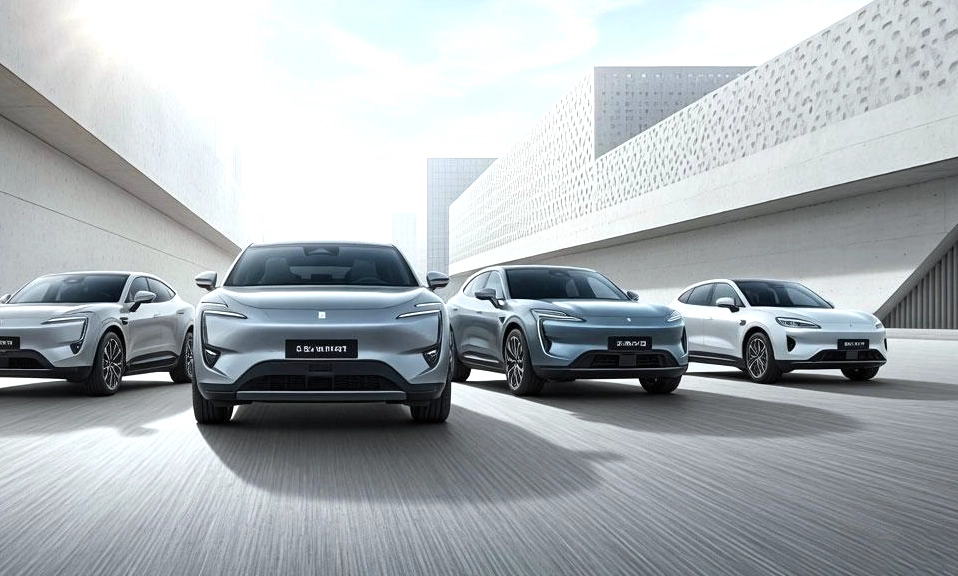
Three years ago, electric cars were small, expensive, and a little weird. A Nissan Leaf for your eco-conscious aunt.
In 2026, the best-selling EVs are not small hatchbacks. They’re big, boxy, 7-seat, panoramic-roof SUVs that can outrun a Porsche.
And everyone is buying them.
Medium SUVs now account for the largest share of EV sales, increasing their segment penetration from 16 per cent in 2024 to 27 per cent in 2025. The number of electric medium SUV models expanded from 30 to 45 over the year.
The electric car didn’t go mainstream when it got small and cheap. It went mainstream when it got big and smart.
Here’s why the electric SUV is eating the entire car market.
1. Price Parity Finally Happened — For SUVs First
According to the IEA’s Global EV Outlook 2026 (May 2026), battery electric vehicles in the SUV segment reached cost parity with ICE models for the first time in 2025, with adoption rates exceeding 55% in that segment.
Wait, what? Electric cheaper than gas?
For SUVs, yes. Why?
- An electric SUV is cheaper to build than a small electric car relative to its gas version. A gas SUV has a big engine, big transmission, AWD system — all expensive. Replace that with two motors and a battery and the price difference shrinks.
- Batteries got cheaper. The EV price premium narrowed to around 18-22 per cent, significantly improving affordability.
- Government incentives and urban emissions restrictions push fleets to buy electric SUVs for delivery, rental, corporate — 85-90% of sales are personal, but fleet is accelerating it.
What we’re seeing this quarter is how quickly the market moves when a car gets the fundamentals right – price, space and simplicity.
In 2026, carmakers are planning to roll out at least six new electric SUVs in the US this year with price tags at or below US$35,000. It’s a huge, lucrative market — comprising around half of new-car sales in the US — but one that few electric vehicles have managed to enter. In 2026, however, that will change.
$35k for an electric SUV with 300 miles range. That’s a RAV4 price with a Tesla drivetrain. That’s why people are switching.
Rising fuel costs remain a key driver behind this shift, pushing more drivers to consider electric mobility not only as an environmental choice but as a financial one.
2. They’re Built Smarter From The Ground Up
Electric SUVs are inherently smarter than their internal combustion engine counterparts because they are built from the ground up as Software-Defined Vehicles. This consists of dedicated skateboard platforms. Traditional ICE SUVs feature mechanical components that dictate the shape. An electric SUV integrates its battery pack directly into the floor structure, drastically lowering the center of gravity.
Translation:
Old gas SUV: Engine in front, driveshaft down middle, exhaust, gas tank in back. High center of gravity, rolls in corners, cramped inside despite being big outside.
New electric SUV skateboard: Flat battery in floor, motors at wheels, no tunnel, no engine. Result:
- More space: Flat floor, frunk + trunk, 3rd row that adults can actually sit in
- Safer: Battery low = won’t rollover like old Explorers
- Smarter: It’s a computer on wheels. Over-the-air updates give you more range, better autopilot, new features overnight. Gas SUV can’t do that.
Tesla Model Y, Kia EV9, Cadillac Lyriq, BYD Sealion 7, Lucid Gravity — they all have more interior space than a gas SUV 10 inches longer.
Now is a strong time to explore what today’s best electric SUVs — from the Cadillac Lyriq to the Lucid Gravity — genuinely have to offer. In 2026, those concerns are being dismantled one by one.
3. People Want One Car That Does Everything — And Electric SUVs Finally Do
Electrification and Hybridization: Hybrid and electric SUVs are expanding rapidly, driven by government incentives, urban emissions restrictions, and consumer interest in premium EV experiences. The global light-vehicle market is expected to see an increase in sales, with SUVs being the fastest-growing segment, especially compact and mid-size models.
Why SUV, not sedan?
Because a family in 2026 has contradictory needs:
- School run in city (needs small turning circle, efficiency)
- Weekend IKEA run (needs cargo)
- 300-mile road trip (needs range + fast charging)
- Wants to feel safe (needs height)
- Wants to feel premium (needs tech)
A small electric sedan can do 2 of those. An electric medium SUV does all 5.
And the range anxiety excuse died:
- 2026 average electric SUV range: 300-350 miles
- 10-80% charge in 18 minutes (800V architecture on Hyundai Ioniq 5, Kia EV9, Porsche Macan EV)
- Home charging: Wake up full every morning
The core demands and business opportunities for All Electric SUVs can be summarized into four key points: First, the anxiety over range and charging drives opportunities for battery technology innovation and the deployment of ultrafast charging networks.
Globally, EV-Volumes reports that EV sales reached 21.6 million units in 2025 and are on track for 22.7 million in 2026, with market share rising to 24.7% even as incentives contract.
Even as US federal tax credits expired and EV sales fell 27% year over year, EV market share held at 5.8%. Analysts say the next phase will be driven by competitive products and smarter positioning — not policy.
People aren’t buying electric SUVs because of government. They’re buying them because they’re better SUVs.
4. The Luxury Trick: They Feel Expensive Without Being Expensive
The driving factors of the electric SUV market are the rising awareness about global warming due to vehicle pollution and the demand for fully equipped luxury vehicles.
An electric SUV gives you things that used to be $70k luxury only:
- Silent cabin (no engine noise)
- Instant torque (0-60 in 4 seconds in a family hauler)
- Giant glass roof (no structural tunnel needed)
- Massive touchscreen, games, Netflix while charging
- Frunk for groceries + trunk for stroller
A $38,000 BYD Atto 3 feels more premium inside than a $45,000 gas CR-V. That’s why BYD becomes UK’s best-selling EV brand in 2026 surge.
So, Should You Get One?
If you drive 30-50 miles a day, have a driveway or garage where you can plug in overnight, and you were going to buy an SUV anyway — yes, 2026 is the year the math finally works.
Buy electric SUV if:
- You want lowest running cost (electricity 1/3 price of gas, almost no maintenance)
- You want space + tech
- You do mostly city + occasional long trip
Wait if:
- You can’t charge at home AND no fast charger near you
- You tow heavy loads long distances weekly (gas still wins here)
- You need cheapest possible car — $25k gas SUV still cheaper upfront than $35k electric
The shift toward electric SUVs is driven by stricter emissions regulations, improved battery technologies, and increased consumer awareness.
But also: they’re just better SUVs.
We thought the future of electric cars was tiny pods. Turns out it’s big, square, 7-seat, 0-60 in 3.8 seconds, and can power your house during a blackout.
Bigger, smarter, cheaper to run. That’s why they’re taking over.