Heroes get the glory, but villains steal the show.
Think about it: we remember the hero’s journey, but we obsess over the villain’s monologues. We admire their style, quote their lines, and secretly understand their motivations (even if we’d never admit it out loud). A great hero can make a good movie, but a legendary villain? That’s what makes a film immortal.
From chilling realism to supernatural terror, from tragic complexity to pure, unadulterated chaos, the greatest movie villains do more than just oppose the protagonist. They challenge our morals, expose our fears, and force us to confront the darkness that exists both on the screen and within ourselves.
So, grab your popcorn and prepare for some evil genius. Here are the top greatest movie villains of all time, and the reasons why they’ve cemented their place in cinematic history.
🃏 1. The Joker (Heath Ledger)
Movie: The Dark Knight (2008)
The Evil: Anarchic chaos and moral corruption.
The Evil: Anarchic chaos and moral corruption.
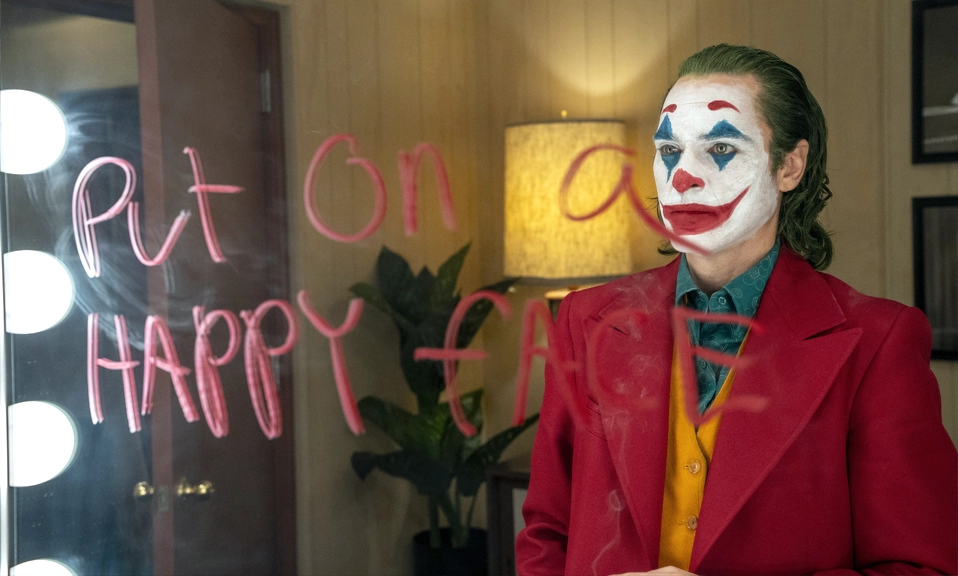
There were villains before Heath Ledger’s Joker, and there have been villains since, but there is only one Joker. Ledger didn’t just play a criminal; he embodied pure, unadulterated chaos. With no origin story, no clear motive, and no fear of death, his Joker wasn’t trying to rob banks or rule the world—he just wanted to watch it burn.
Why He’s the Greatest: Ledger’s posthumous Oscar win was well-deserved. He created a villain who was terrifying not because of his strength, but because of his philosophy. He forced Batman (and the audience) to question the very nature of order and civilization. “Why so serious?” isn’t just a line; it’s a cultural reset.
🎈 2. Hannibal Lecter (Anthony Hopkins)
Movie: The Silence of the Lambs (1991)
The Evil: Sophisticated, intellectual cannibalism.
The Evil: Sophisticated, intellectual cannibalism.
He’s polite, he’s brilliant, he has exquisite taste in art and music… and he eats people. Anthony Hopkins’ portrayal of Dr. Hannibal Lecter is a masterclass in minimalism. He’s on screen for only about 16 minutes, yet he dominates the entire film.
Why He’s Legendary: Lecter isn’t a raving monster; he’s a refined intellectual who views himself as superior to the “rude” people he consumes. The chilling calmness with which he describes his “dietary habits” (“I ate his liver with some fava beans and a nice Chianti”) created a new archetype for the cinematic villain: the monster in a suit.
🌌 3. Darth Vader (David Prowse / James Earl Jones)
Movie: Star Wars Original Trilogy (1977–1983)
The Evil: The fallen hero and the face of tyranny.
The Evil: The fallen hero and the face of tyranny.
You can’t talk about movie villains without bowing before the Dark Lord of the Sith. With that iconic black armor, the mechanical breathing, and James Earl Jones’ booming voice, Darth Vader is the visual and auditory definition of evil.
Why He’s Iconic: Vader represents the ultimate tragedy. He isn’t just a bad guy; he’s a fallen hero, a father, and a slave to his own anger. The Empire Strikes Back gave us one of the most famous plot twists in history (“I am your father”), transforming Vader from a one-dimensional henchman into a complex, tragic figure. He is the standard by which all sci-fi villains are measured.
🔪 4. Norman Bates (Anthony Perkins)
Movie: Psycho (1960)
The Evil: The boy next door with a split personality.
The Evil: The boy next door with a split personality.
Before Psycho, movie villains were often monsters, aliens, or obvious criminals. Alfred Hitchcock changed everything with Norman Bates. He was shy, awkward, and polite. He ran a motel. He seemed harmless.
Why He’s Terrifying: Norman Bates proved that the scariest monsters are the ones hiding in plain sight. The reveal of his “mother” personality shattered the audience’s sense of safety. Perkins’ performance created the blueprint for the psychological thriller villain, showing us that evil doesn’t always roar; sometimes, it whispers.
👹 5. Amon Goeth (Ralph Fiennes)
Movie: Schindler’s List (1993)
The Evil: Banality and casual cruelty.
The Evil: Banality and casual cruelty.
Villains like the Joker or Vader are fun because they are fantastical. Amon Goeth is horrifying because he was real. As the commandant of the Plaszów concentration camp, Goeth represents the darkest capacity of human nature. Ralph Fiennes didn’t play him as a raving lunatic; he played him as a bored, capricious bureaucrat who could shoot a prisoner from his balcony while eating breakfast.
Why He’s Haunting: Goeth reminds us that evil doesn’t always need a grand plan or a dramatic monologue. Sometimes, evil is just indifference. Fiennes’ performance is a chilling, necessary reminder of the horrors of the Holocaust.
🤡 6. Pennywise (Tim Curry)
Movie: It (1990 Miniseries)
The Evil: Predatory fear disguised as childhood joy.
The Evil: Predatory fear disguised as childhood joy.
Clowns are supposed to be funny. Tim Curry’s Pennywise is a nightmare. With those yellow eyes, the rotting teeth, and that sinister, mocking laugh, Pennywise taps into a primal fear of the uncanny. He doesn’t just want to kill you; he wants to terrify you first because “fear tastes better.”
Why He’s Unforgettable: Tim Curry brought a manic, improvisational energy to the role that was genuinely unsettling. He made the innocent (a balloon, a circus) into something predatory. Even decades later, the image of Pennywise in the sewer remains a staple of horror culture.
💼 7. Hans Gruber (Alan Rickman)
Movie: Die Hard (1988)
The Evil: The sophisticated terrorist.
The Evil: The sophisticated terrorist.
Before Hans Gruber, action movie villains were often muscle-bound brutes with machine guns. Alan Rickman changed the game. Gruber was cultured, witty, multilingual, and charming. He quoted Plutarch while orchestrating a hostage crisis.
Why He’s the Best Action Villain: Rickman played Gruber with such elegance and intelligence that you almost respected him. His villainy was cerebral. The scene where he casually drops a cigarette to test if the police are watching is a masterclass in tension. He proved that a villain could be the most interesting person in the room, even if he was the bad guy.
️ 8. Agent Smith (Hugo Weaving)
Movie: The Matrix (1999)
The Evil: The cold logic of control.
The Evil: The cold logic of control.
“I’d like to share a revelation that I’ve had during my time here…” Agent Smith isn’t driven by greed or passion; he’s driven by a virus-like desire to replicate and control. Hugo Weaving’s delivery—precise, monotone, and dripping with disdain for humanity—made him the perfect foil for Neo’s chaotic heroism.
Why He’s Memorable: Smith represents the system fighting back. He is the embodiment of order crushing freedom. Weaving’s performance, combined with the character’s ability to replicate into anyone, created a villain that felt omnipresent and inescapable.
👵 9. Annie Wilkes (Kathy Bates)
Movie: Misery (1990)
The Evil: Obsessive “fan” love.
The Evil: Obsessive “fan” love.
Annie Wilkes isn’t trying to take over the world. She just wants her favorite author to write the book she wants. Kathy Bates won an Oscar for this role, portraying a nurse who rescues a writer from a car crash, only to hold him captive and torture him when she discovers he killed off her favorite character.
Why She’s Terrifying: Annie represents the dark side of fandom and the horror of being trapped with someone who thinks they “love” you. The “hobbling” scene is one of the most visceral moments in cinema history. Bates made Annie unpredictable, swinging from sweet and motherly to murderous in a heartbeat.
🧛 10. Count Dracula (Bela Lugosi)
Movie: Dracula (1931)
The Evil: The seductive aristocrat.
The Evil: The seductive aristocrat.
Before Dracula was a sparkly teen heartthrob or a CGI monster, he was Bela Lugosi. With his hypnotic eyes, his cape, and his heavy Hungarian accent (“I vant to suck your blood”), Lugosi defined the vampire for generations.
Why He’s a Classic: Lugosi brought a sense of gothic romance and ancient evil to the screen. He wasn’t just a monster; he was a nobleman corrupted by darkness. His performance established the visual and behavioral tropes of the vampire that are still used today.
Honorable Mentions (Because 10 Isn’t Enough)
- The Wicked Witch of the West (The Wizard of Oz) – The original icon of evil.
- Nurse Ratched (One Flew Over the Cuckoo’s Nest) – Control disguised as care.
- Anton Chigurh (No Country for Old Men) – Fate with a bolt gun.
- Voldemort (Harry Potter series) – The fear of death personified.
- The Queen (Snow White) – Vanity turned deadly.
We Need the Villain
Great villains do more than just provide an obstacle for the hero. They hold up a dark mirror to society. They represent our fears of chaos, of technology, of madness, and of the evil that can hide behind a polite smile.
We love them because they are fascinating. We fear them because they are real (or feel real). And we remember them because, without them, the hero’s victory wouldn’t mean anything.
So here’s to the bad guys. The monsters, the maniacs, and the masterminds. Cinema would be a lot less interesting without you.