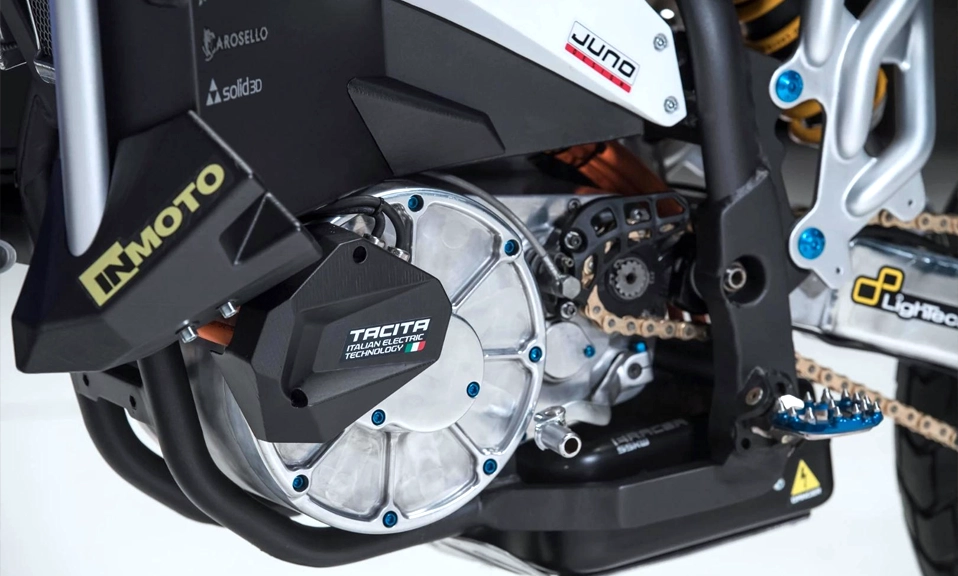
For years, the electric motorcycle has been defined by a simple, elegant truth: it doesn’t need gears. The instant torque of an electric motor delivered through a single-speed reduction gear has been the default formula, a quiet rebellion against the complex, multi-gear drivetrains of combustion. But a new wave of technology is challenging that assumption, asking a question that could reshape the riding experience: can a motorcycle have gears without losing the very thing that makes electric power so compelling—seamless, uninterrupted thrust?
The answer, according to a British engineering firm and a consortium of partners, is a resounding yes. And it could change everything.
The Problem with a Single Speed
A single-speed electric motorcycle is a study in compromise. The motor’s broad torque curve means it can pull strongly from a standstill and still cruise at highway speeds, but the fixed gear ratio forces engineers to choose a priority. A short ratio delivers thrilling acceleration but leaves the motor spinning at high, inefficient RPMs during highway cruising, draining the battery. A tall ratio offers relaxed, efficient cruising but dulls the low-speed punch that makes electric bikes so much fun.
For most riders, the convenience of a single speed—no clutch, no shifting, minimal maintenance—outweighs the trade-off. But for those who want the best of both worlds, the limitations are real. The electric motor’s efficiency map shows a “sweet spot” at higher speeds and moderate loads, an area that a single gear can only reach part of the time. Finding a way to keep the motor operating in its most efficient range across all riding conditions is the holy grail.
The Seamless Solution: Shifting Without the Shock
The most promising answer comes from E-Motiv Shift Systems, a British company that has adapted a seamless transmission concept from MotoGP for the electric era. Their two-speed powershift transmission is designed to do something that conventional gearboxes cannot: change ratios without ever interrupting the flow of torque to the rear wheel.
The technology has a proven pedigree. It traces its roots back nearly 25 years to the Zeroshift system, which was refined for racing and has been used by Aprilia Racing in MotoGP since 2015, contributing to over 30 podium finishes, including a historic 1-2-3 result at the 2026 British Grand Prix. For an electric motorcycle, the benefit is profound. A conventional gear change, even a fast one, creates a momentary cut in power—a “jerk or a drop in thrust” right when a rider needs it most. E-Motiv’s system eliminates that cut entirely, maintaining seamless acceleration through the shift.
The advantages are twofold. First, a lower first gear can provide explosive, tyre-shredding acceleration from a standstill, while a taller second gear allows the motor to operate at a more relaxed, efficient RPM during high-speed cruising. This not only improves the riding experience but could also deliver a real-world range increase of 5 to 15 percent compared to an identically motorised single-speed system. It is a rare win-win: more performance and more efficiency.
The technology is being validated through a £1 million UK government-funded project involving BSA, the University of Bath, and the Institute of Advanced Automotive Propulsion Systems (IAAPS). A demonstrator motorcycle, known as Demo 1, has been built and real-world testing is scheduled to begin in early 2027.
The Broader Shift: Gears Are Returning
E-Motiv is not alone in exploring the potential of geared electric motorcycles. KTM has confirmed that its upcoming E9 model will feature a transmission, gears, a mechanical clutch, and a flywheel—a deliberate choice to create a more engaging, motorcycle-like experience. Other manufacturers, like LiveWire, have stuck with single-speed gearboxes for their flagship models, but the existence of these alternative projects signals a growing recognition that the single-speed formula is not the only way forward.
The innovation is not limited to large motorcycles. In the e-bike world, companies like Avinox and Gobao are integrating gearboxes and even AI-controlled continuously variable transmissions (eCVTs) directly into mid-drive motor units. These systems eliminate traditional derailleurs and cassettes, using intelligent software to select the optimal gear ratio in real time based on cadence, torque, speed, and gradient, creating a seamless and efficient pedalling experience. The principle is the same: use gearing to keep the motor in its most efficient operating range.
The Efficiency Equation: Weighing the Trade-Offs
The core argument for multi-speed transmissions is efficiency. An electric motor is not equally efficient across its entire operating range. It is most efficient at higher speeds and moderate loads, and least efficient at very low speeds under high load—precisely the conditions of a hard launch from a standstill. A two-speed gearbox allows the motor to operate in its sweet spot more often, whether that means using a low gear to multiply torque for acceleration or a high gear to reduce motor RPM for relaxed cruising.
However, gears are not a free lunch. A gearbox adds weight, complexity, and cost. Every set of meshing gears introduces some parasitic loss, and the additional components require maintenance and occupy valuable space. The historical reason most electric vehicles use a single-speed transmission is precisely to avoid these complications; even the original Tesla Roadster was planned with a two-speed but switched to a single-speed due to complexity.
The E-Motiv system addresses the complexity problem with its seamless shifting, which eliminates the need for a clutch and the power interruption that makes conventional gear changes feel jarring on an electric bike. If the technology can deliver meaningful efficiency and performance gains without adding too much weight, cost, or complexity, it could become a compelling proposition for a new generation of electric motorcycles.
The electric motorcycle
is not destined to be gearless forever. The technology now exists to shift gears without losing power, and the benefits—stronger acceleration, more efficient cruising, and a more engaging riding experience—are tangible. The E-Motiv system, with its MotoGP-proven pedigree and its forthcoming real-world testing, represents the most credible path toward a geared electric future.
The question is no longer whether electric motorcycles can have gears without losing power. They can. The question is whether the gains in performance and efficiency will be enough to convince riders—and manufacturers—that the added complexity is worth it. If the early projections hold true, the answer may well be yes. The silent, seamless shift could become the next great sensation of electric motorcycling.