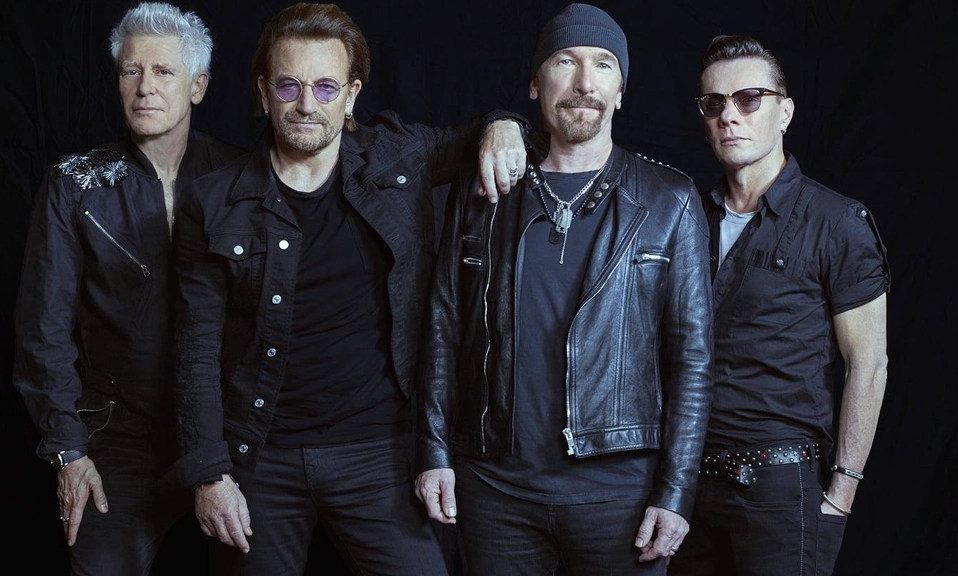
Nine years is a long time in rock music. It is long enough for a generation of listeners to discover a band, for a genre to rise and fall, for the cultural conversation to move on. It is long enough, in other words, for a band to become a legacy act—a name that evokes nostalgia rather than anticipation. U2 have spent the last nine years refusing that fate. And with Carnaval De Luz, their first full-length album of new material since 2017, they have done something rarer than a comeback. They have made a case for their own relevance.
The album, released on November 13, 2026, arrives at a moment of deliberate significance. It lands in the week that marks 50 years since Larry Mullen Jr. posted a handwritten note on a school noticeboard in Dublin, seeking musicians to form a band. It is the culmination of an extraordinarily productive year in which U2 released two six-track EPs—Days of Ash and Easter Lily—and, with the album, a total of 24 new songs. And it features the final recorded vocal performance of Dolly Parton, a duet called “Torn” that closes the album and will be remembered for decades.
But the reason Carnaval De Luz matters is not just its milestones. It is what the album represents: a band refusing to go quietly, a group of men in their sixties still finding new dimensions in their creative process, and a statement of defiance in a world that often feels defined by darkness.
The Occasion: Fifty Years and a Creative Burst
U2 have never been a band that shied away from grand gestures. But the scale of their 2026 output is remarkable even by their standards. The two EPs, Days of Ash and Easter Lily, were surprise releases that followed the liturgical calendar—Ash Wednesday and Easter—and reflected on the political and social upheavals of the year: ICE, Iran, Ukraine, the Israel-Palestine conflict. They were raw, immediate, and unmistakably U2.
Carnaval De Luz sits before them in timeline, but it is not a retreat from the EPs’ seriousness. It is a counterpoint. Where the EPs were about denial and reflection, the album is about celebration—a “messy, provocative, sacred collection of songs,” as The Edge described it. It is the Carnival before Lent, the feast before the fast. And it is a reminder that U2 have always been at their best when they are holding two contradictory ideas at once: the personal and the political, the sacred and the profane, the joy and the grief.
The Dolly Parton Duet: A Farewell That Will Endure
The most talked-about track on the album is “Torn,” a duet between Bono and Dolly Parton. Parton recorded her vocals in June 2026, while she was already unwell, before her death on August 25 at the age of 80. It is her final recorded performance, and it is a gift.
Bono has spoken about the session with characteristic candor: “When she got ill, she got out of her bed to sing this song. And you can hear that. And I can’t even listen to it now”. He added: “She sang her heart out, and I cannot believe that’s an 80-year-old woman”. Producer Jacknife Lee confirmed that Parton heard and approved the final mix before her passing.
The song is not a novelty. It is a tender country ballad about broken family ties, co-written by U2, Parton, and Snow Patrol’s Johnny McDaid, with Daniel Lanois on pedal steel. It is a reminder that U2’s collaborations have always been at their best when they are rooted in genuine respect and mutual history—and that Parton, even in her final months, was still capable of stopping time with a single vocal take.
The Sound: Defiant Joy in a Dark World
Carnaval De Luz is not a political album in the way its preceding EPs were. It is a celebration—a deliberate choice to make music that feels like a resistance to despair. Bono framed the album’s ethos in a statement that could serve as a manifesto for the band’s late career: “The same imagination that brings us our creativity can also bring us monsters. So we make the drums louder. We build a bigger fire. We make our stories wilder and funnier. We make the melodies sweeter and the songs, they better shine, because if the world is in darkness we better not be”.
The music reflects that defiance. Rolling Stone described the album as “tight and punchy, memorable and melodic,” calling it “big, bright pop music with more silver linings than clouds and only a few minor keys”. The central theme, the magazine noted, “seems to be ‘it’s not too late'”—not too late to party, to find God, to empathise, to save a relationship, to save the world. RTE called it “the freshest and most immediate the band have sounded in an age,” noting that Bono “gets his mojo back”.
The album reunites U2 with some of their most important creative partners—Brian Eno co-writes and plays synthesizers on three tracks, Daniel Lanois contributes pedal steel—while also embracing contemporary voices like Martin Garrix and Ryan Tedder. It is a balance that U2 have always managed well: honoring their past while refusing to be trapped by it.
Why It Matters: The Case for Late-Career Relevance
The easy story about a band like U2 is that their best work is behind them. They have nothing left to prove. They could tour the hits, accept the applause, and fade gracefully into legacy status. Carnaval De Luz rejects that story.
It matters because it is a statement of continued creative ambition. U2 did not need to release 24 new songs in a year. They did not need to record an album of celebration in a time of political darkness. They did not need to collaborate with a new generation of artists or to push their sound into new territory. They did it because they are still searching—still trying to find “new dimensions and possibilities within their creative process,” as the band’s announcement put it.
It matters because it is a counterargument to the idea that rock music is a young person’s game. At a time when the genre’s biggest stars are aging and the charts are dominated by pop and hip-hop, U2 have made an album that sounds vital, urgent, and unmistakably current. They have not tried to sound like a young band. They have sounded like themselves—and that, it turns out, is enough.
It matters because it is a gift to a fanbase that has waited patiently. Nine years is a long time between albums. The fans who have followed U2 through five decades have been rewarded with a record that honors their loyalty—not with a retread of past glories, but with something new.
And it matters because it is a reminder of what U2 have always been at their best: a band that believes in something. In a cultural moment defined by irony and detachment, U2 remain stubbornly earnest. They believe in love, in justice, in the power of music to change lives. Carnaval De Luz is not a cynical album. It is a hopeful one. And in 2026, that is a radical act.
A Carnival Against the Darkness
Carnaval De Luz is not U2’s best album. It may not even be their best album of the last decade. But it is the album they needed to make—a celebration of resilience, a farewell to a legend, and a declaration that the band is not done yet.
Fifty years after a teenage drummer pinned a note to a school noticeboard, U2 are still here. They are still making music. They are still finding new ways to say what they have always said: that the world is broken, but it is also beautiful; that the darkness is real, but so is the light; that the carnival is worth attending, even when the Lenten season is just around the corner.
Carnaval De Luz is U2’s refusal to go quietly. And on this evidence, they have plenty of noise left to make.