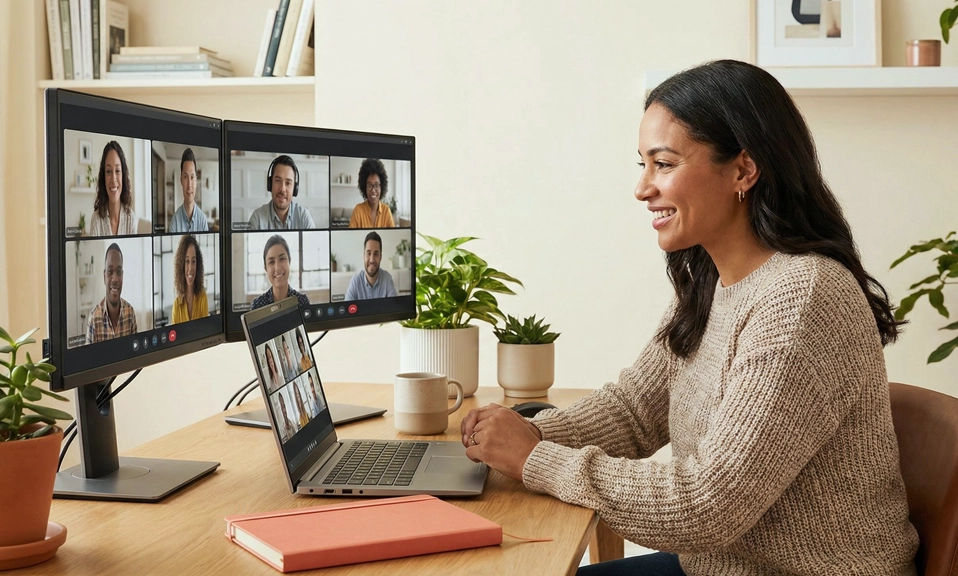
The dream of the “global remote worker” has officially become the standard.
By 2027, the geographical barriers to employment have completely dissolved. Thanks to global payroll platforms, AI-driven real-time translation, and mature asynchronous work tools, a company in Berlin can seamlessly hire a top-tier developer in Buenos Aires, or a marketing strategist in Manila.
But here is the catch: while the opportunity is global, the competition is also global.
Working for an international company from your home office isn’t just about having a good webcam and a quiet room. It requires a completely different operating system for how you communicate, manage your time, and prove your value. If you want to tap into the global talent market and earn a competitive, location-independent income, you need to master the art of the borderless workplace.
Here are the 10 essential skills you need to thrive in a remote, international role in 2027.
🔄 1. Asynchronous Communication Mastery
The Skill: The ability to move a project forward without relying on real-time meetings. Why it matters in 2027: When your team is spread across London, New York, and Sydney, scheduling a live Zoom call is a logistical nightmare. International companies run on “async” (asynchronous) work. How to master it: Stop expecting immediate replies. Learn to write comprehensive, unambiguous briefs. Master tools like Loom or Slack Clips to record 3-minute video updates instead of calling a meeting. Assume the person reading your message is in a different time zone and might not see it for 12 hours—give them everything they need to act without asking you a follow-up question.
🤖 2. AI-Augmented Productivity & Translation
The Skill: Leveraging AI not just to write emails, but to bridge cultural, linguistic, and operational gaps. Why it matters in 2027: You will be working with colleagues whose first language might not be English, and whose business etiquette might differ from yours. How to master it: Use AI tools to soften the tone of your direct messages (what sounds “efficient” in the US might sound “rude” in Japan). Use AI meeting assistants to transcribe, translate, and summarize cross-border calls so you never miss a nuance. The best global remote workers use AI as their personal diplomatic and operational aide.
🌍 3. Cross-Cultural Intelligence (CQ) in a Digital Context
The Skill: Navigating different cultural norms regarding hierarchy, feedback, and time without causing offense. Why it matters in 2027: In some cultures, disagreeing with a manager in a public Slack channel is a fireable offense. In others, it’s expected. Some cultures view a 9:00 AM start time as a hard rule; others view it as a flexible suggestion. How to master it: Do your research. Understand the “high-context” vs. “low-context” communication styles of your team’s home countries. When in doubt, over-communicate your intentions, assume positive intent from others, and ask respectful questions about how your international colleagues prefer to collaborate.
👀 4. “Digital Body Language” & Radical Visibility
The Skill: Making your hard work visible to a manager who is 4,000 miles away and will never see you at your desk. Why it matters in 2027: “Out of sight, out of mind” is the biggest risk for remote workers. If your international boss only sees you in a weekly 30-minute sync, they have no idea how hard you’re working the rest of the week. How to master it: Narrate your work. Update your project management boards (Jira, Asana, Notion) religiously. Post your “wins” and completed milestones in the team’s public Slack/Teams channel. Make it incredibly easy for your manager to copy and paste your achievements into their performance reviews.
🧩 5. Time Zone Tetris & Ruthless Boundary Setting
The Skill: Managing overlapping “golden hours” while fiercely protecting your personal time from 24/7 burnout. Why it matters in 2027: When your company never sleeps, the expectation can subtly shift to you never sleeping. How to master it: Identify the 2 to 3 hours a day where your time zone overlaps with your core team (the “Golden Hours”). Schedule your collaborative meetings and deep-syncs then. For the rest of your day, do deep, focused work. Most importantly, use your email and Slack “scheduled send” features. Just because you are working late doesn’t mean you should ping your European team at their midnight.
🛠️ 6. Tool Agnosticism & Rapid Tech Adaptability
The Skill: The ability to drop into a new company’s tech stack and figure it out without hand-holding. Why it matters in 2027: Every international company has its own Frankenstein stack of tools. One uses Notion and Figma; another uses Confluence and Miro. How to master it: Detach your identity from specific software. Don’t be the person who says, “At my last job, we used Trello, so I don’t know how to do this in Asana.” Cultivate a mindset of rapid self-onboarding. Watch the 10-minute YouTube tutorial, read the internal wiki, and figure it out. Resourcefulness is the ultimate currency in remote work.
✍️ 7. High-Stakes Written Communication
The Skill: Writing with absolute clarity, empathy, and precision, knowing that text is your primary medium of influence. Why it matters in 2027: You can’t tap your international colleague on the shoulder to clarify a vague instruction. You can’t read their body language to see if they are confused. Your writing is your voice. How to master it: Adopt the “BLUF” method (Bottom Line Up Front). Start every message with the core request or update. Use bullet points. Avoid sarcasm, idioms, and local slang that won’t translate across borders. Read your message out loud before hitting send to ensure the tone is collaborative, not demanding.
🕵️ 8. Autonomous Problem Solving (The 15-Minute Rule)
The Skill: Figuring things out on your own before escalating, but knowing exactly when to ask for help. Why it matters in 2027: If you get blocked on a task and your manager is asleep in another time zone, you can’t afford to sit idle for 8 hours waiting for an answer. How to master it: Implement the “15-Minute Rule.” When you hit a roadblock, spend 15 minutes trying to solve it yourself (searching docs, testing workarounds, asking AI). If you can’t solve it, document what you tried, and send a highly structured message to your team: “I’m blocked on X. I tried Y and Z, but it failed. I am going to pivot to task B while I wait for guidance on this. Let me know if you have a quick fix.”
🔒 9. Global Data Security & Compliance Mindset
The Skill: Understanding the basic legal and security boundaries of handling data across international borders. Why it matters in 2027: Working for a European company means you are bound by GDPR. Working for a healthcare company means HIPAA. A careless data leak from your home Wi-Fi can result in massive international fines. How to master it: Never use public Wi-Fi without a premium VPN. Use a password manager and enable 2FA on every single work account. Understand the basics of data privacy in your employer’s region. Showing that you take security seriously makes you a vastly more attractive hire for global enterprises.
🎯 10. Outcome-Based Self-Management
The Skill: Shifting your mindset from “hours worked” to “results delivered.” Why it matters in 2027: International remote companies do not care if you work from 9 to 5, or from 2 AM to 10 AM. They care about the output. How to master it: Stop tracking your time and start tracking your deliverables. At the start of every week, align with your manager on exactly what “done” looks like. Manage your own energy, take breaks when you need them, and deliver the project on time. When you prove that you can manage your own outcomes without a boss hovering over you, you earn the ultimate remote perk: total autonomy.
The World is Your Office, But You Need the Right Toolkit
Working for an international company from home is one of the most rewarding career paths available today. It offers financial leverage, cultural enrichment, and the freedom to design your life on your own terms.
But it is not for the passive worker. It requires a high degree of discipline, emotional intelligence, and proactive communication.
If you can master these 10 skills, you won’t just be “working remotely.” You will be a highly sought-after, borderless professional who can drive results for any company, anywhere on the planet.