Six years after selling off its Honor sub-brand to survive crippling US sanctions, Huawei is making its boldest move yet to reclaim its place at the top of the global smartphone market. On November 20, 2026, the Chinese tech giant officially launched OSTA (known as “Xingmang” or “StarGlow” in Chinese) , a new independent smartphone brand positioned to take the fight directly to Samsung and Apple. This isn’t just another product line—it’s a statement of intent from a company that has spent years rebuilding its supply chain and is now ready to go on the offensive.
From Honor to OSTA: A Strategic Reboot
The launch of OSTA marks Huawei’s first major smartphone sub-brand since it sold Honor in late 2020. At the time, the sale was a necessity: US trade sanctions had cut Huawei off from critical American technology and Taiwan’s TSMC, bringing its once-dominant smartphone business to a near standstill. Honor was spun off to a consortium of over 30 agents and dealers for about $15 billion, insulating it from the restrictions while Huawei itself retreated to rebuild.
That rebuilding phase is now over. Powered by its in-house Kirin processors and the self-developed HarmonyOS operating system, Huawei has staged a remarkable comeback. In the third quarter of 2026, it regained the top spot in China’s smartphone market with a 21.3% share, surpassing Apple’s 19.5% and holding off domestic rivals like Vivo, Oppo, and Xiaomi. With its home turf secured, OSTA represents Huawei’s next phase: creating a new brand that can compete not just on price, but on innovation, AI, and a distinct identity.
Meet the OSTA O1 Pro: A Phone Built for AI
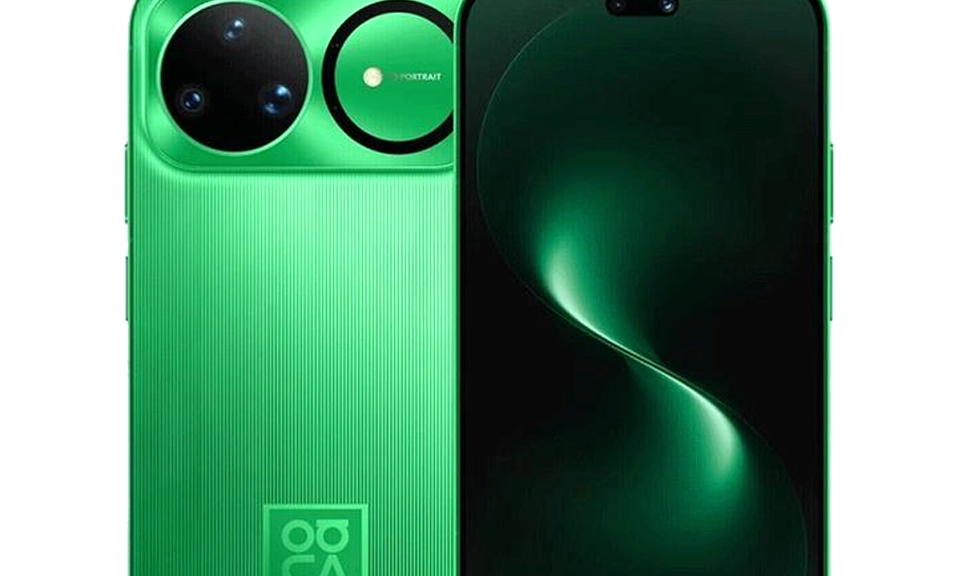
The first device under the OSTA banner is the OSTA O1 Pro, and it is anything but conventional. Huawei’s Executive Director Richard Yu described OSTA’s focus as centering on “Originality, Smartness, Technology, and Accessibility,” and the O1 Pro embodies that ethos with a form factor that stands out from the glass-slab crowd.
The most striking feature is its wide-screen design. The O1 Pro sports a 6.39-inch flat LTPS display with a 1.5K resolution and an unusual 16:9.5 aspect ratio, giving it a broader, more spacious canvas than typical flagship phones. This “wide bar” design is reminiscent of Huawei’s Pura X View, and it’s a deliberate choice aimed at users who want more room for typing, video, and multitasking.
Under the hood, the O1 Pro is powered by Huawei’s Kirin 9030S chipset, paired with up to 16GB of RAM and a staggering 1TB of storage. The camera system is equally ambitious: a 200MP main sensor alongside a 50MP periscope telephoto lens with 3.7x optical zoom. A massive 7,000mAh battery with 66W wired and wireless charging ensures the device can keep up with its power-hungry AI features.
But the real differentiator is the software. The O1 Pro is being positioned as “Huawei’s first Harmony AI phone” —a device defined by its artificial intelligence capabilities rather than just its hardware. It runs HarmonyOS 7 AI Pioneer Edition, and Huawei is betting that AI will be the next major battleground in smartphones, an area where it believes it can outpace both Samsung and Apple.
The Challenge to Samsung and Apple
OSTA’s launch is not a tentative experiment. It is a direct challenge to the established order. At its peak in 2019, Huawei shipped over 240 million smartphones globally and was the only Chinese company genuinely competing with Samsung and Apple at the premium end of the market. The US ban interrupted that trajectory, but it did not end it. Now, with OSTA, Huawei is creating a vehicle to re-enter international markets and target segments currently dominated by its rivals.
The timing is significant. Smartphone makers are grappling with rising component costs and intensifying competition, particularly in China. By launching a new brand that operates independently, Huawei can experiment with different price points and marketing strategies without diluting its core identity. OSTA is designed to be nimble—a brand that can chase new customers, particularly younger or more tech-forward users, while Huawei proper continues to serve its loyal base.
Pricing and Availability: Premium Ambitions
Despite early rumors that OSTA might target the budget segment, the O1 Pro’s pricing tells a different story. The device starts at 5,499 yuan (approximately $775) for the 12GB/256GB model** under a limited-time launch offer, with a list price of 5,699 yuan. The top-tier 16GB/1TB configuration is priced at **8,799 yuan (about $1,240) during the launch period, rising to 8,999 yuan afterward.
That pricing places the O1 Pro firmly in flagship territory, competing directly with premium devices from Samsung and Apple. For now, the launch is China-only, and there is no confirmed US release or pricing. But the ambition is clear: OSTA is not content to be a domestic budget brand. It is being built as a premium, AI-first competitor on the global stage.
A New Chapter in Huawei’s Comeback Story
The launch of OSTA is more than a product announcement. It is the clearest signal yet that Huawei has moved from survival mode to expansion mode. By creating a new sub-brand focused on AI and distinctive design, Huawei is hedging its bets and opening new fronts in its long campaign to reclaim its standing in the global smartphone industry.
The OSTA O1 Pro may not be the phone that immediately dethrones the iPhone or the Galaxy S series. But it doesn’t need to be. It needs to establish OSTA as a credible, innovative brand that stands for something different. With its wide-screen form factor, Kirin-powered performance, and AI-first software, it has a genuine point of view. And in a market that often feels homogenized, that might be the most valuable feature of all. The next chapter of the smartphone wars has officially begun—and Huawei has just introduced a new protagonist.