For centuries, the question of whether Jesus of Nazareth was a real, historical figure has been a subject of intense debate. Pop culture, internet forums, and fringe theories have occasionally floated the idea that Jesus was purely a mythological construct, a composite of pagan gods, or a literary invention of the early Church.
But if you step away from the noise and look at the actual discipline of ancient history, a very different picture emerges.
While no newly unearthed Roman scroll has suddenly popped up with a signed confession from Pontius Pilate, fresh scholarly analysis, advanced textual criticism, and a tightening historical consensus are providing stronger, more nuanced evidence than ever before that Jesus was a real, historical figure who lived in 1st-century Judea.
The most compelling evidence doesn’t actually come from the Bible. It comes from ancient Roman and Jewish-Roman historians who had no theological axe to grind—and in some cases, were openly hostile to the early Christian movement.
Here is a look at the ancient records that anchor Jesus in history, and why modern historians are more certain than ever about his existence.
📜 1. The Gold Standard: Tacitus and the Annals
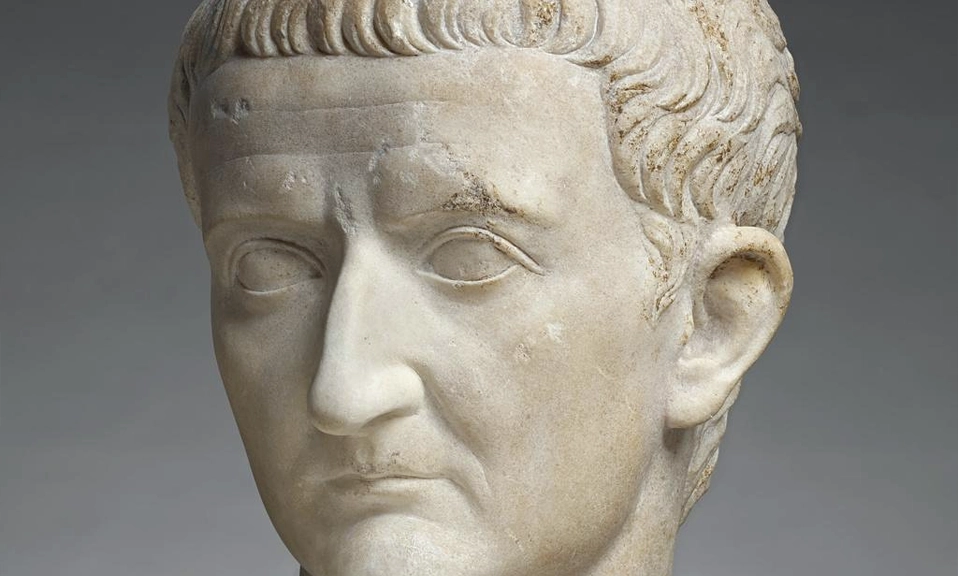
If there is a “smoking gun” in secular historical records, it is the writings of Publius Cornelius Tacitus, widely considered one of the greatest and most rigorous historians of ancient Rome.
Around 116 AD, while documenting the Great Fire of Rome under Emperor Nero, Tacitus wrote:
“Nero fastened the guilt and inflicted the most exquisite tortures on a class hated for their abominations, called Christians by the populace. Christus, from whom the name had its origin, suffered the extreme penalty during the reign of Tiberius at the hands of one of our procurators, Pontius Pilatus.” (Annals 15.44)
Why this matters to historians:
- Hostile Witness: Tacitus despised Christians, calling their beliefs a “mischievous superstition.” He had absolutely no motive to fabricate a story that gave legitimacy to a group he hated.
- Specific Details: He independently confirms the name “Christus,” the timeframe (reign of Tiberius, 14–37 AD), and the specific Roman official responsible for the execution (Pontius Pilate).
- Recent Analysis: Modern textual critics have thoroughly examined Tacitus’s manuscripts. The consensus is that this passage is authentic and not a later Christian interpolation, making it one of the most solid pieces of non-Christian evidence for Jesus’s crucifixion.
🏛️ 2. The Administrator’s View: Pliny the Younger
Around 112 AD, Pliny the Younger, a Roman governor in Bithynia (modern-day Turkey), wrote a letter to Emperor Trajan asking for advice on how to handle the growing number of Christians in his province.
In this letter, Pliny notes that these people were in the habit of meeting on a fixed day before dawn, where they “sang hymns to Christ as to a god.”
Why this matters to historians: Pliny’s letter doesn’t detail Jesus’s life, but it provides crucial historical context. It proves that within 80 years of Jesus’s death, a distinct, widespread movement existed that worshipped a specific, named historical figure as divine. The rapid, organic spread of this movement across the Roman Empire is incredibly difficult to explain if its founder was a complete fabrication.
📖 3. The Jewish-Roman Bridge: Flavius Josephus
Flavius Josephus was a 1st-century Jewish historian who became a Roman citizen. In his work Antiquities of the Jews (c. 93 AD), he mentions Jesus twice.
The most famous passage, known as the Testimonium Flavianum, originally read something like this (according to modern scholarly reconstruction):
“At this time there appeared Jesus, a wise man. For he was a doer of startling deeds, a teacher of people who receive the truth with pleasure. And he gained a following both among many Jews and among many of Greek origin. And when Pilate, because of an accusation made by the leading men among us, condemned him to the cross, those who had loved him previously did not cease to do so.”
The “Fresh Evidence” Angle: For a long time, skeptics dismissed this passage because later Christian copyists had clearly added phrases like “he was the Messiah.” However, recent advances in textual analysis—including the discovery and study of an Arabic version of Josephus’s history and a Syriac manuscript—have allowed historians to strip away the later Christian additions.
Today, the vast majority of secular and religious scholars agree that a core, authentic reference to Jesus, his reputation as a wise teacher, and his crucifixion under Pilate was indeed written by Josephus.
🏺 4. The Archaeological Backdrop
While archaeology cannot dig up “Jesus,” it constantly verifies the historical framework in which the Roman records place him.
- The Pilate Stone: Discovered in 1961 in Caesarea Maritima, this limestone block bears the inscription “Pontius Pilate, Prefect of Judea.” It proved that the man Tacitus and the Gospels named as the executor of Jesus was a real, historical Roman official with the exact title and jurisdiction described.
- 1st-Century Judean Context: Ongoing excavations in Jerusalem, Capernaum, and Nazareth have perfectly mapped the cultural, political, and religious landscape described in both the New Testament and Roman accounts. The world these texts describe is not a mythical fairyland; it is a highly specific, verifiable historical reality.
🧠 The Modern Historian’s Consensus
It is time to retire the “Jesus Myth Theory.”
Today, virtually all serious scholars of antiquity—whether they are Christian, Jewish, atheist, or agnostic—agree that Jesus of Nazareth was a real historical figure.
Prominent atheist historians like Bart Ehrman and Gerd Lüdemann have explicitly stated that the existence of Jesus is as certain as the existence of any other figure from the ancient world. The debate among serious historians is not whether Jesus existed, but rather who he was, what he specifically taught, and how his movement evolved after his death.
The criteria historians use to establish this are robust:
- Multiple Independent Attestation: Jesus is mentioned by Christian, Roman, and Jewish sources within a century of his life.
- The Criterion of Embarrassment: Early sources include details that were embarrassing or counterproductive to the early Church (e.g., their leader being executed as a common criminal by the state). Historians know people do not invent details that make their cause look weak.
- Contextual Credibility: Everything we know about Jesus fits perfectly into the 1st-century Jewish and Roman context.
History Meets Faith
Acknowledging the historical reality of Jesus does not require a person to accept the theological claims of Christianity. You can be a strict secular materialist and still conclude, based on the evidence, that a Jewish preacher named Jesus lived in Galilee, gathered followers, and was crucified by Pontius Pilate around 30–33 AD.
The ancient Roman records do not prove miracles. They do not prove the resurrection. But they do something equally important for the study of human history: they anchor a figure who would go on to shape the entire trajectory of Western civilization in the cold, hard facts of the 1st-century Roman world.
The evidence is in, and the historical verdict is clear. Jesus was real.