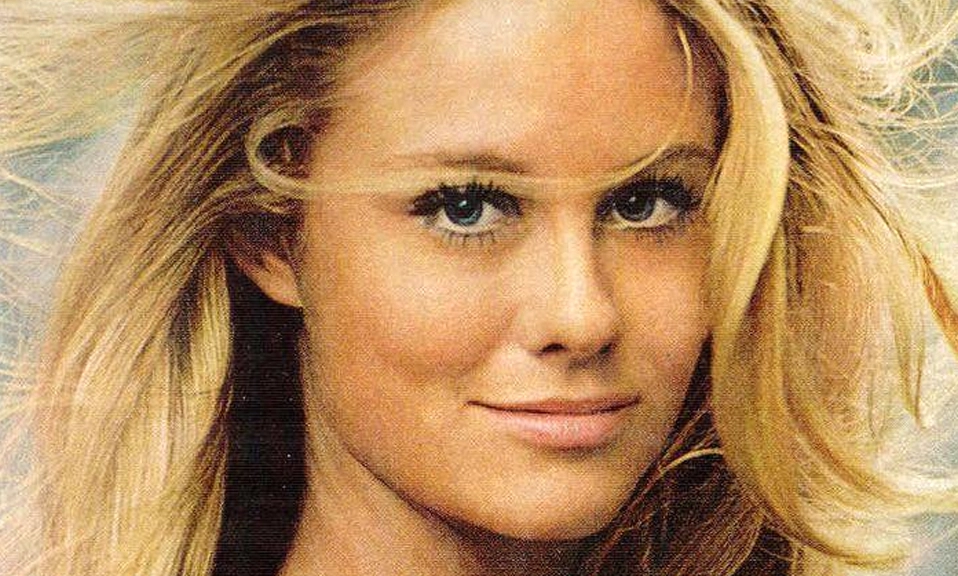
If you were to look at a photograph of Cybill Shepherd in the early 1970s, you would see what the world saw: a breathtaking, statuesque beauty with piercing blue eyes and an aura of cool, untouchable elegance. She was the girl in the iconic red Target sweater. She was the muse for legendary directors. She was, by all conventional Hollywood metrics, the ultimate “pretty face.”
But to reduce Cybill Shepherd to just her beauty is to miss one of the most fascinating, rebellious, and transformative career arcs in Hollywood history.
Beneath that glamorous exterior was a fiercely independent, razor-sharp, and unapologetic woman who refused to play by the studio system’s rules. Over five decades, Shepherd evolved from a passive cinematic muse into a powerful producer, a comedic genius, and a trailblazer for female agency in television.
Here is the story of how Cybill Shepherd didn’t just survive Hollywood—she bent it to her will.
🎬 1. The Muse Becomes a Masterpiece (The 1970s)
Cybill’s entry into Hollywood reads like a movie script. Discovered by legendary director Peter Bogdanovich while she was still a teenager and a working model, she was cast as Jacy Farrow in The Last Picture Show (1971).
It was a massive gamble. Shepherd had never acted in a film, and she was thrown into a black-and-white masterpiece alongside veteran actors like Cloris Leachman and Ben Johnson. But Shepherd didn’t just hold her own; she anchored the film. Her portrayal of the complex, heartbreaking, and often cruel Jacy earned her an Academy Award nomination and instantly established her as a serious dramatic talent.
Throughout the 70s, she was the quintessential “cool blonde” of the New Hollywood era. She starred in Bogdanovich’s Daisy Miller, played opposite Robert De Niro in Martin Scorsese’s Taxi Driver (delivering the ultimate, aloof rejection of Travis Bickle), and took on bold, boundary-pushing roles like the 1982 film Making Love, which was one of the first mainstream Hollywood films to depict a gay love triangle.
She was working with the greatest auteurs of her generation, but she was beginning to chafe at the limitations placed on women in the industry. She wanted more than just to be looked at; she wanted to be in control.
📺 2. Moonlighting and the Invention of Modern TV Romance
In the 1980s, television was largely considered a step down from film. Actors who went to TV were seen as having “washed out.” But when Cybill Shepherd was offered the lead in a quirky, low-budget ABC pilot called Moonlighting, she saw something the studios didn’t: a revolution.
Paired with a completely unknown, fast-talking actor named Bruce Willis, Shepherd played Maddie Hayes, a glamorous, high-society woman who goes broke and is forced to run a gritty detective agency.
The magic of Moonlighting wasn’t just the mystery-of-the-week plots; it was the electric, combative, and deeply romantic chemistry between Shepherd and Willis. They invented the modern “will-they-won’t-they” television dynamic. They traded witty, overlapping dialogue, broke the fourth wall, and brought a cinematic sophistication to the small screen.
But Shepherd’s evolution didn’t stop at acting. She quickly realized the power she held. She became a co-producer of the show, fought fiercely for equal pay, and demanded creative input. When the writers tried to resolve the sexual tension between Maddie and David Addison too quickly (which famously caused the show’s ratings to plummet), Shepherd was one of the few people in the room who understood the fundamental rule of romantic comedy: the chase is the point. She was no longer just the star; she was a creative executive.
🎭 3. Cybill and the Art of Meta-Television
If Moonlighting proved she could be a dramatic and romantic lead, her 1995 sitcom Cybill proved she was a comedic savant with a brilliant sense of self-awareness.
In Cybill, Shepherd played Cybill Sheridan, a struggling, slightly messy, fiercely optimistic actress living in Los Angeles. The genius of the show was that it was a thinly veiled, highly satirical version of Cybill Shepherd herself.
She was poking fun at her own Hollywood image, her past marriages, her vanity, and the absurdities of the entertainment industry. It was meta-humor years before Curb Your Enthusiasm or 30 Rock made it the standard. Shepherd was willing to look foolish, to mock her own glamour, and to present a flawed, hilarious, and deeply human version of a “star.” It earned her a Golden Globe and proved her comedic timing was as sharp as her dramatic instincts.
📖 4. The Rebel with a Pen
In 2000, Shepherd released her memoir, and the title told you everything you needed to know: Cybill Disobedience: How I Survived Hollywood, Small-Town Values, and the Boy Who Peed in My Handbag.
The book was a revelation. It stripped away the polished PR veneer of Hollywood memoirs. Shepherd wrote candidly about her difficult childhood in Memphis, her tumultuous relationships, the sexism she faced on movie sets, and her unapologetic refusal to be a passive “good girl.”
She wrote about standing up to powerful men, about the realities of aging in a youth-obsessed industry, and about the joy of living life entirely on her own terms. Cybill Disobedience cemented her status not just as an actress, but as a feminist icon who navigated a fiercely patriarchal industry without losing her soul or her sense of humor.
👑 5. The Legacy: Paving the Way for Female Agency
Today, we take for granted that female actors will produce their own projects, demand equal pay, and have a say in their creative direction. We watch women like Reese Witherspoon, Margot Robbie, and Jennifer Aniston build production empires and control their own narratives.
Cybill Shepherd was doing this in the 1980s and 90s.
She evolved from a young woman who was told how to stand, how to look, and what lines to say, into a powerhouse who hired the directors, approved the scripts, and balanced the budgets. She transitioned seamlessly into her later years, taking on brilliant guest roles in shows like Psych, Law & Order: SVU, and Jane the Virgin, always bringing a sense of gravitas and wit to every scene.
More Than Just a Pretty Face
Cybill Shepherd’s evolution is the ultimate Hollywood success story because it isn’t just about fame; it’s about agency.
She used her undeniable beauty to get her foot in the door, but she used her fierce intelligence, her rebellious spirit, and her tireless work ethic to build a house of her own. She proved that a woman could be glamorous and gritty, dramatic and hilarious, a muse and a mastermind.
She didn’t just play the star. She became the one calling the shots. And for that, she will forever be a legend.