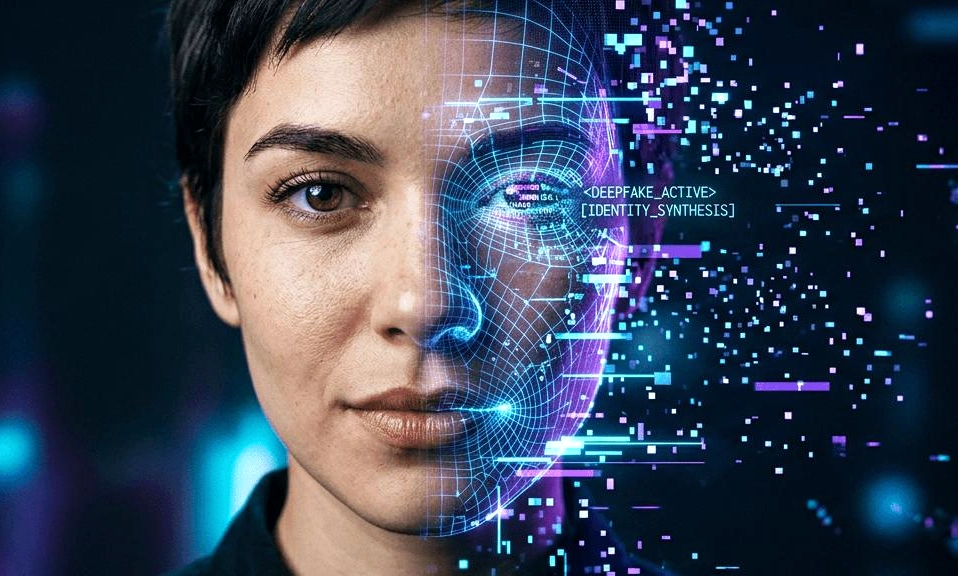
Remember when spotting a deepfake was easy? Back in 2023, you just looked for a person with seven fingers, a melting background, or eyes that pointed in two different directions.
Welcome to 2026. Those amateur mistakes are gone.
Today’s generative AI models can create photorealistic images, real-time interactive video deepfakes, and flawless voice clones in seconds. The technology has advanced so rapidly that the old adage “seeing is believing” is officially dead. We have entered the era where seeing, hearing, and watching are no longer enough.
But while AI has gotten incredibly good at fooling us, it still hasn’t achieved absolute perfection. The physics of the real world and the chaotic nature of human biology still leave microscopic fingerprints behind.
Here are 10 advanced ways to spot AI-generated images, videos, and audio in 2026.
🖼️ Spotting Fake Images
1. The “Plastic Skin” and Micro-Texture Test
AI models are great at generating a beautiful face, but they struggle with the messy, imperfect micro-textures of real human skin. Look closely at the subject’s face. Does the skin look slightly too smooth, airbrushed, or waxy? Real skin has pores, peach fuzz, subtle asymmetrical wrinkles, and tiny blemishes. If the skin looks like polished plastic or a high-end video game render, it’s likely AI.
2. The Lighting and Shadow Physics Check
This is where AI still frequently trips up. Look at the light sources in the image. If the sun is coming from the top left, are the shadows falling consistently to the bottom right? More importantly, check the reflections in the eyes. In a real photo, the subject’s eyes will reflect the actual environment around them. In AI images, the reflections in the left and right eyes often mismatch, or they reflect a generic, blurry light source that doesn’t match the room.
3. The Background “Melting” and Geometry Trap
AI models focus almost all their computing power on the main subject (the person). The background is often an afterthought. Zoom in on the edges of the frame. Look for warped geometry, nonsensical architecture, or objects that don’t make logical sense (like a chair with three legs, or a street sign with alien, gibberish text). If the camera angle is dynamic, check if the background objects maintain their structural integrity or if they seem to “melt” and morph.
4. Complex Object Interaction (The “Thin Object” Rule)
AI has largely fixed the “extra fingers” problem, but it still fails at how hands interact with complex, thin objects. Look closely at how the subject is holding a pen, a pair of glasses, or a thin strap. Are the fingers wrapping around it with correct physical overlap? Is the object casting a shadow on the hand, and is the hand casting a shadow on the object? AI often struggles with the precise physics of thin objects resting against skin.
🎥 Spotting Fake Videos
5. The Micro-Expression and “Dead Eye” Analysis
Real human faces are constantly moving in tiny, asymmetrical ways. We have micro-expressions—a slight twitch of the lip, a subtle crinkle of the nose, a fleeting shift in the eyebrows. AI-generated faces, especially in real-time deepfakes, often suffer from “dead eye” syndrome. The face is too perfectly symmetrical, the blinking is too rhythmic, and the micro-muscle movements around the mouth and eyes are unnervingly still.
6. The Hair and Edge Blending Glitch
Watch the edges of the subject, particularly where their hair meets the background, or where their body meets a complex backdrop (like a chain-link fence or a dense forest). AI video models struggle to maintain temporal consistency at these edges. You might see the hair “shimmer,” briefly merge with the background, or look like a solid, unmoving helmet rather than individual, moving strands.
7. The Lip-Sync and Consonant Stutter
Even in 2026, high-speed speech is a vulnerability for video deepfakes. Pay close attention to the lips when the subject is speaking quickly or using complex consonant sounds (like “P,” “B,” “M,” or “F”). Look for micro-stutters, where the lips don’t quite close fast enough to match the audio, or a slight blurring around the mouth area as the AI struggles to render the rapid physical changes in real-time.
🎙️ Spotting Fake Audio
8. The “Breath” and Pause Test
This is the ultimate tell for AI voice clones. Human beings need to breathe. We pause, we inhale, we swallow. AI voice generators, unless specifically prompted to add breathing sounds, will often generate a continuous, unbroken stream of speech that a human lung capacity simply couldn’t sustain. Listen closely for the absence of natural inhales, or for pauses that happen in the middle of words rather than at natural punctuation points.
9. Emotional “Prosody” and Vocal Cracks
AI can perfectly mimic the words of a crying person, or the words of someone who is furious. But it struggles with “prosody”—the chaotic, emotional rhythm, pitch, and melody of genuine human speech. If the audio is supposed to be someone in extreme distress, listen for the subtle vocal cracks, the sudden shifts in pitch, and the messy, unpolished reality of human emotion. AI audio often sounds like a very good actor reading a script about being sad, rather than actually being sad.
10. Background Noise Consistency
Real audio exists in a physical space. If a person is speaking in a kitchen, you should hear the subtle, consistent hum of the refrigerator, the echo of the room, or the faint sound of traffic outside. AI voice clones are often generated in a “vacuum.” Listen for a jarring disconnect between the crisp, isolated voice and the background noise. Does the voice sound like it’s actually in the same acoustic environment as the ambient sound, or does it sound like it was recorded in a professional studio and pasted over a background track?
🛡️ The Ultimate 2026 Defense: Content Credentials
Beyond using your own eyes and ears, the tech industry has rolled out a powerful new tool: Content Credentials (C2PA).
Major camera manufacturers, software companies (like Adobe and Microsoft), and social media platforms have adopted this universal standard for digital provenance. If an image or video is authentic, it carries a secure, tamper-evident digital signature (often visible as a small “CR” icon or a “Verified” badge on social platforms).
If you see a highly sensational image from a major news event and it lacks these content credentials, treat it with extreme suspicion. The absence of a digital signature is just as telling as the presence of a fake one.
Healthy Skepticism is Your Best Tool
The goal of AI isn’t necessarily to trick you; it’s to generate content. But malicious actors will always use the best tools available to spread misinformation, commit fraud, and manipulate public opinion.
You don’t need to be a cybersecurity expert to spot a deepfake. You just need to slow down. When you see an image, watch a video, or listen to an audio clip that triggers a strong emotional reaction—outrage, shock, or fear—pause.
Look at the lighting. Listen for the breath. Check the source.
In 2026, the most powerful antivirus software you have against AI manipulation isn’t an app on your phone. It’s your own critical thinking.