Some stories never really leave us. They wait, quietly, in the corners of childhood memory, until someone with the right combination of reverence and imagination brings them back into the light. Enid Blyton’s The Magic Faraway Tree is one of those stories. First published in 1939 as The Enchanted Wood, it has been passed down through generations of readers who dreamed of Moonface’s curved room, the Slippery Slip, and the ever-changing lands at the top of the tree.
In 2026, that dream has been made real. Ben Gregor’s film adaptation has become a genuine phenomenon—a family adventure that has won over critics, charmed audiences, and sparked plans for two sequels before it has even finished its global rollout. But why has this 87-year-old story resonated so powerfully now? The answer lies in what the filmmakers chose to keep, what they chose to change, and the simple, radical idea at its heart: that children need magic, and magic needs trees.
The Story: A Modern Family, an Ancient Tree
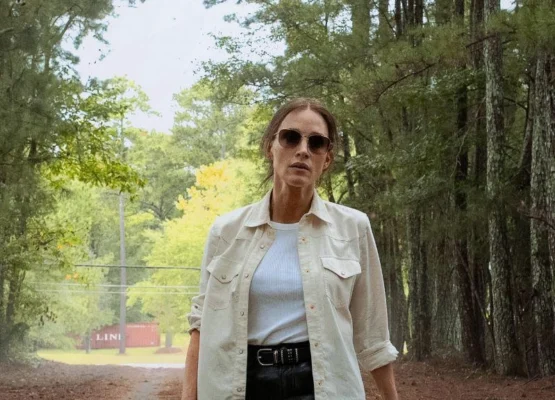
The film follows Polly (Claire Foy) and Tim (Andrew Garfield), a modern couple forced to relocate from the city to the remote English countryside after Polly quits her job as an electronic engineer. Her reason is pointed: she refuses to continue working on a smart fridge that secretly gathers data on its owners. It is a small detail that signals the film’s larger theme—a rejection of the tech-saturated world in favor of something older, stranger, and more alive.
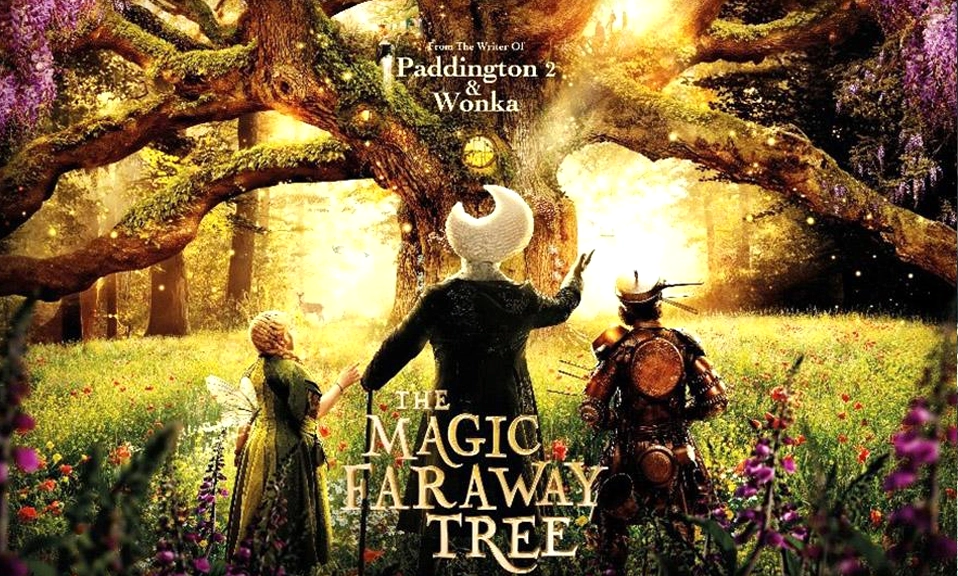
Their three children—Beth, Joe, and Fran—are initially resistant. Beth and Joe are addicted to their screens; Fran is the quiet dreamer who rarely speaks. When Fran discovers the Enchanted Wood and the magical tree within it, everything changes. The tree is home to an extraordinary cast of residents: Moonface (Nonso Anozie), Silky the fairy (Nicola Coughlan), Dame Washalot (Jessica Gunning), and the Saucepan Man (Dustin Demri-Burns). At the top of the tree, new lands appear with every visit—the Land of Goodies, the Land of Secrets, and more—each offering adventure, danger, and a lesson the family desperately needs.
The Cast: A Murderers’ Row of British Talent
What elevates The Magic Faraway Tree above the standard family-film template is the sheer quality of its ensemble. Andrew Garfield and Claire Foy, reuniting nearly a decade after Breathe, bring a warmth and wit to Tim and Polly that grounds the fantasy in genuine parental love and mild exasperation. The Hollywood Reporter noted that Garfield “really gravitated” to the project, drawn to its message of reconnection.
Around them, the supporting cast is a who’s-who of British screen talent. Nicola Coughlan is “delightful” as Silky, the wingless fairy. Rebecca Ferguson, fresh from Silo, is clearly having a blast as the haughty Dame Snap, a villain who sings “Teddy Bear’s Picnic” with unmistakable glee. Jennifer Saunders appears as a grandmother determined to drag the family back to the city. And Nonso Anozie brings a gentle solidity to Moonface, even if his interpretation departs from some readers’ mental image.
The Creative Team: Paddington’s Secret Weapon
The film’s screenwriter is Simon Farnaby, the man behind Paddington 2—arguably the most beloved family film of the last decade. That pedigree matters enormously. Farnaby has a gift for taking a classic property and making it feel both faithful and urgently contemporary, without ever tipping into cynicism or cheap nostalgia. Director Ben Gregor (of Brassic and Fatherhood) explained the approach: “Simon made it really relevant. He made it about kids of today, but with all the values and excitement of the adventures of Enid Blyton. He brought the two worlds together in this amazing, tender, warm, funny way”.
The production design reflects that same philosophy. Gregor deliberately avoided relying on green screens and CGI wherever possible. The Land of Goodies, for instance, was built as an edible set—”The kids came and just ate it,” Gregor recalled. “I really wanted them to do this in the old school way of making films where things are really there and things they can see, feel and touch”. That tactile, practical approach gives the film a texture and charm that digital effects often lack, and it signals a respect for the audience that is rare in modern family entertainment.
The Box Office and the Sequels: A Franchise Is Born
The Magic Faraway Tree was released in the UK and several international markets in March 2026, where it opened to $3.7 million and quickly became a word-of-mouth hit. It holds a 91% critic score on Rotten Tomatoes. Its US release followed on August 21, 2026, distributed by Vertical.
The success has been sufficient to greenlight two sequels, with producers Pippa Harris and Danny Perkins comparing the franchise’s potential to Paddington. “If you can crack the family audience with a single film,” Harris said, “then there’s no reason why you wouldn’t keep coming back and take the IP elsewhere”. Perkins noted that the groundwork—the visual style of the world, the character designs—has already been laid, and that the source material provides endless material: “there are new lands to discover every time you go to the tree”. Garfield himself reportedly told the producers, “Wouldn’t this be great if this was every summer?”.
Why This Story Matters Now
The Magic Faraway Tree is not a slavish adaptation. The Hindu described it as “very much a spiritual reimagining of the series,” one that departs from the books in details but captures their “gentle humour, vivid imagination and a quiet wonder”. The changes—the smart fridge, the screen-addicted children, the environmental subtext—are not concessions to modernity. They are the point. As Foy put it, “I think it needs to be reinvented, these stories—sometimes because they exist in a world that we no longer live in. To bring them up to date and to allow a larger audience in is really important”.
What makes the film resonate is not nostalgia alone. It is the sincerity of its argument: that children are spending too much time looking at screens, that families are disconnected, and that the cure is not a lecture but an adventure—a tree to climb, a world to explore, a silly, magical, slightly dangerous place where the only way to get down is the Slippery Slip. Gregor summed it up simply: “It’s not a preachy thing, but it does say go outside and climb a tree and have some fun. Get off the screens”.
The story of The Magic Faraway Tree has been bringing joy to children for nearly a century. In 2026, it is doing so again, on a bigger canvas, with a cast that clearly loves what they are making and a creative team that understands why it matters. The tree is back in bloom. And if the sequels deliver on their promise, this may not be the last time we climb it.