What Would Happen If Iran Collapses? A Look at the Global Impact
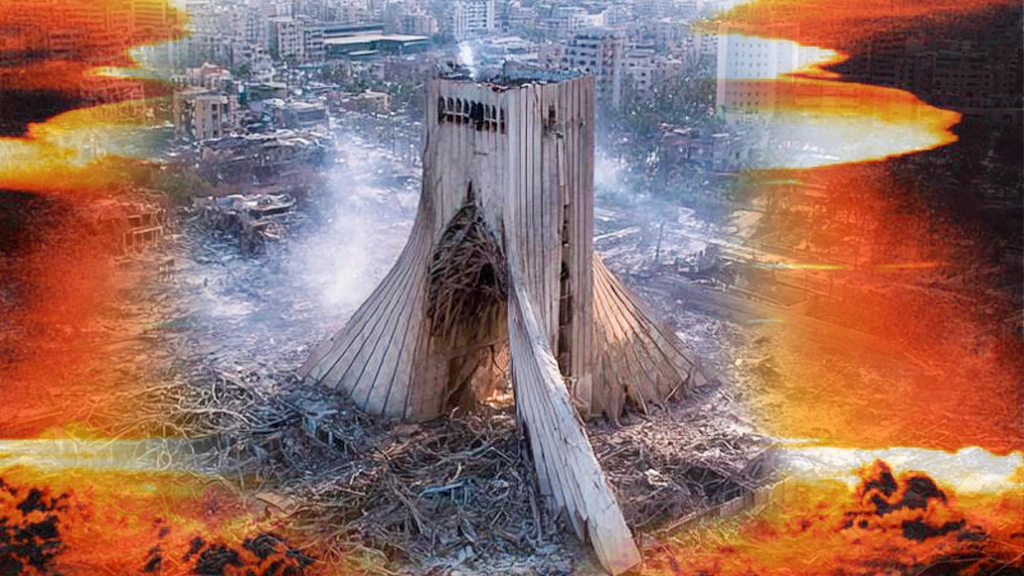
The collapse of Iran would not just be a regional event — it would reshape the Middle East, global energy markets, security systems, and international politics. Iran is one of the most influential nations in the world, and any sudden breakdown of its government would send shockwaves far beyond its borders.
But what does “collapse” actually mean? And what could realistically happen next?
Let’s break it down.
What Does “Collapse” Mean?
A collapse does not always mean total destruction or disappearance. It could mean:
The fall of Iran’s current government
A civil uprising leading to regime change
Military fragmentation
Widespread instability and loss of central control
Any of these scenarios would deeply disrupt Iran’s political, economic, and social systems.
1. Massive Political Chaos Inside Iran
Iran is a highly diverse country, made up of many ethnic and regional groups including:
Persians
Azeris
Kurds
Arabs
Baluchis
If the central government falls, long-suppressed tensions could explode. This may lead to:
Civil war
Ethnic separatist movements
Regional breakaway attempts
Violent power struggles
This would likely resemble what happened in Iraq, Libya, and Syria, but on a much larger scale due to Iran’s size and population (over 85 million people).
2. Middle East Power Balance Would Collapse
Iran plays a major role in Middle Eastern politics, supporting powerful regional groups and governments.
If Iran collapses:
Hezbollah in Lebanon would weaken
Militias in Iraq and Syria would fragment
Hamas and other groups would lose a major backer
Israel and Gulf countries would face unpredictable security threats
Instead of peace, power vacuums often create more instability, not less.
3. Global Energy Markets Would Be Shaken
Iran controls access to the Strait of Hormuz, one of the world’s most critical oil shipping routes. About 20% of global oil flows through this passage.
If Iran collapses:
Oil prices could skyrocket
Fuel shortages may occur
Shipping lanes could become unsafe
Global inflation would likely rise
Even a short disruption could affect every country on Earth.
4. Refugee Crisis on an Unprecedented Scale
A collapsing Iran would create one of the largest refugee waves in modern history.
Millions could flee toward:
Turkey
Iraq
Afghanistan
Europe
This would overwhelm humanitarian systems and create major political tensions worldwide.
5. Nuclear and Terrorism Risks Increase
Iran has advanced nuclear infrastructure. If state control weakens:
Nuclear materials could be compromised
Terror groups could exploit the chaos
Extremist networks could grow
This creates a global security nightmare, similar to but far larger than post-war Iraq.
6. Global Superpower Tensions Would Rise
The United States, China, and Russia all have strategic interests in Iran.
If Iran collapses:
The U.S. might seek to stabilize the region
China would attempt to secure energy access
Russia could move to protect its regional influence
This could spark dangerous geopolitical competition, increasing the risk of broader conflict.
Would Iran’s Collapse Bring Freedom or Chaos?
Many people assume collapse equals freedom. History shows otherwise.
Examples like Libya, Iraq, Syria, and Afghanistan prove that destroying a regime does not guarantee peace, stability, or democracy. Often, it leads to:
Lawlessness
Armed militias
Corruption
Human suffering
Real transformation requires gradual reform, strong institutions, and national unity, not sudden collapse.
And A Collapse No One Can Win From
If Iran collapses, there would be no clear winners — only massive uncertainty, suffering, and global instability.
The consequences would affect:
Middle Eastern peace
Global oil prices
International security
Refugee movements
World politics
This is why many global powers — even those critical of Iran — fear total collapse more than continued tension.
Sometimes, stability — even imperfect — is safer than total breakdown.