Could These SUVs Suddenly Lose Power While Driving?
Yes. That is exactly the risk Toyota is trying to eliminate.
On October 7, 2026, Toyota issued a safety recall covering approximately 31,000 model-year 2026 RAV4 Plug-in Hybrid vehicles in the United States, with additional recalls filed in Canada, Japan, New Zealand, and across Europe. The defect: a software fault in the Motor Generator Electronic Control Unit (MG-ECU) that can cause the plug-in hybrid system to shut down entirely while the vehicle is in motion.
The recall number is 26TA22. And the consequence, according to Toyota’s own remedy notice, is a “loss of motive power while driving at higher speeds,” which “increase[s] the risk of a crash”.
What Is Actually Wrong?
The problem is not a failing part. It is a software logic error.
Toyota’s engineers determined that the MG-ECU’s program was not designed correctly for a specific sequence that occurs during vehicle startup. If the motor’s initial learning routine fails to complete when the vehicle is started, the ECU will not correctly control motor output during driving. The system may then detect the anomaly — and when it does, it shuts the entire plug-in hybrid system down as a protective measure.
The result: the dashboard lights up with a “Hybrid System Malfunction” warning, and the vehicle loses propulsion. In the worst case, it stops entirely.
Why This Is Genuinely Dangerous
The recall notice is specific: the failure mode is most dangerous “while driving at higher speeds”. That is not a hypothetical concern.
A sudden, total loss of power at highway speed is not like running out of fuel. There is no sputter, no gradual decline. The vehicle simply stops responding to the accelerator. Power steering assistance may be affected. Braking assistance may be affected. The driver is left with a rapidly decelerating vehicle and whatever momentum remains — in the middle of traffic, at speed.
That is why Toyota classified this as a safety recall and why the remedy is being offered free of charge.
Which Vehicles Are Affected?
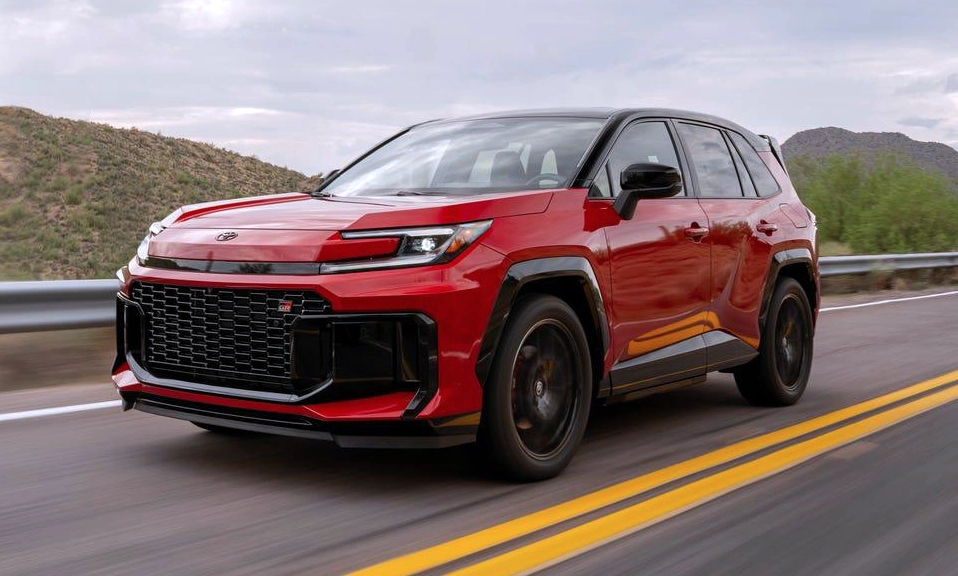
The recall applies to certain 2026 model year RAV4 Plug-in Hybrid (PHEV) vehicles. The production window is narrow. In Japan, the affected vehicles were built between February 4 and September 4, 2026. A forum member in the United States noted that their vehicle — built in March 2026 — was included, while another built later was not.
Toyota is notifying all known owners directly. The notification process began in early October, and Toyota has stated that owners will be notified by early December 2026. Owners can also check their Vehicle Identification Number (VIN) through Toyota’s recall lookup website or the Toyota app, which has already pushed notifications to some affected owners.
The Fix: A Free Software Update
The remedy is straightforward. Toyota dealers will reprogram the Motor Generator ECU with corrected software. The update is free of charge.
There is no hardware replacement. No parts need to be ordered. The entire procedure is a software flash, which typically takes less than an hour. Toyota has confirmed that the remedy is already available at dealerships.
What You Should Do Right Now
If you own a 2026 RAV4 Plug-in Hybrid:
Check your VIN immediately. Go to Toyota’s recall lookup page or open the Toyota app. If your vehicle is included, schedule a service appointment with your dealer as soon as possible.
Do not wait for the notification letter. The letters are being sent, but some owners have already received app alerts and VIN confirmations before the mail arrives. If your vehicle is affected, the fix is ready now.
Be aware of the warning signs. If you experience a hybrid system malfunction warning or any unexpected loss of power, pull over safely and contact your dealer immediately. The ECU update is designed to prevent the failure, not to repair a failure that has already occurred.
Keep driving if you must, but with awareness. The statistical likelihood of the failure occurring on any given drive is low. But the severity of the consequence — a total power loss at speed — justifies prioritizing the appointment.
The recall covers roughly 31,000 vehicles in the U.S. alone, with additional campaigns in Japan (5,307 vehicles), New Zealand (2,479 vehicles), Canada, and several European countries. If you own one of them, the question is not whether the risk is real. It is whether you want to be driving it when the software decides to shut down.