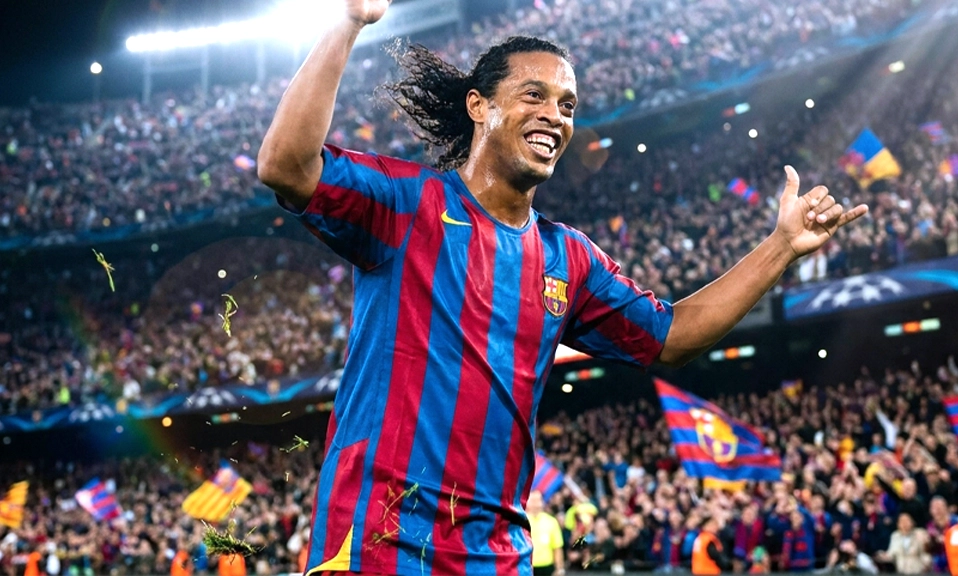
Ask any football fan to close their eyes and picture the “beautiful game,” and their mind will likely drift back to the 2000s.
It was an era of raw, unfiltered magic. Zinedine Zidane’s volley in Glasgow (2002). Ronaldinho’s standing ovation at the Bernabéu (2005). The early, electrifying clashes between a teenage Lionel Messi and a muscular, relentless Cristiano Ronaldo. It was a time of classic number 10s, flying wingers, and a certain chaotic romance that made every matchday feel like an event.
But fast forward to today. The game is faster, the athletes are stronger, and the tactics are so complex they require a PhD to fully decode.
So, the ultimate question arises: Is modern football actually better than the football of the2000s?
The answer depends entirely on whether you value objective quality or subjective romance. Let’s break down the evolution of the sport across five key battlegrounds.
🧠 1. Tactics: The Death of the “Maverick” vs. The Rise of the System
The 2000s: This was the golden age of individual brilliance. Teams were often built around a singular, magical playmaker (Riquelme, Zidane, Rui Costa, early Kaká) who was given the freedom to roam and create. Defenses were more rigid, but the spaces between the lines were larger, allowing geniuses to exploit them with a drop of the shoulder and a burst of pace.
Modern Football: The classic “number 10” is practically extinct. Today’s game is dominated by systemic perfection. Pep Guardiola’s positional play, Jürgen Klopp’s Gegenpressing, and the rise of the “inverted fullback” mean that all 11 players must function as a single, hyper-coordinated organism.
The Verdict: Modern football is tactically superior. The level of collective intelligence, spatial awareness, and coordinated pressing is lightyears ahead. However, we have sacrificed some of the unpredictable, “street-football” flair that made the 2000s so wildly entertaining.
🏃♂️ 2. Athleticism and Pace: Humans vs. Machines
The 2000s: Players were fit, but many legendary figures (think of a prime Francesco Totti or Andrea Pirlo) relied almost entirely on their brain and technique, covering minimal distance per game.
Modern Football: Sports science, nutrition, and GPS tracking have turned footballers into absolute physical specimens. The average distance covered by a midfielder today is significantly higher than it was 20 years ago. The game is played at a blistering, breathless pace. A modern fullback is expected to have the stamina of a marathon runner, the defensive awareness of a center-back, and the crossing ability of a winger.
The Verdict: Modern football is undeniably faster and more athletic. The physical demands of the modern game mean that a top-tier 2000s team would likely be run off the pitch by a top-tier 2026 team within 20 minutes.
⚖️ 3. Fairness vs. Flow: The VAR Dilemma
The 2000s: The game was governed by the fallible human eye. This led to iconic moments of injustice (think Thierry Henry’s handball against Ireland, or Frank Lampard’s disallowed “ghost goal” in 2010), but it also meant that the spontaneous, unbridled joy of a last-minute goal celebration was never interrupted by a two-minute referee review.
Modern Football: VAR (Video Assistant Referee) and semi-automated offside technology have eradicated the most blatant, game-changing errors. The game is fundamentally fairer.
The Verdict: It’s a tie, leaning toward frustration. While we have gained fairness, we have lost the immediate, visceral emotion of the game. The modern fan’s instinct when their team scores is no longer to celebrate, but to look at the referee and wait for the VAR check. The “flow” of the 2000s has been replaced by sterile, forensic analysis.
🥊 4. Physicality and the “Dark Arts”
The 2000s: The midfield battles were gladiatorial. Roy Keane, Gennaro Gattuso, and Patrick Vieira engaged in literal, thumping warfare. Tactical fouls were often brutal, and referees were much more lenient, letting the game “flow” even after heavy challenges.
Modern Football: The game is much more protected. Referees are quicker to brandish yellow and red cards for dangerous tackles, protecting the star players (like Neymar, Vinícius Jr., or Messi) who are the financial lifeblood of the sport. However, the “dark arts” haven’t disappeared; they’ve just become more subtle. Instead of a flying two-footed tackle, modern players use cynical shirt-pulls, body-blocking, and time-wasting to break up play.
The Verdict: Modern football is safer and more skillful because players aren’t constantly being hacked down. But many fans miss the raw, gladiatorial edge of a 2000s midfield battle.
🌍 5. The Globalization and Financial Chasm
The 2000s: The Premier League, La Liga, and Serie A were the undisputed centers of the universe, but there was more parity. Teams like Porto (2004) or Monaco (2004) could reach the Champions League final.
Modern Football: The financial gap has become a canyon. The richest clubs (backed by state ownership or massive commercial empires) can hoard the best talent, making domestic leagues increasingly predictable. However, the global talent pool is deeper than ever. The tactical sophistication of teams in the Netherlands, Portugal, and even the MLS has risen dramatically, meaning the “gap” in pure footballing knowledge has closed, even if the financial gap has widened.
The Verdict: The 2000s had more romantic underdog stories in Europe’s elite competition, even if the overall global standard of play was lower.
We Traded Magic for Mastery
So, is modern football better?
Objectively, yes. The technical skill, tactical intelligence, athletic conditioning, and overall speed of the modern game are higher than they have ever been in human history. If you put the 2003 AC Milan team against the 2023 Manchester City team, the modern team’s pressing and physicality would likely overwhelm the classics.
Subjectively, however, the 2000s had a soul.
Modern football can sometimes feel sterile, over-coached, and overly focused on risk-aversion. The 2000s were messy, flawed, and unpredictable, but they were filled with a type of individual, maverick brilliance that is systematically coached out of players today.
We have gained a masterpiece of tactical engineering. But in the process, we may have lost a little bit of the magic.