What a New Study Discovered
For decades, the Mediterranean diet has been celebrated for its physical benefits—a shield against heart disease, diabetes, and cognitive decline. But a new study suggests it may offer something even more profound for people over 50: a genuine boost to psychological well-being, the kind that shapes not just how long you live, but how good those years actually feel.
The research, published in BMJ Open and led by researchers from University College London and the Barcelona Institute for Global Health (ISGlobal), found that older adults who more closely followed a Mediterranean-style eating pattern reported significantly higher levels of psychological well-being—a measure that goes far beyond the absence of depression. It encompasses autonomy, purpose, enjoyment of life, energy levels, and optimism about the future.
Perhaps most striking, the study tracked participants through the early months of the COVID-19 pandemic. While well-being declined across the board during that period of collective stress, the decline was smaller among those who had been eating a more Mediterranean-style diet—suggesting a protective effect that extended into one of the most mentally taxing periods in modern history.
The Study: What They Measured and How
Researchers analyzed data from 3,296 adults aged 50 to 90 who were participating in the English Longitudinal Study of Ageing (ELSA). Dietary habits were assessed between 2018 and 2019, before the pandemic, using detailed food diaries. Psychological well-being was measured using a validated quality-of-life questionnaire on two occasions: once before the pandemic, and again during its early months in 2020.
The researchers used the relative Mediterranean Diet Index (rMED) to score how closely participants adhered to the diet. Points were awarded for consumption of fruit, vegetables, legumes, whole grains, fish, olive oil, and moderate alcohol, while points were deducted for high intake of meat and dairy.
Crucially, the analysis controlled for a wide range of factors that could skew the results: income, education, physical activity, smoking, chronic disease, and even symptoms of depression. The association between the Mediterranean diet and better psychological well-being held true across the board.
The Key Finding: Diet and Well-Being Are Linked
The headline result was clear: greater adherence to a Mediterranean diet was positively associated with higher psychological well-being among older adults in England.
This wasn’t about feeling less depressed. It was about feeling more alive. The well-being measure captured things like:
Autonomy: Feeling in control of your life
Purpose: Feeling that what you do matters
Enjoyment: Taking pleasure in daily activities
Energy: Having the vitality to do what you want
Optimism: Feeling positive about the future
Those who ate more Mediterranean-style reported higher scores across all these dimensions, independent of their socioeconomic status or whether they showed signs of depression.
Why This Matters for People Over 50
The findings are particularly relevant for older adults, who face unique challenges to mental health. Retirement can bring a loss of structure and purpose. Social circles may shrink. Physical limitations can reduce independence. The risk of isolation and depression rises with age.
The Mediterranean diet, the study suggests, may offer a modifiable, accessible tool for protecting mental well-being during this stage of life. Unlike expensive therapies or complex interventions, it’s something people can incorporate into their daily routines—a way of eating that supports both body and mind.
“Although many questions remain open, there is no doubt about the need to promote healthy lifestyles, prioritising a balanced diet rich in plant-based foods and low in foods such as processed meats and sweets, particularly among older adults,” said Andrew Steptoe, a researcher at University College London and first author of the study.
The Mechanisms: How Food Shapes Mood
The study is observational, meaning it can’t prove that the Mediterranean diet causes better mental health. But the researchers point to several plausible biological pathways that could explain the connection.
“The evidence suggests that its foundational foods and components help regulate key processes such as stress responses, inflammation, gut health and brain function,” said Camille Lassale, ISGlobal researcher and senior author of the study.
The Mediterranean diet is rich in:
Omega-3 fatty acids from fish, which support brain cell function and reduce inflammation
Fiber from vegetables, fruits, and legumes, which feeds beneficial gut bacteria
Polyphenols from olive oil, nuts, and berries, which act as antioxidants
B vitamins and minerals that support neurotransmitter production
These components work together to reduce chronic inflammation—a known contributor to depression—and to support the gut-brain axis, the communication network between the digestive system and the brain that plays a growing role in mental health research.
A separate 2026 study from the Moli-sani cohort in Italy reinforced these findings, showing that long-term increases in Mediterranean diet adherence combined with reductions in ultra-processed food consumption were associated with meaningful reductions in depressive symptoms over a median follow-up of nearly 13 years. The message: it’s not just what you add to your plate, but what you remove.
The Pandemic Stress Test
The timing of the study gave researchers an unexpected natural experiment. When COVID-19 lockdowns began in early 2020, participants’ well-being was measured again. As expected, mental health declined across the entire cohort.
But the decline was less severe among those who had been eating more Mediterranean-style before the pandemic. This suggests that the diet didn’t just correlate with better mental health in calm times—it may have provided a buffer against acute stress.
“The questionnaires administered during the pandemic allowed us to follow participants over time, which is a major strength of the study,” Lassale said.
What This Means for Your Plate
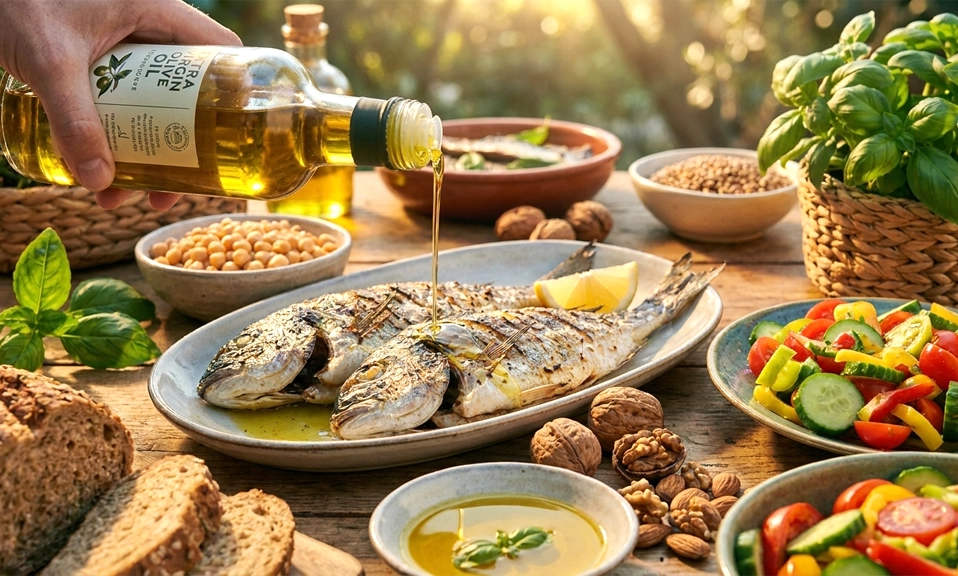
If you’re over 50 and looking for a way to support your mental well-being, the Mediterranean diet offers a compelling, evidence-backed option. It’s not a restrictive regimen or a complicated protocol. It’s a pattern of eating that prioritizes:
Vegetables and fruits at every meal
Whole grains instead of refined carbohydrates
Legumes and nuts as regular protein sources
Fish and seafood several times a week
Olive oil as the primary fat
Herbs and spices for flavor instead of salt
Moderate portions of dairy and red meat
Minimal ultra-processed foods
And it’s never too late to start. The Moli-sani study showed that people who increased their adherence to the Mediterranean diet over time experienced reductions in depressive symptoms—meaning change is possible at any age.
The Limitations: What the Study Can’t Tell Us
The study’s authors are careful to note its limitations. It’s observational, so causality can’t be established—it’s possible that people who feel better mentally are simply more likely to cook and eat well. The sample was predominantly older and white, so the results may not generalize to other populations. And during the pandemic, dietary data had to be collected online, resulting in only about 50% of participants responding.
Still, the findings add to a growing body of evidence that diet and mental health are deeply connected, and that the Mediterranean pattern may be one of the most accessible, sustainable ways to support both.
The Mediterranean diet isn’t
a magic bullet. It won’t cure depression, erase grief, or solve the structural problems that make aging difficult. But for people over 50, it offers something rare: a simple, enjoyable, and scientifically supported way to protect not just your body, but your sense of purpose, joy, and resilience.
As the study’s authors put it, the benefits for well-being appear to be independent of depressive symptoms—meaning the diet may help people feel genuinely better, not just less bad.
In a world that often treats aging as a slow decline, that’s a finding worth savoring—perhaps with a drizzle of olive oil.