What This Means for Gamers Who Love Collecting Games
On July 1, 2026, Sony made it official: physical disc production for all new PlayStation games will end in January 2028. For collectors, preservationists, and anyone who has ever loved the ritual of opening a new game case, this is the moment the music stopped.
The Announcement: A Quiet End to a 30-Year Era
The news came not with a dramatic press conference, but with a blog post. On the PlayStation Blog, Sony announced that “physical game disc production for all new games releasing on PlayStation consoles will be discontinued starting January 2028”. After that date, new games will be available only through the PlayStation Store and at retailers in digital formats.
The company framed the decision as a natural evolution. “As consumer preferences and the broader entertainment industry continue to shift away from physical discs to digital,” the blog post read, “this transition will enable us to align more closely with how most of our community prefers to access and play games today”.
Crucially, Sony clarified that the decision has “no impact on games that already released, or will be releasing, prior to January 2028 in disc format”. Publishers can continue reordering existing disc-based games even after new physical production formally ceases. But for new titles, the disc is dead.
The announcement was accompanied by another piece of news: Sony is closing the PlayStation Store on PS3 and PS Vita globally by July 2027. Together, the two decisions paint a clear picture of a company moving decisively into an all-digital future.
The Backlash: “We Are Profoundly Disappointed”
The response from the industry was immediate and furious.
iam8bit, the collectibles publisher behind physical editions for Blizzard, Capcom, and Annapurna Interactive, called the decision “profoundly disappointing,” stating that “physical games are vital to games preservation, ownership, and consumer choice”. “Long live physical media,” the company signed off.
Atari reaffirmed its commitment to physical releases, saying it remains “committed to game preservation and creating products for fans for whom collecting physical editions is an important part of their gaming experience”.
GameFly, the disc-rental service, said it was “disappointed” and reminded everyone it’s “run by people who believe physical products still matter”.
Frank Cifaldi, executive director of the Video Game History Foundation, called it “unfortunate news for those who still prefer buying games on physical media, and is certainly a significant hit to consumer rights, the resale market, and game creators whose businesses rely on the physical market”.
And Shawn Layden, the former chairman of Sony Interactive Entertainment, was perhaps the most pointed. Speaking on The Expansion Pass podcast, Layden said he doesn’t agree with the decision. “If you can’t sell a thing, that means you don’t own a thing,” he said. “And if you don’t own it, then what are you buying? If you’re buying access, that doesn’t quite sound as sexy, to be honest”.
The Fan Uprising: 127,000 Signatures and Counting
The backlash wasn’t confined to industry insiders. Within days of the announcement, a Change.org petition titled “Don’t Kill the Disc: Tell Sony to Keep Physical PlayStation Games” had gathered more than 120,000 signatures. By the following Monday, it had climbed past 127,000.
The petition’s argument was simple: fans are not necessarily against digital games, but they do not want digital to become the only option. Physical games allow players to lend, trade, resell, gift, collect, and preserve the games they buy. A boxed download code is not the same thing as owning a disc.
“A disc works without servers,” one analysis noted. “A digital license exists only as long as the storefront decides it does”.
The timing of the announcement made the reaction louder. On the same day Sony announced the end of new physical discs, it also revealed that the PlayStation Store on PS3 would begin closing in select markets, with broader PS3 and PS Vita store closures coming globally in July 2027. Sony said players will still be able to download previously purchased content “for the foreseeable future” — but as the petition’s supporters pointed out, “for the foreseeable future” is not the same as forever.
What It Means for Collectors: A Countdown to the Last Disc
For collectors, the announcement is a countdown clock.
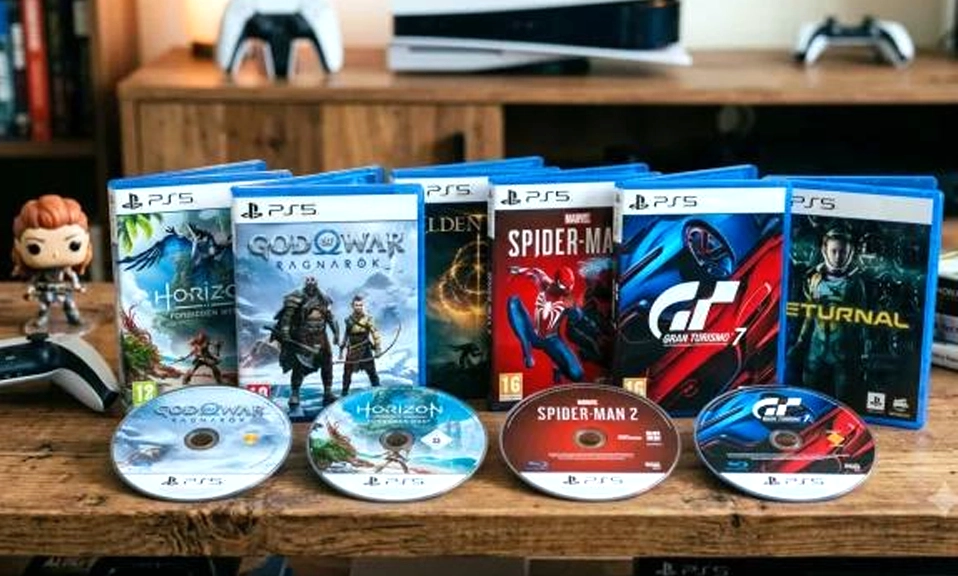
The good news: Every game released on disc before January 2028 will still work. Those discs will play on existing hardware, and publishers can continue to reprint them on request. Your existing collection is safe. Physical games released between now and 2028 will be the last new physical PlayStation games ever made.
The bad news: The second-hand market is about to change. Cody Spencer, co-owner of the retail chain Pink Gorilla Games, told The Verge that he expects to see “increased prices for the physical titles printed before 2028 and a niche but strong demand for our products” in five to 10 years. In other words, the games you own now could become significantly more valuable — but the games you don’t own may become harder and more expensive to find.
Spencer put it bluntly: “It’s sad to see. This decision is only a negative for gamers. We’re losing the ability to sell games, to share games, and to own games”.
The long-term outlook is even more sobering. As physical games become a niche curiosity, Spencer fears “the very idea of physical video games will be foreign and more seen as a novelty, which will not be good for us at all. Our type of store may be seen more like a record store. A place for largely the most” — and here the thought trails off, but the implication is clear. Record stores survived. But they became a niche, not a norm.
The Preservation Problem: What Happens When the Servers Go Dark?
For game preservationists, the announcement is a mixed bag.
Frank Cifaldi of the Video Game History Foundation noted that for professional preservationists, the impact “doesn’t have as much of an impact as you might expect”. The VGHF has been preparing for a digital future for years, archiving games in ways that don’t rely on consumer hardware.
But the broader concern remains. When a game is digital-only, it exists only as long as the platform decides it does. Games get delisted. Servers shut down. Storefronts close. Accounts get locked, banned, or lost. A disc, by contrast, works without servers. It doesn’t need a license check. It doesn’t depend on a company’s continued goodwill.
The closure of the PS3 and PS Vita stores by July 2027 is a preview of what’s to come. Players who bought digital games on those platforms will still be able to download them “for the foreseeable future” — but that phrase is exactly what worries preservation advocates.
What Comes Next: The All-Digital PlayStation
The end of new physical disc production has an obvious implication: the PlayStation 6 will almost certainly be a digital-only console — or close to it.
“If no new discs ship after January 2028, the PS6 is almost certainly a digital-only machine — or close to it,” The Verge noted. Microsoft’s rumored Project Helix is reportedly heading in the same direction.
Sony has already begun repurposing its last physical disc factory. Workers at the Austrian plant are being retrained to manufacture optical microlenses for power-consumption applications. The machinery that once pressed millions of PlayStation discs is being converted to make something else entirely.
Sony has also begun attaching warning stickers to PS5 console boxes, stating that new PlayStation games will be sold only in digital format from January 2028, and that discs released before that date can continue to be played on the console. The message is unmistakable: the era of cracking open a new PlayStation case is winding down.
What Are You Actually Buying?
The shift to digital has been underway for years. In its last fiscal year, Capcom reported that 93 percent of its game sales were digital. Sony’s decision is less a sudden change of direction than an acknowledgment of where the market already is.
But that doesn’t make it painless. For collectors, the announcement marks the end of an era. For preservationists, it raises uncomfortable questions about ownership and access. For the industry, it signals a future where games are licenses, not products.
As Shawn Layden put it: “If you can’t sell a thing, that means you don’t own a thing. And if you don’t own it, then what are you buying?”.
It’s a question every PlayStation player will have to answer for themselves. The discs are going away. The games, increasingly, are not yours to keep.