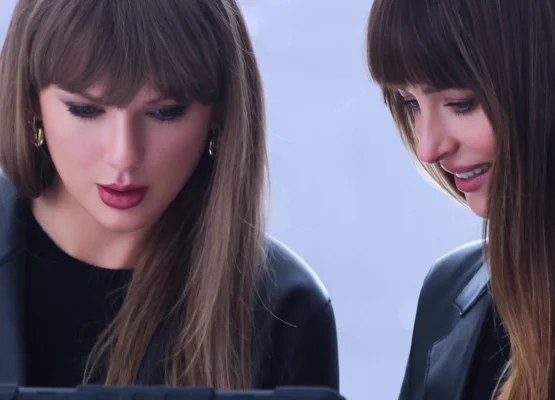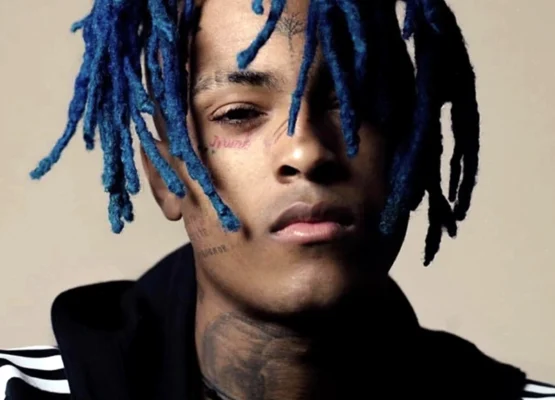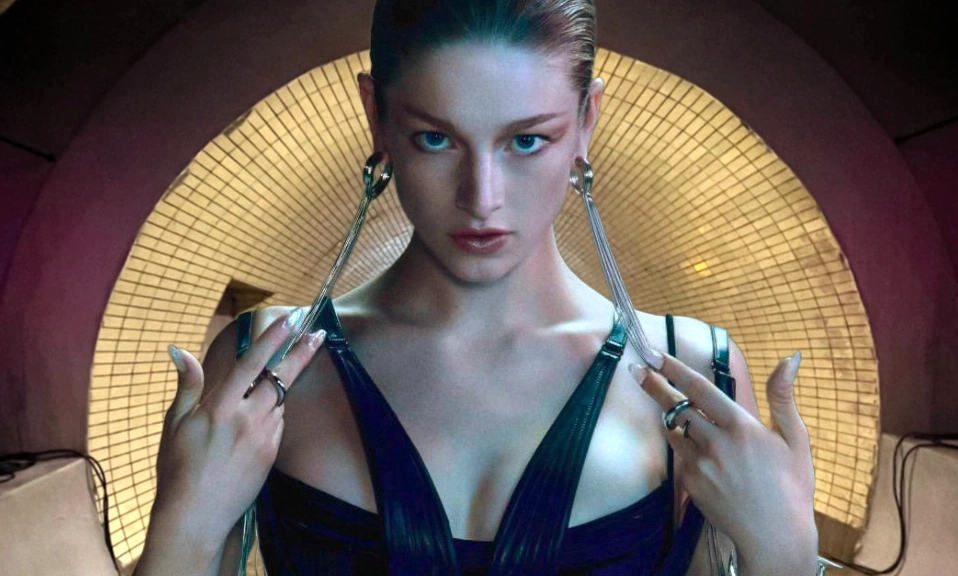
The Blade Runner universe is moving beyond the era of Rick Deckard and K. Blade Runner 2099 takes place half a century after Blade Runner 2049, when Los Angeles has been transformed by a replicant uprising and humans no longer control the city they once dominated.
The eight-episode limited series premieres in full on Prime Video on November 25, 2026, in more than 240 countries and territories. Michelle Yeoh and Hunter Schafer lead the new story as Olwen and Cora, two women whose alliance could determine whether the city’s fragile new order survives.
Created and showrun by Silka Luisa, the series is executive produced by Ridley Scott, director of the original 1982 film. It is being produced by Amazon MGM Studios and Alcon Television Group, the company behind Blade Runner 2049.
What is Blade Runner 2099 about?
The official premise begins in a Los Angeles that has been “reborn, just not by humanity.” The city has changed after a war between replicants and humans. Cora, a human fugitive who has spent her life running from Blade Runners, takes on a new identity as one of them.
Her first major assignment forces her to work with Olwen, a replicant Blade Runner who has only days left to live. Together, they hunt a runaway replicant whose hidden truth could destabilize the city.
That setup gives the series two investigations at once. Cora is investigating a missing replicant, but she is also trying to construct a new identity inside the system she once feared. Olwen is pursuing the case while confronting the certainty of her own death.
The result is a story about fugitives, power and identity in a society where the old categories of human and replicant have been reversed.
When does it take place?
The series is set in 2099, 50 years after the events of Blade Runner 2049.
The original Blade Runner was set in a heavily industrialized Los Angeles where replicants were manufactured to work in dangerous and exploitative environments. Blade Runner 2049 expanded that world and introduced K, a replicant Blade Runner whose investigation questioned the boundary between artificial life and human identity.
Blade Runner 2099 moves the story farther into the future so it can explore the consequences of those earlier conflicts without repeating the same characters. The series will not bring back Harrison Ford’s Deckard or Ryan Gosling’s K as the central figures. Instead, it introduces a new generation living with the results of the choices made before them.
That time jump is important. The show is not simply asking whether replicants can become human. It is asking what humanity means after humans have lost political and social dominance.
The replicants now hold power
According to showrunner Silka Luisa, a replicant uprising occurred between Blade Runner 2049 and Blade Runner 2099. The humans lost, and replicants became the power brokers of Los Angeles. Humans now occupy the position of a second-class population.
This reverses the political structure that defined the earlier films.
In the original film, humans controlled the corporations, police departments and systems that created and hunted replicants. In the new series, replicants have inherited power, but the story is unlikely to present that reversal as a simple victory.
Power changes the moral questions. A group that has suffered oppression may still reproduce the structures of oppression when it gains control. The central issue becomes whether the new order can build something different—or whether the city is simply repeating the same hierarchy with different people at the top.
The trailer hints at this tension. Olwen tells Cora that the old world is trying to return and that humans want back what was taken from them. The conflict is therefore not over. It has moved into a new phase.
Michelle Yeoh plays Olwen
Michelle Yeoh plays Olwen, a replicant Blade Runner searching for a group of missing rogue replicants.
Olwen is also approaching the end of her life. Replicants know the exact day they will die, making her mortality unusually concrete. She does not face an abstract fear of aging or an uncertain medical prognosis. She knows how much time remains.
That detail connects Olwen to one of the most important ideas in the Blade Runner films: the desire to live when life has been designed to end.
Luisa has described Olwen’s story as a new perspective on Roy Batty’s story from the original film. Like Batty, Olwen is a replicant confronting the end of her existence. The difference is that Blade Runner 2099 tells the story from the replicant’s point of view across an entire television season, giving the character more room to explore fear, anger, memory and the desire not to disappear.
Yeoh is well suited to the role because she can combine physical authority with emotional restraint. Olwen is a professional investigator, but her case is inseparable from her own mortality. Every decision she makes carries the pressure of a deadline that cannot be negotiated.
Her partnership with Cora may also force her to question what she is protecting. Is she defending the new replicant-led order, protecting individual replicants from the authorities or trying to leave behind a better world before her time runs out?
Hunter Schafer plays Cora
Hunter Schafer plays Cora, a human fugitive who has spent her life avoiding Blade Runners. She now takes on the identity of a Blade Runner herself.
Cora’s role creates a different kind of identity conflict from the one experienced by earlier protagonists. Deckard and K were investigators who gradually questioned the system they served. Cora begins outside the system and must pretend to belong to it.
That means she is performing an identity rather than discovering a hidden one. She must learn the language, procedures and behavior of the people who once hunted her while concealing the fact that she is one of the fugitives they would pursue.
Luisa describes Cora as a human who has lost her humanity through years of running and surviving. The show’s question is whether she can regain it.
That gives the series an intriguing reversal. The replicant, Olwen, is moving toward death while trying to protect life. The human, Cora, is alive but must rediscover the ability to care, trust and belong.
Their partnership is therefore not just a detective pairing. Each woman represents a different answer to the question of what makes someone human.
The mystery at the center
Like the earlier films, Blade Runner 2099 is built around a mystery that has political consequences.
Olwen and Cora are hunting a runaway replicant. The fugitive is hiding information that could “collapse” the city’s fragile order, according to the official synopsis.
The series has not revealed the full nature of that secret, and preserving it is important. The mystery is likely to operate on two levels. It will provide the immediate plot, while also forcing the characters to confront what the new society believes about its origins, its rights and its enemies.
A missing replicant could be dangerous because they possess evidence about the uprising, because they know how the new government operates or because their existence challenges the official history of the war.
The most interesting possibility is that the runaway is not simply a threat. In the Blade Runner tradition, the person being hunted often reveals more about the society doing the hunting than about the individual crime.
How it connects to the original films
Blade Runner 2099 is not a reboot or a separate story using only the title. It is part of the same franchise and follows the events of both earlier films.
The series is connected to the original through its world, its questions and Ridley Scott’s involvement as an executive producer. It is connected to Blade Runner 2049 through Alcon Entertainment and through the historical consequences of the replicant conflict.
Michael Green, who co-wrote Blade Runner 2049, advised Luisa during the development of the series. Luisa has also described Scott as an important creative mentor who offered insight into the original film’s visual and mythological foundations.
That does not mean Blade Runner 2099 will imitate the earlier movies scene for scene. Luisa has said the series stays true to the noir principles of the franchise while creating a new mystery that looks backward and forward at the same time.
Fans can therefore expect familiar ingredients—investigation, uncertainty, corporate or political power, artificial life and questions about memory—without expecting Deckard or K to return as the story’s center.
The series is also drawing from Philip K. Dick’s novel
The films were inspired by Philip K. Dick’s 1968 novel Do Androids Dream of Electric Sheep? The new series is also returning to elements of that book for its world-building.
Television gives the writers more time to develop the society than a two-hour film can. Luisa has said that the book helped the team imagine parts of the history and universe that the films did not have room to show.
That may make Blade Runner 2099 feel broader than the previous movies. Instead of focusing on one investigation through a narrow section of Los Angeles, the series can examine institutions, communities and the consequences of the war.
The novel’s mixture of dark themes and strange, sometimes absurd details may also influence the tone. The Blade Runner world has always been bleak, but it is not uniformly solemn. Its future is crowded with odd technologies, commercial noise, social rituals and contradictions.
What will Los Angeles look like?
The visual identity of Blade Runner is one of its most difficult legacies to inherit.
The 1982 film created a rain-soaked, neon-lit future noir. Blade Runner 2049 developed its own visual language through cold landscapes, snow, dust and orange industrial light, with cinematographer Roger Deakins winning an Academy Award for the film’s cinematography.
For Blade Runner 2099, Luisa says the creative team moved toward “sunshine noir.” The city remains recognizably part of the Blade Runner universe, but the visual atmosphere is hotter, brighter and more coastal. Santa Monica and other areas near the water become part of the world.
That change reflects the story. The old films presented cities dominated by rain, darkness and industrial decay. The new series is about a birth: the birth of a new city and a new replicant era.
The brighter environment should not be mistaken for a more optimistic society. Sunshine can make inequality easier to see. A city controlled by replicants may be visually open while remaining politically oppressive. The clean sky does not guarantee moral clarity.
The production also emphasized practical environments and in-camera work. Luisa has said that using physical sets and objects helped the actors move through spaces that felt real rather than imagining everything against a digital background.
That approach includes a new version of the spinner, the flying car first seen in the original movie. The vehicle is designed to feel like an evolution of the earlier machines while remaining part of the same visual lineage.
Who created the series?
Silka Luisa serves as creator, showrunner and executive producer. She is known for the Apple TV+ series Shining Girls.
Ridley Scott executive produces alongside Alcon Entertainment co-founders Andrew Kosove and Broderick Johnson, Alcon President of Television Ben Roberts, David W. Zucker and Clayton Krueger of Scott Free Productions, and other franchise producers. Michael Green, Cynthia Yorkin, Frank Giustra, Tim Gamble and Isa Dick Hackett are also among the executive producers.
Jonathan van Tulleken directs the first two episodes and serves as an executive producer. His credits include work on Shōgun and other high-profile television dramas.
The production was largely filmed in the Czech Republic at Prague’s Barrandov Studios, with additional work in Barcelona.
That international production footprint fits the franchise’s scale. The show needs to present a future Los Angeles, but it also needs a world that feels layered, old and geographically larger than one city block.
The full cast
Yeoh and Schafer lead the series, with Dimitri Abold and Lewis Gribben as series regulars. The recurring cast includes Katelyn Rose Downey, Daniel Rigby, Johnny Harris, Amy Lennox, Sheila Atim, Matthew Needham, Tom Burke and Maurizio Lombardi.
Amazon has not revealed every character’s role, which keeps the focus on Olwen and Cora while preserving some of the show’s mystery. The size of the ensemble suggests that the story will move beyond the two leads and examine the institutions and communities created after the replicant victory.
That is another way the series can distinguish itself from the films. A television story can use multiple perspectives to show how different groups interpret the new order. A human administrator, a replicant official, a fugitive, a Blade Runner and a survivor of the war may all understand the same city in different ways.
Why the 50-year jump matters
A shorter sequel might have focused on the immediate aftermath of Blade Runner 2049. By moving 50 years forward, Blade Runner 2099 can examine what happens after a revolution becomes a government.
Revolutions are often defined by their first victories. Societies are defined by what they do afterward. The series begins at the point where the replicants are no longer only resisting power. They hold power and must decide how to use it.
That creates a more complicated story than “humans versus machines.” The conflict now exists within both groups. Some replicants may support the new order, while others may resist it. Humans may oppose replicant rule, but they may also collaborate, adapt or benefit from the system.
Olwen and Cora are positioned between those categories. One is a replicant who may be nearing the end of her life; the other is a human pretending to enforce replicant authority. Their partnership may reveal that the old labels are no longer enough to explain the city.
What kind of Blade Runner story should viewers expect?
The new series appears to be a noir mystery with science-fiction world-building rather than a conventional action show.
There will be a hunt, a runaway, a political conflict and a threatened city. But the central questions are philosophical and personal. What makes a person human? Can a society built by the oppressed avoid becoming oppressive? Does a manufactured life become less valuable when its expiration date is known? Can someone who has lost their humanity recover it?
The franchise has always used detective stories to approach those questions. The investigator follows clues, but the case gradually forces them to question the rules used to define guilt, identity and personhood.
Blade Runner 2099 continues that tradition while changing the power structure around it. This time, the investigator is partly an impostor, the replicant is a dying authority figure and the city’s future may depend on a secret that neither side is prepared to accept.
Release date and how to watch
All eight episodes of Blade Runner 2099 premiere on Prime Video on November 25, 2026. The series will be available exclusively on the service in more than 240 countries and territories.
Unlike a weekly rollout, the full limited series is scheduled to arrive at once. That gives viewers the option of watching the mystery as one continuous story rather than waiting for each investigation to unfold.
Before the premiere, viewers can revisit the original Blade Runner and Blade Runner 2049, both available to rent or buy through Prime Video.
The questions the series must answer
The biggest challenge for Blade Runner 2099 is not simply living up to the visual reputation of its predecessors. It must show that the franchise’s questions remain useful after the original conflict has changed.
The series has a strong starting point. Replicants have won the war, but victory has not created peace. Humans have lost control, but they have not disappeared. Olwen knows exactly when she will die, while Cora must pretend to be part of a system that would once have hunted her.
Those contradictions give the show a reason to exist beyond nostalgia.
If the series focuses only on visual callbacks, it will feel like an expensive continuation. If it uses the new order to examine power, memory, mortality and identity from unfamiliar angles, it can become a meaningful next chapter.
Blade Runner 2099 is arriving in a world where the franchise’s old question—“What does it mean to be human?”—has become more complicated. The new question may be even harder:
What happens when the beings once denied humanity are the ones deciding who gets to have it?