The first trailer for Netflix’s Narnia: The Magician’s Nephew arrived this week, and it has done something remarkable: it has united Narnia fans in a state of utter disagreement. Some are calling it the best trailer they’ve seen in years. Others are calling it a “bizarre, disastrous fever dream” that has lost the soul of C.S. Lewis’s beloved books.
Directed by Greta Gerwig, the film is a massive gamble. With a reported budget of $280 million, it is one of Netflix’s most ambitious projects ever. It is also a deliberate departure from everything fans thought they knew about Narnia. The question now is whether Gerwig’s bold, divisive vision can actually live up to the books—or whether it has already broken something fundamental in the process.
The Trailer: Glitter, Glam-Rock, and a Very Different Aslan
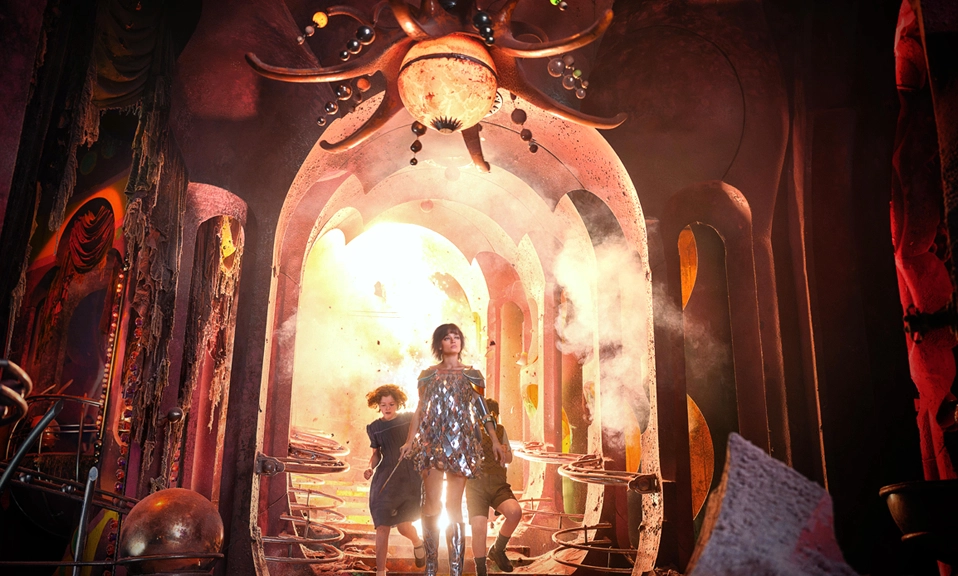
The trailer, scored by Led Zeppelin’s notoriously difficult-to-license “Stairway to Heaven,” immediately establishes that this is not the Narnia of the 2005 Disney films or the BBC adaptations. It is a glittery, psychedelic, space-rock spectacle. The visuals are saturated and cosmic, with swirling nebulae and a creation sequence that looks closer to Doctor Strange than to the quiet, lamplit magic of a wardrobe.
The most talked-about moment is the reveal of Aslan. Voiced by Meryl Streep, this Aslan appears not as a traditional, majestic lion, but as a cosmic outline with multicolored eyes and a red-striped face—a design that draws more from David Bowie than from C.S. Lewis. Gerwig has spoken openly about Bowie’s influence on the film, describing it as a “rock opera” of sorts and citing the musician as a profound personal inspiration.
The Fan Divide: “Best in Years” vs. “Lost Its Soul”
The reactions on social media are a case study in how to fracture a fandom.
On one side, there are those who are genuinely thrilled. “The trailer for The Magician’s Nephew is, hands down, the best trailer I’ve seen in years,” one fan wrote. “They’re definitely leaning into the pagan side of Narnia”. Another praised it as a “very faithful adaptation with a sort of rock opera twist,” noting that they recognized “just about every scene and every line [from the book]”. IGN’s reaction was similarly positive, with the writer admitting they were skeptical until the trailer proved them “very wrong,” calling it a “real feast for the eyes” that makes a “huge, bold statement” about how different this reboot is from anything before.
On the other side, the backlash is fierce. The most common criticism is that the film looks like a Marvel movie. Fans have quipped that it is “Narnia: Ragnarok,” “Thor: Love & Thunder Narnia,” and “Guardians of Narnia’s Galaxy“. Others have been harsher, calling the CGI backgrounds “some of the worst looking” ever put on film and accusing Netflix of creating a “butchering” of Narnia that “literally looks like it was made with AI”. The most damning critique is perhaps the simplest: “Visually stunning trailer but nothing really jumped out to me indicating that this is a Narnia movie”.
The Book Changes That Have Fans Worried
The trailer’s divisive reception is rooted in a series of creative decisions that depart significantly from Lewis’s source material. These are not minor tweaks; they are structural changes that could define the entire franchise.
The Timeline Shift. Perhaps the most consequential change is the setting. C.S. Lewis’s The Magician’s Nephew takes place in 1900. Gerwig’s film moves the story to the 1950s, tying it to the birth of rock and roll. This is a massive departure with major implications. The subsequent book, The Lion, the Witch and the Wardrobe, takes place during the Blitz in 1940, and the Pevensie children’s evacuation from London is central to the story. If the reboot maintains a consistent time jump, the later films would have to be set in the 1990s, stripping away the historical context that gives the stories much of their weight and charm.
Meryl Streep as Aslan. The decision to cast Streep as the voice of Aslan has been controversial since it was first reported. Aslan is a clear allegory for Jesus Christ, a male figure in the books, and some fans and conservative commentators view the gender-swap as a theological and creative misstep. Gerwig has defended the choice, saying she wanted someone with “gravitas but not morose self-seriousness” and the “wisdom of experience”. But for many, the change signals a fundamental misunderstanding of the character’s role in Lewis’s Christian framework.
A “Rock Opera” Narnia. Gerwig’s stated intention to make the film a “love letter” to the rock music of her childhood, particularly David Bowie, is puzzling to fans who associate Narnia with a very different kind of magic. As one critic noted, “There isn’t much that is ‘rock and roll’ about C.S. Lewis’s fantasy world”.
The Production Context: A Troubled Road?
The creative choices are not the only source of concern. Reports suggest the production has faced its share of turbulence. The film’s release was delayed from November 2026 to February 2027, and there have been rumors of reshoots and concerns about the film’s quality, with some insiders comparing it unfavorably to other recent fantasy disappointments. Netflix, in a notable reversal for the company, is giving the film a wide theatrical release before it hits streaming, a move that suggests they are hoping for a major event-film reception to justify the enormous cost.
Can It Live Up to the Books?
The honest answer is that no one knows yet—and that’s the point. The trailer has succeeded in doing exactly what a trailer should: it has provoked a reaction, sparked debate, and made the film impossible to ignore.
The core tension is between fidelity and reinvention. Fans who want a faithful, reverent adaptation of Lewis’s books are understandably alarmed by a Narnia that looks like a Marvel movie, sounds like Led Zeppelin, and reimagines its central Christ-figure as a Bowie-esque cosmic entity. But there is another possibility: that Gerwig, a director of immense talent and clear passion for the source material, has seen something in The Magician’s Nephew that others have missed—a story about creation, courage, and the birth of a world that lends itself to a more mythic, more psychedelic, and yes, more rock-and-roll interpretation.
The fans who are thrilled point out that the trailer is, in fact, full of recognizable moments and lines from the book. The question is whether those moments will cohere into something that feels like Narnia, or whether the stylistic flourishes will overwhelm the substance.
Netflix’s Narnia trailer
has achieved something rare: it has made a 70-year-old children’s fantasy series feel genuinely dangerous and unpredictable again. Whether that is a good thing depends entirely on what you want from an adaptation. If you want the Narnia you remember—the one of snow-covered lampposts, talking beavers, and a lion who is good but not safe—this trailer may feel like a betrayal. If you are open to a Narnia that is louder, stranger, and more visually ambitious than anything that has come before, Gerwig may have something extraordinary in store.
Narnia: The Magician’s Nephew opens in theaters on February 12, 2027, and arrives on Netflix on April 2. The debate over whether it lives up to the books will not be settled until then. But one thing is already clear: everyone will be watching.