What Is Behind the World Cup Power Struggle?
Gianni Infantino has spent nearly a decade running world football with the confidence of a man who believed his position was untouchable. This week, he walked into a room in Zurich and sat down with the people who want him gone.
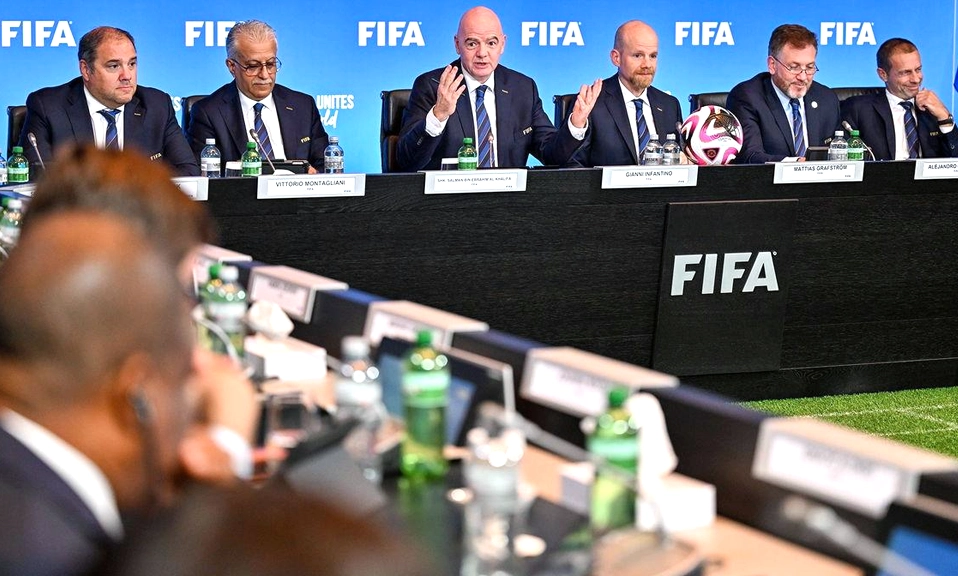
The FIFA President chaired a meeting of the 37-member FIFA Council on Thursday, his first face-to-face encounter with his most powerful critics since a secretive plan to sell off stakes in the World Cup collapsed in spectacular fashion eleven weeks ago. It was, as the Associated Press put it, “the biggest crisis of Infantino’s near 11-year presidency”.
The question now is not whether Infantino has lost support. It’s whether anyone can actually force him out.
The Trigger: A $4.2 Billion Plan That Broke the Trust
The crisis began in July 2026, nine days after the World Cup final near New York. Infantino proposed creating a commercial subsidiary called FIFA Forward Enterprise (FFE) and selling a 20 per cent stake to private investors to raise approximately $4.2 billion.
The lead investor was identified as Thrive Capital, a company launched by Joshua Kushner — the brother of Donald Trump’s son-in-law, Jared Kushner.
The proposal was met with immediate and furious backlash. UEFA, the Asian Football Confederation (AFC), and CONCACAF — the three most powerful confederations in world football — issued a joint open letter accusing Infantino of breaking trust “through deception”, of having “placed himself above the collective”, and of failing to consult them before pursuing a plan that would fundamentally alter the commercial structure of the World Cup.
Within days, Infantino was forced to abandon the plan. But the damage was done. The three confederations — led by UEFA’s Aleksander Ceferin, the AFC’s Sheikh Salman bin Ibrahim Al Khalifa, and CONCACAF’s Victor Montagliani — declared that “the time has come for change at the top of FIFA”.
The Revolt: Three Confederations, One Demand
The united position of UEFA, AFC, and CONCACAF represents an unprecedented split in world football. Together, these three confederations control 136 of FIFA’s 211 member associations — more than enough votes to remove Infantino in a no-confidence motion if they could secure a challenger.
But that’s the problem. Finding a credible alternative has proven extraordinarily difficult.
As of this week, the only declared candidate is Ramon Vega, a former Switzerland and Tottenham defender with no experience in football governance. He announced his intention to stand last week but has not confirmed whether he has the backing of the five national associations required to enter the race officially.
Former Arsenal manager Arsène Wenger has been touted as a potential challenger, but no formal candidacy has materialized. The deadline for nominations is November 18, 2026, with the election scheduled for March 2027 in Rabat, Morocco.
The lack of a viable opponent has forced Infantino’s critics to pursue a different strategy: not to replace him, but to strip him of his powers.
“Although the chances of finding someone to replace Infantino were remote, his opponents were determined to leave him more isolated and curb his powers,” Reuters reported, citing people familiar with the matter.
The Isolation Strategy: Curbing the President’s Power
The FIFA Council meeting on Thursday was not just about the failed FFE plan. The agenda included four items that go to the heart of how FIFA is governed:
The failed FIFA Forward Enterprise scheme. The council reviewed Infantino’s abandoned proposal to sell a permanent stake in tournament rights to private investors.
FIFA’s financial reserves. With at least $5 billion in cash reserves**, the council discussed how much money to release to member associations. UEFA and CONCACAF have demanded **$10 million directly to each of the 211 associations, countering Infantino’s proposal under which associations could receive $20 million in development funding and potentially access a further $20 million.
Disciplinary procedures. The council examined FIFA’s disciplinary processes, including the controversial decision to suspend a red-card ban for USMNT striker Folarin Balogun during the 2026 World Cup after what appeared to be political interference from President Donald Trump.
Governance framework and the Peace Prize. The council discussed FIFA’s governance standards and the controversial FIFA Peace Prize awarded to Donald Trump last year.
At the core of all four subjects, the AP noted, is Infantino’s “increasingly executive, one-man leadership style” — a style that led his own chief operating officer, Kevin Lamour, to call the FIFA Forward Enterprise spinoff “the project of one person” before departing.
The Support: Why Infantino Isn’t Going Anywhere
Despite the revolt, Infantino retains significant support — and that support may be enough to survive.
Africa has stood behind him. Infantino received a standing ovation when he met African football leaders in Cape Verde last week. CAF President Patrice Motsepe remains a supporter.
South America is expected to back him at next year’s election in Rabat.
A bloc of Arab nations within the AFC has announced its backing, despite the confederation’s leadership opposing him. Morocco, Qatar, Lebanon, Kuwait, and Sri Lanka are among the countries that have pledged support.
And then there’s Donald Trump. The US President posted on Truth Social that it would be a “terrible mistake” for FIFA to replace Infantino, calling him “fantastic” and crediting him with presiding over “the most successful World Cup ever presented”.
Infantino has also been actively courting support. He wrote to all 211 member associations saying they would receive $40 million if they backed his controversial proposal — a direct appeal to the financial self-interest of the smaller federations whose votes he needs.
The Deeper Problem: A Governance Crisis
The FFE scandal is not an isolated incident. It is the culmination of a pattern that has defined Infantino’s presidency since he took office in 2016.
Infantino’s leadership has repeatedly created turmoil when proposing multi-billion-dollar commercial plans without fully consulting the continental bodies, as the Globe and Mail noted. FIFA has often seemed like “an executive one-man leadership”, with Infantino building closer ties to Trump around the 2026 World Cup.
The Folarin Balogun red-card scandal crystallized this perception. The American striker was sent off in the last 32 of the World Cup, triggering an automatic one-match suspension. But the ban was lifted after a phone call from Trump to Infantino.
For Infantino’s critics, this was the moment the line was crossed — the moment FIFA’s disciplinary independence was visibly subordinated to political pressure.
What Comes Next: The November Deadline
The immediate focus is on November 18, the deadline for presidential nominations. If a credible challenger emerges with the backing of five national associations, Infantino could face a genuine contest. If not, he will likely run unopposed — or with only token opposition from Ramon Vega.
But even if Infantino survives the election, his presidency has been fundamentally weakened. The three confederations that oppose him have threatened “non-co-operation” with FIFA unless he steps down. “There is no going back,” one senior figure said.
UEFA has threatened legal action over the FFE plan, demanding that FIFA preserve all documents and electronically stored information. Wales has publicly withdrawn its backing for Infantino’s re-election, with England’s Football Association expected to follow suit. Serbia, Sweden, and Finland have also withdrawn their support.
Emanuel Medeiros, founder of the Sport Integrity Global Alliance, said FIFA needed a “frank discussion” in Zurich. “The eyes of the world are on them,” he said. “The world of football expects to see a council that takes this unique opportunity to establish a genuinely independent, comprehensive and transparent governance review”.
Miguel Maduro, who chaired the FIFA Governance Committee in 2016 before being sacked by Infantino, said he would be “surprised if anything meaningful came of Thursday’s meeting”.
Gianni Infantino
is not going to resign. He has made that clear through his actions, if not his words. When asked by a reporter why he refused to step down, he responded with a bizarre joke: “I’ll see you at the hairdressers”.
But the FIFA President is more isolated than he has ever been. Three of the six confederations want him gone. Two of FIFA’s vice presidents — Ceferin and Montagliani — are leading the opposition. His chief operating officer quit, calling his signature project “the project of one person.”
And yet, he still holds the levers of power. He still controls the FIFA Council. He still has the support of Africa, South America, and a bloc of Arab nations. And he still has the backing of the President of the United States.
The question is not whether Infantino can survive this crisis. It’s whether FIFA can survive his presidency.
The election is in March 2027. The nomination deadline is November 18, 2026. And the world is watching.