Scientists Are Racing to Solve the Mystery
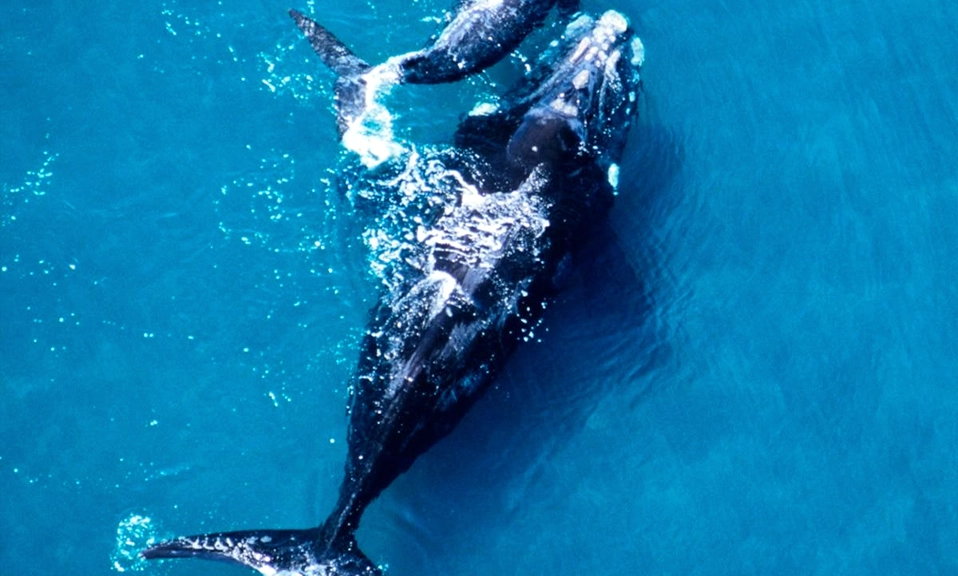
Along the windswept coast of Argentina’s Patagonia region, a grim and baffling scene has been unfolding for months. Hundreds of southern right whale calves have washed ashore dead, their carcasses appearing on beaches near the city of Puerto Madryn and the Valdés Peninsula—one of the most important breeding grounds on Earth for this iconic species. Scientists are racing against time, decomposition, and the approaching end of the calving season to figure out why.
The numbers are staggering. A record 2,110 whales were counted in the area in 2025, including about 800 young. This year, authorities have counted 1,375 specimens, including nearly 400 calves. But it’s the mortality rate among the youngest that has researchers deeply alarmed.
“The death rate (among young whales) is quite high this season in particular,” Mariano Coscarella, a researcher at the Marine Mammals Laboratory of Argentina’s National Scientific and Technical Research Council (CONICET), told AFP. Dozens of dead calves have been washing up on beaches in southern Chubut province since June, and the trend has only continued.
An Unusual Event, 23 Years in the Making
What makes this die-off so significant is that it isn’t happening in isolation. Researchers have been monitoring this exact population for over two decades, which gives them a critical baseline for what’s normal—and what isn’t.
“We’re looking into the whale calf deaths based on 23 years of monitoring that we have of this same population. That’s what allows us to say that this is an unusual event,” said Marcela Uhart, a veterinarian with the One Health Institute at the University of California, Davis, who is leading the investigation as head of the Southern Right Whale Health Monitoring Program.
The carcasses have been washing ashore around the gulf city of Puerto Madryn, including near the central waterfront where they alarm residents and tourists. Residents have reported hundreds of them, but researchers have declined to give a definitive death toll, saying that will become clear after the season ends around late November.
The Leading Hypothesis: A Bacterial Infection
Veterinarians suspect an outbreak of erysipelas, a serious disease caused by bacteria commonly found on the whales’ skin. The Chubut provincial government said preliminary research suggested the deaths were caused by a “common marine bacteria”.
Erysipelas is caused by Erysipelothrix rhusiopathiae, a bacterium that can trigger systemic disease in calves. While it’s commonly found on marine mammals, it usually doesn’t cause mass mortality events. Something has changed this year that has made the bacteria far more deadly.
The Kelp Gull Connection
The leading hypothesis for how the bacteria are entering the calves’ bodies points to an unexpected culprit: kelp gulls. For decades, these seabirds have pecked at whales surfacing to breathe, gorging on their skin and blubber. Adult whales have learned to adapt, surfacing with only their heads exposed and keeping their backs underwater, out of reach of the gulls’ beaks. But calves can’t perform that maneuver, leaving them vulnerable to repeated attacks.
Those gull-inflicted wounds, researchers believe, create entry points for marine bacteria. Once inside the calf’s body, the infection can become systemic and fatal. It’s a chain of events that transforms a nuisance behavior into a lethal threat for the youngest members of the population.
Racing Against Time
Uhart and a team of biologists, veterinarians, and park rangers have been searching the area for dead calves from shore and with boats, planes, and drones. The work is gruesome: they photograph and examine the bodies, racing against decomposition to collect skin and organ samples for testing at a veterinary school in the city of Tandil, farther north.
Bacteria have already been detected in those tissues, but researchers are still culturing samples to identify the specific microbes and determine whether infection was definitively the cause of death.
Why Now? The Search for a Trigger
Even if bacteria are confirmed as the cause, a crucial question remains: why have they become so deadly this year? Uhart suspects a confluence of environmental factors may be at play.
Changes in marine conditions—like warming sea temperatures, potentially linked to climate change or El Niño—could contribute to “this perfect storm where this bacteria is powerful enough to overcome the immunity of the babies and cause their deaths,” she said.
“So to the extent that we can, we’ll try to identify at least what factors may be triggering this event and making it so massive”.
Coscarella added that while the deaths appear to have a natural cause, “we cannot completely rule out the influence of human activity”. The investigation remains open, and no definitive explanation has been reached for all of the deaths.
A Species on the Rebound—But Still Vulnerable
The southern right whale has a remarkable conservation story. Hunted to the brink of extinction in the 19th and 20th centuries, the species gradually rebounded after gaining international protection in 1935. Whalers gave them their name because they were the “right” whales to hunt—they swam slowly, stayed close to shore, and floated when killed.
Today, the Valdés Peninsula is one of their most important breeding grounds, where they gather in sheltered waters to give birth and nurse their young. The record count of 2,110 whales in 2025 was a sign of hope. But this year’s calf die-off is a stark reminder that recovery is fragile.
Coscarella said the recent deaths “do not constitute a medium-term danger” for the population, given the species’ average lifespan of around 60 years. But if losses on this scale recur, they could slow the population’s recovery. Southern right whales already face declining food supplies, fishing gear entanglements, oil spills, and ship strikes.
What Comes Next
For now, the investigation continues. Researchers are culturing samples, analyzing environmental data, and monitoring the remaining calves as the season draws to a close. The hope is that by pinpointing what is killing the calves, they can find ways to protect the vulnerable population.
“If the cause relates to something that we are doing as humans, then we need to change that,” Uhart said. “We don’t want to endanger these whales again”.
Until the mystery is solved, the beaches of Patagonia will continue to hold a troubling question—and the scientists working to answer it are running out of time before the season ends and the whales move on.