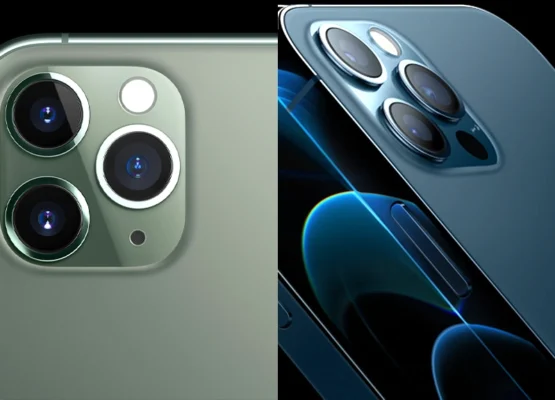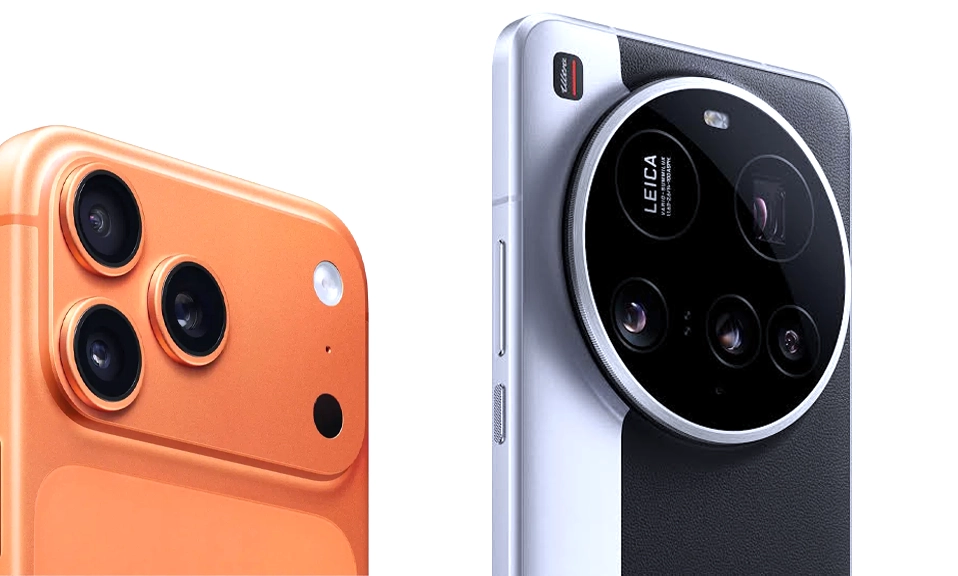
One phone was built in Cupertino to be the biggest, brightest, longest-lasting iPhone ever. The other was built in Beijing to put a Leica camera system in your pocket. The iPhone 17 Pro Max and the Xiaomi 15 Ultra are both called “flagship,” both cost a fortune, and both are absolutely convinced the other one is doing it wrong.
This is the matchup that defines 2025’s premium phone market: Apple’s refined, ecosystem-locked titan against Xiaomi’s spec-sheet maximalist. We’re judging it aspect by aspect — and just like our previous breakdowns, every category gets its winner declared at the bottom. No fence-sitting, no “it depends.” Let’s go.
📋 The Tale of the Tape
Spec | iPhone 17 Pro Max | Xiaomi 15 Ultra |
|---|---|---|
Released | 19 September 2025 | 27 February 2025 |
Chip | Apple A19 Pro (3nm) | Snapdragon 8 Elite (3nm) |
RAM | 12 GB | 12/16 GB LPDDR5X |
Display | 6.9″ LTPO OLED, 2868×1320, 3000 nits | 6.73″ 2K 120Hz LTPO AMOLED |
Rear cameras | Triple 48MP (main, ultra-wide, 4× tele) | Quad Leica: 50MP 1″ main, 200MP periscope, 50MP tele, 50MP ultra-wide |
Front camera | 18MP Center Stage | 32MP |
Battery | 4823 mAh (5088 mAh eSIM) | 5410 mAh (6000 mAh China) |
Charging | 40W wired / 25W wireless | 90W wired / 80W wireless |
Weight | 233 g | ~226 g |
OS | iOS 26 | Android (HyperOS) |
🎨 Round 1: Design & Build
Apple finally broke tradition: the 17 Pro Max is the first Pro iPhone with an aluminum unibody chassis — a deliberate retreat from the titanium of the 15/16 Pro, chosen to fix overheating — with a bold horizontal “camera plateau” and a color palette (Cosmic Orange, Deep Blue, Silver) that abandons black entirely. It’s the biggest design shake-up in years, even if it triggered the inevitable “scratchgate” complaints about soft aluminum .
The Xiaomi 15 Ultra answers with an unibody metal frame, Xiaomi’s Dragon Crystal Glass 2.0, and — make no mistake — a massive camera circle that dominates the back of the phone . It looks like a camera first and a phone second, and it doesn’t apologize for it. At ~226 g it’s slightly lighter than Apple’s 233 g slab.
One is a polished, minimal sculpture; the other wears its purpose on its sleeve — literally.
🏆 Winner: iPhone 17 Pro Max — the aluminum unibody and plateau design is braver, more cohesive, and finally something new from Apple.
🖥️ Round 2: Display
Apple’s 6.9-inch Super Retina XDR OLED pushes 2868×1320 resolution and a searing 3,000 nits of peak brightness, with reviewers calling it “one of the best displays on the market”.
Xiaomi’s 6.73-inch 2K LTPO AMOLED runs at 120Hz with Dolby Vision and a 12-bit panel that owners rave about. It’s arguably the better raw panel on paper.
But raw numbers meet reality: the iPhone is bigger, brighter in peak HDR, and Apple’s color calibration remains the industry benchmark. This is a split decision that comes down to size versus bit depth.
🏆 Winner: iPhone 17 Pro Max — 3,000 nits, a larger canvas, and calibration nobody quite matches. Xiaomi’s 12-bit panel is the best counter-argument in Android.
⚡ Round 3: Performance
On paper, this is closer than ever. The A19 Pro is a 3nm monster with a 6-core GPU and — for the first time in an iPhone — a vapor chamber cooling system built into the aluminum unibody, giving up to 40% better sustained performance than the iPhone 16 Pro.
The Snapdragon 8 Elite is Xiaomi’s answer: also 3nm, with Oryon CPU cores and Adreno 830 graphics, cooled by a dual-channel wing-shaped cold pump.
The verdicts from testing are consistent: in TechRadar’s benchmarks, the iPhone 17 Pro was the fastest smartphone in single- and multi-core CPU performance, beating even the Galaxy S25 Ultra — though Android flagships sometimes struck back in GPU tests . User sentiment on Versus actually gives the performance category to the Xiaomi — that 16GB RAM option is real, and so is the A19 Pro’s lead in raw CPU.
🏆 Winner: iPhone 17 Pro Max — the A19 Pro takes CPU benchmarks, and the vapor chamber means it holds its speed under load instead of throttling.
📸 Round 4: Cameras — The Main Event
This is why both phones exist, and it’s the closest fight here.
The iPhone’s system: three 48MP sensors — main, ultra-wide, and a new 4× tetraprism telephoto whose sensor crop emulates 8× optical-quality zoom, the best telephoto ever fitted to an iPhone. Add the 18MP square front sensor that rotates without rotating the phone, Dual Capture front-and-rear video, and Apple’s unmatched video pipeline.
The Xiaomi’s system: a Leica quad-camera that reads like a shopping list of superlatives — a 50MP main with a 1-inch sensor and f/1.63, a 200MP periscope super-telephoto (100mm, f/2.6), a 50MP 70mm floating telephoto, and a 50MP 115° ultra-wide and it shoots 8K with ACES LOG movie-grade color.
The community verdict is fascinating. Even iPhone photography communities concede that “iPhone really improved their camera performance this year” while watching the Xiaomi beat it in zoom and stills comparisons — one user’s verdict: “I’m an iPhone fanboy and the Xiaomi looks way better.” But the iPhone keeps the undisputed crowns: video, stabilization, and the front camera. Versus.com users hand Apple the camera categorym while Xiaomi dominates zoom range, stills detail, and versatility.
So let’s split this honestly:
📸 Stills & zoom: 🏆 Winner: Xiaomi 15 Ultra — a 1-inch main sensor, two dedicated telephotos, and 200MP of periscope reach are simply more camera than Apple’s trio.
🎥 Video & selfies: 🏆 Winner: iPhone 17 Pro Max — the video pipeline, stabilization, and that rotating 18MP front sensor keep Apple undefeated where it matters to creators.
Round 4 overall — 🏆 Winner: Xiaomi 15 Ultra. Photographers buy the camera; the iPhone wins the film shoot.
🔋 Round 5: Battery & Charging
Apple’s headline stat: up to 39 hours of video playback — the longest battery life ever claimed for an iPhone at launch . The 4,823 mAh cell with 40W wired / 25W wireless charging earned universal praise from reviewers.
Xiaomi’s numbers: a 5,410 mAh Surge Battery globally with 90W wired and 80W wireless HyperCharge .
Apple wins endurance — that 39-hour claim and iOS efficiency are real, and user sentiment gives Apple the battery category too. But Xiaomi wins recovery speed: 90W wired means a full charge in well under an hour, at more than twice Apple’s wired rate, plus 80W wireless and reverse wireless charging — things Apple doesn’t offer at all.
🤝 Winner: Draw — the iPhone lasts longer; the Xiaomi refills in half the time. Pick your poison.
🧠 Round 6: Software & Ecosystem
iOS 26 with Apple Intelligence, on-device Siri, five-plus years of guaranteed updates, and a hardware-level security system that Apple says makes mercenary-spyware attacks “significantly more expensive” . Then add the entire Apple web: AirPods, Mac, Watch, iMessage, FaceTime.
Xiaomi’s HyperOS is fast, deeply customizable, and far less locked down — but update commitments trail Apple’s, and the bloatware varies by region. The ecosystem, for all of Xiaomi’s progress, remains an Android-wide affair rather than a Xiaomi-specific one.
🏆 Winner: iPhone 17 Pro Max — and it’s not close. You’re not buying a phone; you’re buying into a decade of software support and a universe of devices.
💰 Round 7: Value for Money
Here’s the twist nobody expects: the Xiaomi 15 Ultra is not the cheap option. At launch it was priced as a true ultra-premium device — in Europe, above the iPhone 17 Pro Max’s $1,199 starting point — because its camera hardware genuinely costs that much.
But value isn’t just price. It’s what the money buys. And nanoreview’s head-to-head conclusion, after weighing everything, lands on the iPhone: “These smartphones have a lot in common, but we would recommend the Apple iPhone 17 Pro Max” . Meanwhile Versus’ crowd-sourced scoring gives the Xiaomi the win in performance, display, audio, and battery.
The fairest read: the Xiaomi justifies every cent for camera obsessives and gives more hardware per dollar. The iPhone justifies its price through longevity, resale value, and the ecosystem — the places where Android money quietly evaporates.
🏆 Winner: iPhone 17 Pro Max — resale value, update longevity, and ecosystem value tip the scales, unless you’re buying purely for the camera.
📊 The Final Scorecard
# | Category | Winner |
|---|---|---|
1 | Design & build | 🏆 iPhone 17 Pro Max |
2 | Display | 🏆 iPhone 17 Pro Max (narrowly) |
3 | Performance | 🏆 iPhone 17 Pro Max |
4 | Cameras — stills & zoom | 🏆 Xiaomi 15 Ultra |
5 | Cameras — video & selfies | 🏆 iPhone 17 Pro Max |
6 | Battery endurance | 🏆 iPhone 17 Pro Max |
7 | Charging speed | 🏆 Xiaomi 15 Ultra |
8 | Software & ecosystem | 🏆 iPhone 17 Pro Max |
9 | Value for money | 🏆 iPhone 17 Pro Max |
iPhone 17 Pro Max 7 – 2 Xiaomi 15 Ultra
🎯 So, Who Actually Wins?
The iPhone 17 Pro Max wins the fight — but the Xiaomi 15 Ultra wins the argument.
On paper, Apple takes seven of nine categories: it’s the faster, longer-lasting, better-built, better-supported phone. If you want the single most complete flagship of 2025 and you’re already anywhere near the Apple ecosystem, the decision is genuinely easy.
But look at what the Xiaomi does with its two wins. It delivers a camera system Apple has never matched — a 1-inch sensor, a 200MP periscope, two telephotos, Leica glass — and charging speeds that make the iPhone’s 40W look timid. For photographers, the scorecard flips entirely, and even Apple loyalists admit it in blind tests .
The truth: these are two philosophies of “ultra.” Apple builds the phone around the user — ecosystem, video, endurance, longevity. Xiaomi builds the phone around the camera and lets everything else follow. Neither is wrong. One is just more versatile.
🏆 iPhone 17 Pro Max for 90% of buyers. Xiaomi 15 Ultra if your camera roll is your life. 📱⚔️