Two phones. Two philosophies. One question every tech fan is screaming about in 2026: do you buy Apple’s brand-new, eye-wateringly expensive marvel — or Samsung’s proven, battle-tested Ultra that’s now sitting at a discount? Let’s settle it, round by round.
This is a genuinely fascinating matchup, because it’s not a fair fight on paper — and that’s exactly what makes it interesting. The iPhone 18 Pro Max landed on September 18, 2026 as the freshest flagship money can buy, while the Galaxy S25 Ultra has been on shelves since February 2025. One is the new kid with the 2nm chip; the other is the reigning champ with a price tag that’s been quietly shrinking while nobody was watching. Let’s see who survives twelve rounds of spec-sheet warfare.
📊 Tale of the Tape
Spec | iPhone 18 Pro Max | Galaxy S25 Ultra |
|---|---|---|
Released | September 18, 2026 | February 7, 2025 |
Chipset | A20 Pro (2nm) | Snapdragon 8 Elite for Galaxy (3nm) |
Display | 6.9″ OLED, 2868×1320, 458 ppi | 6.9″ Dynamic LTPO AMOLED 2X, QHD+, 505 ppi, 120Hz |
Peak brightness | High-brightness OLED | 2,600 nits |
Main camera | 48MP with variable aperture | 200MP |
Front camera | 18MP | 12MP |
Battery | 5,391–5,567 mAh | 5,000 mAh |
Charging | 50% in 15 minutes | 45W wired |
Storage | Up to 2TB | Up to 1TB |
RAM | 12GB | 12GB |
Stylus | ❌ | ✅ S Pen (built in) |
Software | iOS 27 | One UI 7 (Android 15), now One UI 9 |
Updates promised | ~5–6 years | 7 years OS + security |
Launch price | From $1,299 | $1,299.99 (now discounted) |
The iPhone 18 Pro Max arrived with Apple’s A20 Pro chip built on a 2nm process — up to 40% faster than the A19 Pro and widely called the fastest chip on the market — alongside class-leading battery life and the first iPhones ever to ship with physical variable-aperture cameras. The S25 Ultra counters with its Snapdragon 8 Elite for Galaxy, a 3nm chip custom-tuned for Galaxy, and the most versatile camera array Samsung has ever put in a phone .
Round 1: 🎨 Design & Build — Titanium vs Titanium
Here’s the thing about this round: both phones are gorgeous, both are titanium, and both will make strangers ask “is that the new one?”
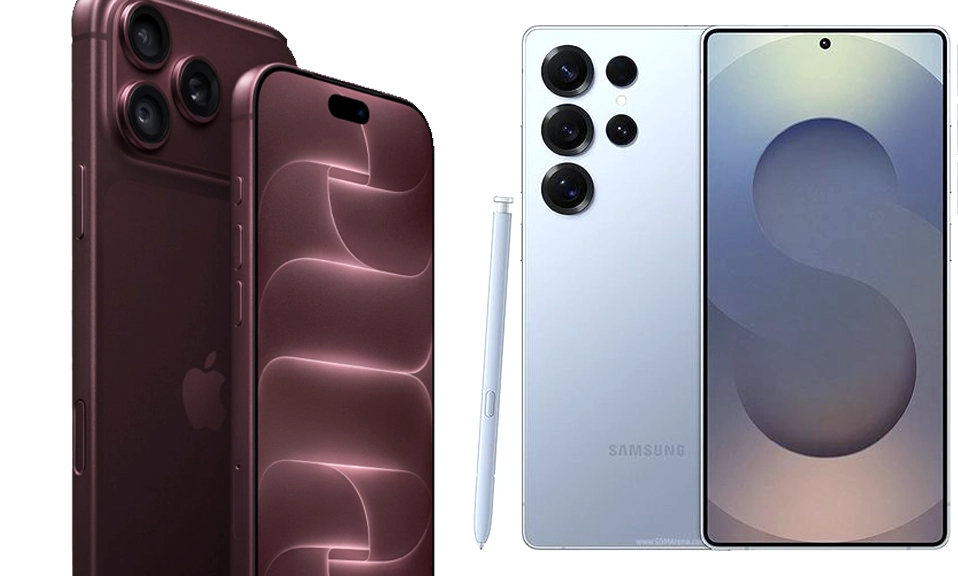
The iPhone 18 Pro Max brings a slimmer Dynamic Island and a refined palette of Black, Glacier, Burgundy, and Silver . It’s classic Apple: understated, obsessively engineered, and instantly recognizable from across a coffee shop.
The S25 Ultra answers with a titanium frame, Corning Gorilla Armor 2 glass, and IP68 water resistance — plus one thing Apple has never offered: a built-in S Pen slot . A stylus in the frame isn’t a gimmick; for note-takers and doodlers it’s a genuine hardware feature no iPhone can match.
Apple wins on coherence and polish. Samsung wins on sheer hardware generosity. This one’s too close to call.
🤝 Draw — Apple’s finish and feel are elite, but a built-in S Pen is a real feature the iPhone simply doesn’t have.
Round 2: 📱 Display — Sharpness Is a Numbers Game
On paper, this looks like a mismatch, and Samsung fans know it.
The S25 Ultra’s Dynamic LTPO AMOLED 2X panel runs at QHD+ resolution (1440×3120, 505 ppi) with a 120Hz refresh rate and a blistering 2,600-nit peak brightness. It has been called one of the best displays ever put on a smartphone, and 91mobiles’ head-to-head gives Samsung the screen verdict outright for its sharper, brighter AMOLED .
The iPhone 18 Pro Max’s 6.9″ OLED (2868×1320, 458 ppi) is superb — Apple’s panels always are — but Samsung Display literally makes some of the best screens in the business, and the Ultra spec sheet reflects it. Against the S26 Ultra’s sharper OLED, the 18 Pro Max holds its own on color and brightness tuning, but pixel density is pixel density.
🏆 Winner: Galaxy S25 Ultra — 505 ppi, 2,600 nits, and a QHD+ AMOLED that still embarrasses phones a year younger than it.
Round 3: ⚡ Performance — 2nm vs 3nm Is a Generational Gap
This is where the age difference stops being trivia and starts being decisive.
The A20 Pro is built on a 2nm process, delivering up to 40% better performance than the already-monstrous A19 Pro — it is, bluntly, the fastest chip in any smartphone, and it’s not particularly close ). GSMArena’s verdict on the 18 Pro Max singles out that “fastest chip” status as a headline strength .
The Snapdragon 8 Elite for Galaxy is no slouch — it was the fastest Android chip of 2025, custom-clocked for Galaxy with ray tracing support But it’s a 3nm chip fighting a 2nm chip. That’s not a rivalry; that’s a generation gap. Gaming, video editing, on-device AI — the A20 Pro pulls ahead in all of it.
🏆 Winner: iPhone 18 Pro Max — the 2nm A20 Pro is simply the fastest silicon you can put in your pocket right now.
Round 4: 📸 Cameras — Megapixels vs Aperture Wizardry
Now THIS is a fight.
On raw numbers, Samsung embarrasses: a 200MP main sensor, 50MP ultrawide, 50MP periscope 5x telephoto, and a 10MP 3x telephoto, with 8K/30fps video — the most versatile hardware array in the matchup . 91mobiles gives the S25 Ultra the rear-camera hardware win on resolution, 200MP vs 48MP.
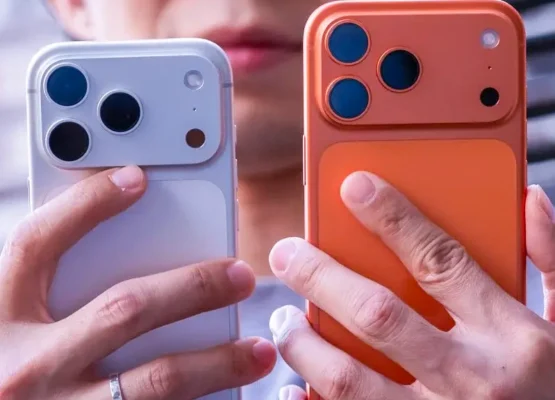
But Apple changed the game in 2026. The iPhone 18 Pro Max is the first iPhone ever with physical variable-aperture cameras, letting the sensor actually change how much light it takes in — a hardware trick, not a software trick. Add cryptographically signed reference images for photographers who need provable authenticity, and an 18MP front camera that crushes Samsung’s 12MP selfie shooter.
Samsung has more lenses and more megapixels. Apple has the more interesting camera technology and the better front camera. Zoom lovers pick Samsung; everyone else is tempted by Cupertino.
🏆 Winner: iPhone 18 Pro Max — variable aperture is a genuine hardware first, and the 18MP front camera seals it against an aging 12MP selfie sensor.
Round 5: 🔋 Battery & Charging — Surprise Contender
Here’s a round nobody expected to be close.
On paper, the iPhone’s bigger battery (5,391–5,567 mAh depending on SIM configuration) and 15-minute-50% charging look unbeatable. Apple has been loudly touting “class-leading battery life” this generation .
But the real-world test results sting: 91mobiles clocked the iPhone 18 Pro Max at 13 hours 08 minutes of continuous use — while the S25 Ultra, with its smaller 5,000 mAh cell, lasted 13 hours 51 minutes. That’s a full 43 minutes more screen time from the year-old phone with the smaller battery. That’s Samsung’s efficiency tuning flexing hard.
The iPhone charges faster. The Galaxy lasts longer. Endurance is the metric that matters at 11pm when you forgot your cable.
🏆 Winner: Galaxy S25 Ultra — 13h 51m vs 13h 08m. The older phone with the smaller battery simply refuses to die first.
Round 6: 🧩 Software & Longevity — Seven Years Is a Promise
Apple’s ecosystem gravity — iMessage, AirPods handoff, the whole walled garden — remains the industry’s stickiest glue, and iOS 27 ships day one on the 18 Pro Max.
But Samsung did something radical with the S25 Ultra: it promised 7 years of OS and security updates , and it’s keeping that promise — the stable One UI 9 update rolled out to the S25 series on September 28, 2026, right alongside the launch-season hype of its successor . A phone from February 2025 getting flagship-tier software in late 2026 is exactly what that promise looks like in practice.
Apple will support the iPhone longer in practice, and its ecosystem lock-in is real. But Samsung matching (and contractually exceeding) Apple’s historically vague support window is a massive deal for anyone keeping a phone past year three.
🤝 Draw — Apple’s ecosystem is unmatched, but Samsung’s contractual 7-year promise keeps a 2025 phone feeling brand new in 2026.
Round 7: 💰 Value for Money — The Round Apple Hates Fighting
Brace yourself, because the prices moved this year.
The iPhone 18 Pro Max starts at $1,299 — Pro Max pricing went up $100 this cycle, with the Pro line starting at $1,199, driven partly by memory chip costs jumping from $13 to $51 per unit .
The S25 Ultra launched at $1,299.99 — but it launched in February 2025. A year and a half later, it’s aged straight into bargain territory: UK SIM-free prices have been spotted from £569.99. You’re getting 90% of the flagship experience for a fraction of the price, and even Samsung’s own successor pressure plays in your favor — the S26 Ultra launched in March 2026 with Samsung keeping its price flat , which is exactly why the S25 Ultra is being discounted so aggressively.
Yes, you lose the 2nm chip, the variable aperture, and the 2TB storage option. But you keep the superior display, the longer-lasting battery, the S Pen, and several hundred dollars in your pocket.
🏆 Winner: Galaxy S25 Ultra — a discounted 2025 flagship with a 2,600-nit screen and a 200MP camera is the smartest money in this fight, full stop.
🏁 The Final Scorecard
Round | Winner |
|---|---|
🎨 Design & Build | 🤝 Draw |
📱 Display | 🤖 Galaxy S25 Ultra |
⚡ Performance | 🍎 iPhone 18 Pro Max |
📸 Cameras | 🍎 iPhone 18 Pro Max |
🔋 Battery & Charging | 🤖 Galaxy S25 Ultra |
🧩 Software & Longevity | 🤝 Draw |
💰 Value for Money | 🤖 Galaxy S25 Ultra |
Total | Galaxy S25 Ultra 3 – iPhone 18 Pro Max 2 (with two draws) |
🎯 So, Who Actually Wins?
Here’s the uncomfortable truth: the Galaxy S25 Ultra wins this fight by being old.
The iPhone 18 Pro Max is objectively the better phone — faster chip, more innovative cameras, newer everything. If someone hands you either phone for free, take the iPhone, no hesitation. The A20 Pro’s 2nm performance and that variable-aperture camera system are genuinely the future of smartphones .
But nobody hands you a free phone. You pay — and this year Apple asked for $100 more , while the S25 Ultra quietly dropped to mid-range money while keeping a screen that still embarrasses most 2026 flagships. That’s the definition of a value trap in reverse: the “old” phone is the smart buy.