🌍 Where Is Kauai?
- Location: The fourth-largest Hawaiian Island, nicknamed the “Garden Isle” for its lush landscapes, waterfalls, and dramatic cliffs (like the Nā Pali Coast).
- Population: ~73,000–80,000 humans (2026 estimates).
- Chicken Population: ~450,000–500,000 feral chickens—nearly 6 to 8 chickens for every person.
🐓 How Did Kauai End Up With So Many Chickens?
The feral chicken explosion on Kauai is the result of a perfect storm of history, ecology, and a little bad luck:
🌱 1. Ancient Origins: The Red Junglefowl
- Polynesian Settlers (1200 AD): The first inhabitants of Hawaii brought red junglefowl (moa), the wild ancestor of modern chickens, as a food source.
- Hardy Breed: These birds thrived in the wild, adapting to Kauai’s climate and terrain.
🏝️ 2. Plantation Era: Domestic Chickens Go Wild
- 1800s–1900s: During Hawaii’s sugar plantation era, workers kept domestic chickens for eggs and meat.
- Hurricanes Iniki (1992) and Iwa (1982): These devastating storms destroyed chicken coops, releasing thousands of domestic chickens into the wild.
- No Natural Predators: Unlike other Hawaiian islands, Kauai has no mongooses (introduced elsewhere to control rats and snakes). Without predators, the chicken population exploded.
🔄 3. Breeding & Hybridization
- Wild + Domestic Mix: The feral chickens on Kauai today are a hybrid of red junglefowl and domestic breeds, making them hardier and more adaptable.
- Year-Round Breeding: Hawaii’s warm climate means chickens breed all year long, with no off-season to slow population growth.
📊 The Numbers: Chickens vs. Humans on Kauai
| Statistic | Kauai (2026) | Source |
|---|---|---|
| Human Population | ~73,000–80,000 | [Census Data] |
| Feral Chicken Population | 450,000–500,000 | [Wildlife Estimates]<custom-element data-json=”%7B%22type%22%3A%22rag-reference%22%2C%22attributes%22%3A%7B%22contentChunkIndex%22%3A11%2C%22referenceIds%22%3A%5B%222d7cqSMY%22%2C%22gV4qWKMK%22%2C%22NkjpYWiO%22%2C%22NeKOXnB9%22%5D%7D%7D” /> |
| Chickens per Person | 6–8:1 | [Local Reports] |
| Densest Chicken Areas | Līhuʻe, Kapaʻa, Hanalei, Waimea | [Tourist Observations] |
💡 Fun Fact: If Kauai were a country, it would have one of the highest chicken-to-human ratios in the world—rivaling places like Brunei (4,902 chickens per 100 people).
🌿 Life on Kauai: Chickens Everywhere!
Kauai’s chickens are impossible to miss—they’re everywhere:
📍 Where You’ll Find Them:
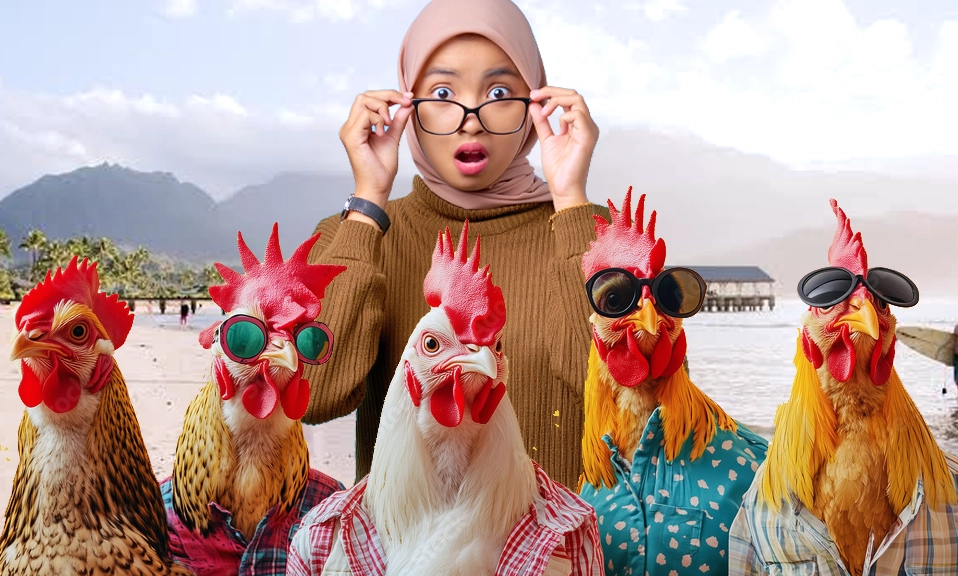
✅ Beaches (clucking along the sand).
✅ Parking Lots (pecking for food scraps).
✅ Parks & Trails (foraging in the bushes).
✅ Residential Areas (roaming backyards and streets).
✅ Tourist Hotspots (posing for photos with visitors).
💡 Tourist Tip: Don’t feed the chickens! While it’s tempting, feeding them encourages aggressive behavior and disrupts their natural foraging.
🕒 The Kauai Rooster Alarm Clock
- Dawn Chorus: Kauai’s roosters start crowing before sunrise—sometimes as early as 3 or 4 AM.
- Volume: With thousands of roosters, the morning cacophony can be deafening (earplugs are highly recommended for light sleepers).
- Local Humor: Residents joke that roosters are Kauai’s unofficial wake-up call—no alarm clock needed!
🚗 Chickens & Traffic
- Road Hazards: Chickens frequently cross roads, leading to near-misses and accidents. Locals drive cautiously to avoid hitting them.
- No Fear: Unlike chickens in other places, Kauai’s feral chickens have no fear of humans or cars. They’ll walk right in front of traffic without flinching.
🍽️ Why Don’t Locals Eat the Chickens?
- Tough Meat: Feral chickens are lean and wild, making their meat tough and gamey (not ideal for eating).
- Cultural Taboo: Many locals view them as part of the island’s identity rather than food.
- Pest Control: Chickens eat insects, centipedes, and cockroaches, helping control pests naturallyCockfighting: Some chickens are captured for cockfighting (though this is controversial and illegal in many areas).
🎨 Kauai’s Chicken Culture
The chickens have become a beloved (and sometimes frustrating) part of Kauai’s identity:
🛍️ Chicken Souvenirs
- Gift Shops: Overflowing with chicken-themed T-shirts, mugs, magnets, and postcards.
- Art & Photography: Chickens are a popular subject for local artists and photographers.
- Social Media Fame: #KauaiChickens and #FeralChickensOfHawaii are viral hashtags on Instagram and TikTok.
🎭 Local Legends & Lore
- “The Chicken Island”: Kauai is often jokingly called “Chicken Island” by locals and tourists.
- Hurricane Survivors: The chickens that survived Hurricanes Iniki and Iwa are seen as resilient symbols of the island’s spirit.
- No Mongooses: Unlike other Hawaiian islands (where mongooses were introduced to control rats), Kauai never got mongooses—allowing the chicken population to grow unchecked.
⚖️ The Downside: Problems Caused by Kauai’s Chickens
While the chickens add charm and character, they also create challenges:
❌ Noise Pollution: Constant crowing (especially at dawn) disrupts sleep for residents and tourists.
❌ Property Damage: Chickens scratch up gardens, eat plants, and leave droppings on porches and cars.
❌ Disease Risk: Large feral populations can spread diseases (like avian flu) to domestic poultry.
❌ Ecosystem Impact: Chickens compete with native birds for food and habitat, potentially disrupting local wildlife.
🛡️ What’s Being Done to Control the Population?
- Population Control Programs: Hawaii’s Department of Agriculture and county governments have started culling and relocation efforts (e.g., trapping and moving chickens to less populated areas).
- Public Education: Campaigns to discourage feeding chickens (which only makes the problem worse).
- Natural Predators: Some locals encourage cats and dogs to help keep numbers in check (though this is not a long-term solution).
- Sterilization: Experimental birth control methods (like sterilizing roosters) have been discussed but are difficult to implement on a large scale.
💡 The Reality:
- Culling is controversial—many locals oppose killing the chickens for cultural and ethical reasons.
- The chickens are here to stay—they’ve become too ingrained in Kauai’s ecosystem and culture to eradicate completely.
🌟 Why Tourists Love (and Hate) Kauai’s Chickens
| Love ❤️ | Hate 😠 |
|---|---|
| Unique photo ops (chickens in tropical settings). | Loud crowing at dawn (ruins sleep). |
| Part of Kauai’s charm (adds to the island’s quirky personality). | Messy and destructive (scratch gardens, poop everywhere). |
| Free pest control (eat bugs and insects). | Traffic hazards (chickens in the road). |
| Cultural symbol (represent Kauai’s wild, free spirit). | Overpopulation (too many in some areas). |
📍 Other Islands With More Animals Than People
Kauai isn’t the only place where animals outnumber humans. Here are a few other famous examples:
| Place | Animal | Animal Population | Human Population | Ratio |
|---|---|---|---|---|
| Aoshima, Japan | Cats | ~150 | ~4 | 37:1 |
| Key West, FL | Chickens | ~5,000 | ~25,000 | 1:5 |
| Bermuda | Chickens | ~1,000 | ~64,000 | 1:64 |
| Brunei | Chickens | ~200,000 | ~450,000 | ~1:2 |
💡 Fun Fact: Aoshima, Japan, is the opposite of Kauai—it’s overrun with cats instead of chickens!
🎤 Kauai’s Chickens Are Here to Stay
Kauai’s feral chicken population is a quirky, noisy, and inescapable part of the island’s identity. While they cause headaches for locals (early-morning wake-up calls, property damage, traffic hazards), they’ve also become a beloved symbol of Kauai’s wild, free spirit.
If you visit Kauai:
✅ Embrace the chickens—they’re part of the experience!
✅ Bring earplugs (trust me, you’ll need them).
✅ Don’t feed them (it only makes the problem worse).
✅ Take photos—they make for hilarious and unique souvenirs.
Kauai isn’t just a tropical paradise—it’s a chicken paradise too!