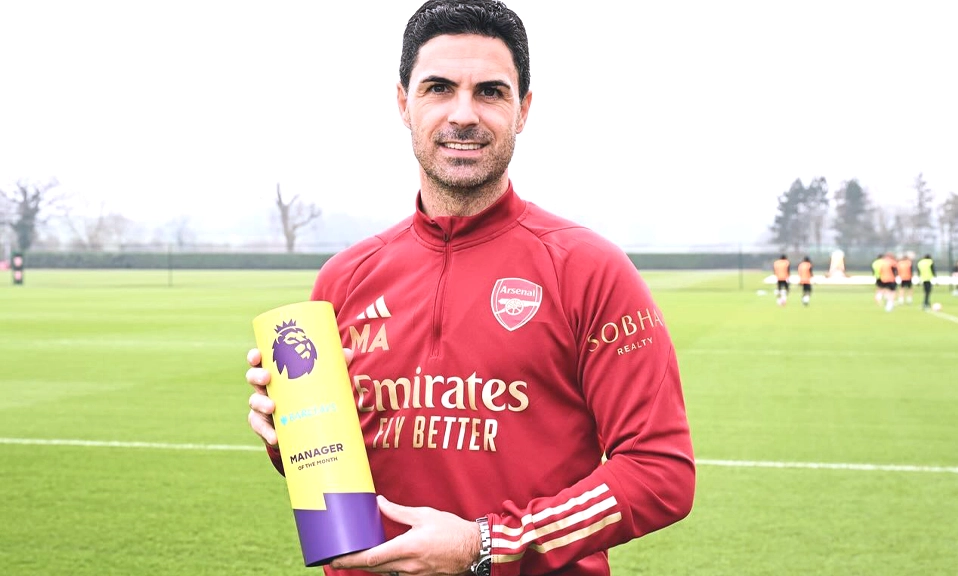
Mikel Arteta has committed his future to Arsenal until June 2030 — a deal that could take his tenure into an 11th year and, if the club’s hierarchy gets its way, into a dynasty.
On October 7, 2026, Arsenal confirmed that their manager had signed a new four-year contract, ending months of speculation and removing the uncertainty that had hung over the club since his previous deal entered its final 12 months. The new terms include a significant pay rise, taking Arteta from £10 million per year plus £5 million in bonuses to a package that places him among the best-paid managers in the Premier League.
But the contract is about more than money. It is a statement of intent from a club that believes it is on the cusp of something unprecedented.
The Deal: What Arteta’s New Contract Actually Means
Arteta’s previous deal was due to expire at the end of the 2026-27 season. By extending until 2030, Arsenal have secured the services of the man who ended the club’s 22-year wait for a Premier League title in May 2026.
The timing is significant. Talks had been ongoing since the title-winning season, but Arsenal deliberately paused negotiations over the summer to allow Arteta and his staff to focus on the transfer window and the new campaign. Chief executive Richard Garlick led the renewal, working alongside sporting director Andrea Berta and the club’s ownership.
When Arteta put pen to paper, he described it as “only the beginning of what we can achieve together”.
Why Arsenal Believe This Deal Is Different
Arsenal’s hierarchy has been explicit about the ambition behind the contract. The club’s leadership believes Arteta’s stability — and the continuity it provides — will give them a “competitive advantage” over their rivals.
“We want to dominate football for the next number of years,” Garlick said after the announcement. “We’re in a really strong position to do that, but we need to keep finding that edge that gives us that advantage”.
The club’s confidence is rooted in two factors. First, the departure of Pep Guardiola from Manchester City has created a power vacuum at the top of English football. Maresca has started well — five wins from five — but the instability at City, combined with their ongoing financial case, has opened a window that Arsenal intend to exploit.
Second, Arsenal believe their squad is entering its prime. The core of the team — Saka, Ødegaard, Rice, Saliba, Gabriel — is aged between 24 and 28. The club’s recruitment strategy has been built around signing players in that age bracket, ensuring a peak that could last for years.
The Challenges: What Could Stop Arsenal’s Dynasty
The path to sustained dominance is rarely smooth, and Arsenal face several obstacles.
The forward line remains incomplete. Arsenal spent £155 million rebuilding their midfield in the summer, signing Bruno Guimarães, Piero Hincapié, and Ezri Konsa. But they failed to add a level-raising forward — the kind of game-changer who can win matches on his own. Reports suggest Arsenal are targeting RB Leipzig’s Antonio Nusa in January, but the deal is not yet done.
The squad needs to keep evolving. The Athletic’s analysis of the new contract noted that Arteta has been “constantly tinkering” to keep Arsenal competitive — just nine of the 25 players from the 2023-24 squad are still at the club. That rate of turnover must continue, especially as key players approach 30. Ian Wright has raised concerns about whether Arsenal can rebuild effectively when their current core ages out.
Away form is a vulnerability. Former Arsenal winger Theo Walcott has warned that the club’s performances on the road could jeopardise their title defence. “Arsenal have one major vulnerability in their quest to retain the Premier League title,” Walcott said, pointing to away form as the primary concern.
Manchester City are still Manchester City. Despite the chaos surrounding the club, City have started the season with five wins from five and sit top of the table. A points deduction from their financial case could change everything — but until that happens, they remain the benchmark.
The Vision: Building a Dynasty, Not Just a Team
Arteta has never hidden his ambition. When he took the Arsenal job in December 2019, he inherited a club in crisis. Six years later, he has won the Premier League, transformed the squad, and rebuilt the club’s identity.
But the new contract isn’t just about what he has done. It’s about what he wants to do next.
The Sky Sports analysis described Arteta as entering “step five” of his project — the stage where the goal shifts from winning a title to keeping one. That means evolving the playing style, integrating academy talent, and ensuring that the squad’s hunger doesn’t fade after success.
It also means winning in Europe. Arsenal have never won the Champions League. Arteta knows that no dynasty is complete without continental glory.
Mikel Arteta is now
contracted to Arsenal until 2030. By the time that deal expires, he will have been in charge for more than a decade — behind only Arsène Wenger and George Allison in the club’s history.
The contract is a reward for what he has achieved. But it is also a bet on what he might yet achieve. Arsenal’s hierarchy believes that stability, combined with the instability elsewhere, gives them a chance to build something that lasts.
Whether they succeed depends on factors beyond any contract: recruitment, injuries, the evolution of rivals, and the unpredictable chaos of football. But for the first time in two decades, Arsenal have a manager, a squad, and a structure that look capable of sustained success.
Arteta called it “only the beginning.” Arsenal are betting that he’s right.