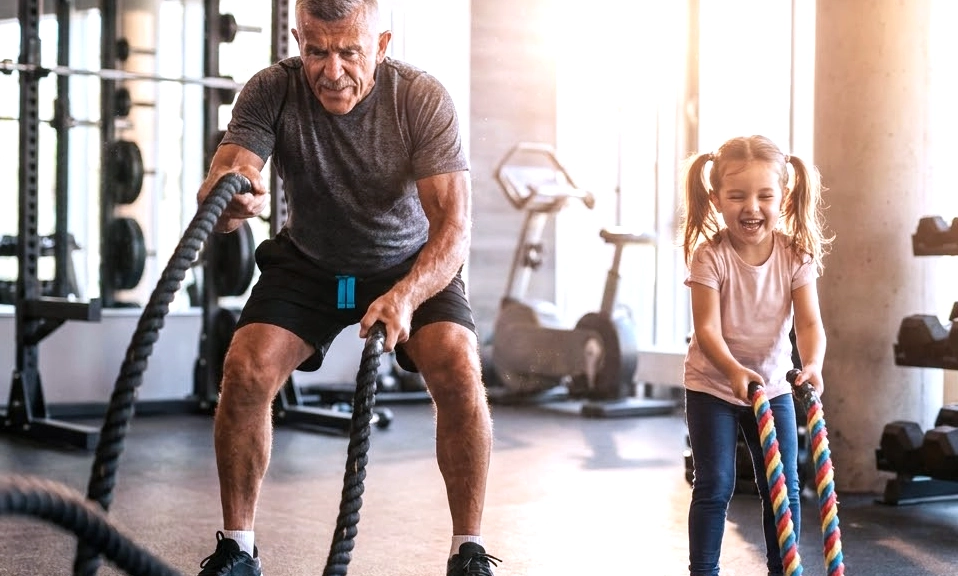
Losing weight is easy. Losing fat while keeping the muscle that keeps you strong, mobile, and independent — that’s the hard part. And for older adults, it’s the part that matters most. A new six-month study has found that one specific type of workout may be the only one that reliably achieves both.
The research, published in the journal Maturitas and led by researchers at the University of the Sunshine Coast in Australia, compared three different exercise intensities in adults over 65. The headline finding is striking: high, medium, and low-intensity exercise all led to modest fat loss — but only high-intensity interval training (HIIT) preserved lean muscle mass.
For anyone who has watched a parent or grandparent lose weight and end up weaker, frailer, and more prone to falls, this is not a minor distinction. It is the difference between weight loss that helps and weight loss that harms.
The Study: 123 Adults, Six Months, Three Intensities
The trial involved 123 healthy older adults from the Greater Brisbane region, with an average age of 72 and an average body mass index (BMI) of approximately 26 kg/m² — which the researchers described as normal for adults over 65.
Participants were assigned to one of three supervised exercise groups and completed three 45-minute sessions per week for six months. The groups were:
HIIT: Short bursts of very vigorous activity alternated with recovery periods
Moderate-intensity training: Continuous exercise at a steady, moderate effort
Low-intensity training: Gentler sessions designed for ease and sustainability
Body composition was measured at the start, at three months, and at six months using a specialized scanning technique that estimates fat and lean tissue throughout the body.
The Results: Fat Loss for All, Muscle Preservation for One
The findings were clear.
Both high and moderate-intensity training significantly reduced fat mass, with larger improvements than the low-intensity group. Participants in both groups also saw improvements in the composition of weight carried around the middle — specifically, reductions in visceral adipose tissue, the dangerous fat that accumulates deep in the abdomen and surrounds internal organs like the liver.
But when it came to lean muscle, the groups diverged.
The moderate-intensity group lost a small amount of lean muscle alongside their fat loss. The low-intensity group showed smaller overall improvements, and the effect on muscle was less clear.
Only the HIIT group lost fat while maintaining their lean mass.
“We found that high, medium and low intensity exercises all led to modest fat loss but only HIIT retained lean muscle,” said lead author Dr. Grace Rose, an exercise physiologist at the University of the Sunshine Coast.
Why HIIT Works: “A Stronger Signal to Keep Muscle”
The study doesn’t definitively explain why HIIT preserved muscle while moderate exercise didn’t, but the researchers have a plausible theory.
HIIT involves repeated short bursts of very hard exercise — “where breathing is heavy and conversation is difficult” — alternated with easier recovery periods. This pattern places significantly more mechanical and metabolic stress on the muscles than steady-state exercise at a moderate pace.
“HIIT likely works better because it puts more stress on the muscles,” explained Associate Professor Mia Schaumberg, a co-author of the study, “giving the body a stronger signal to keep muscle tissue rather than lose it”.
In other words, the body responds to the demand placed on it. When muscles are pushed hard, the body recognizes them as valuable and preserves them. When exercise is gentler, the body may be more willing to break down muscle tissue during a period of fat loss.
A Crucial Caveat: Lean Mass Is Not the Same as Strength
One important limitation of the study is that the scans measured lean tissue, not muscle strength directly. Lean mass includes muscle, but also other tissues and water. Changes in lean mass measurements do not necessarily translate into equivalent changes in strength.
This means the study tells us that HIIT preserved lean tissue better than moderate exercise — but it doesn’t definitively prove that HIIT participants were stronger or more functional as a result. More research is needed to confirm whether the muscle preserved through HIIT translates into real-world benefits like better balance, faster walking speed, or fewer falls.
Why This Matters for Older Adults
As people age, they naturally lose muscle mass and gain body fat. This combination — sometimes called sarcopenic obesity — reduces strength, balance, and mobility, making everyday activities like climbing stairs and getting out of chairs more difficult. It also increases the risk of falls, diabetes, heart disease, and other health problems.
The standard advice for older adults who want to lose weight is often to eat less and move more. But if the “move more” part is moderate-intensity exercise that causes muscle loss, the result can be a lighter but frailer person — someone who has traded one health risk for another.
The HIIT findings suggest a different approach. If older adults can lose fat while keeping the muscle that supports their independence, they get the benefits of weight loss without the costs.
A Practical Guide: What HIIT Looks Like for Older Adults
The HIIT protocol in the study involved 45-minute supervised sessions three times per week. But HIIT doesn’t require a gym or specialized equipment.
The basic structure is simple: alternate short bursts of hard effort with easier recovery periods. For example, a person might walk quickly, cycle, or climb stairs at a fast pace for one minute, then slow down for another minute, and repeat the cycle.
The key is that the intense intervals should be genuinely hard — “where breathing is heavy and conversation is difficult”. If you can chat comfortably during the “hard” interval, it’s not hard enough.
That said, anyone new to HIIT — especially an older adult with cardiovascular concerns, joint issues, or other health conditions — should consult a doctor before starting. The study participants were healthy older adults, and the exercise was supervised by professionals.
The study doesn’t
suggest that moderate or low-intensity exercise is worthless. All three groups lost fat. Both high and moderate intensities improved the composition of weight around the waist. And low-intensity exercise has its own benefits, particularly for people who are deconditioned, injured, or managing chronic conditions.
What the study does suggest is that if your goal is to lose fat while keeping muscle, intensity matters. And for older adults, preserving muscle is not a vanity concern. It is the foundation of independence, mobility, and quality of life.
Dr. Rose put it simply: “We found that high, medium and low intensity exercises all led to modest fat loss but only HIIT retained lean muscle”.
The takeaway is not that everyone needs to do HIIT. It’s that the type of exercise you choose shapes the type of weight you lose. For older adults who want to lose fat without losing the muscle that keeps them strong, high-intensity interval training may be the most efficient path.
And in a field where “lose weight” has been the default advice for decades, that’s a genuinely important distinction.