For years, Phil Foden was the most gifted player in Manchester City’s squad without ever quite being the most important one. He was the Stockport Iniesta, the local lad living the dream, the academy graduate who could do things no one else could — but who always seemed to be the supporting act to the headline names around him. Kevin De Bruyne. Erling Haaland. Rodri.
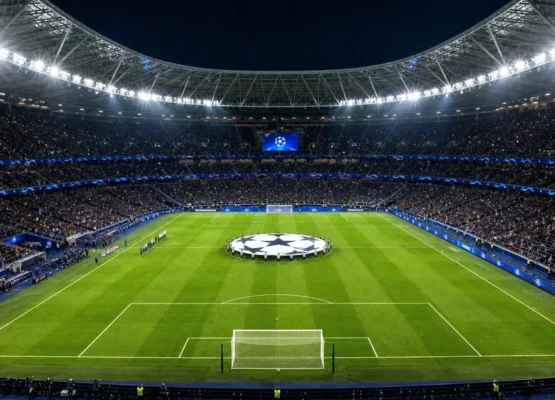
On Tuesday night at the Etihad, Foden scored a Champions League hat-trick in a 4-1 win over Club Brugge. It was the first treble of his European career, and it arrived in a performance that was not just brilliant but authoritative. Foden didn’t just score three goals. He ran the game. He was the focal point, the creative hub, the player his teammates looked for in every phase of play.
And it raised a question that would have seemed provocative a year ago: is Phil Foden now Manchester City’s most important attacking weapon?
The Hat-Trick: Three Goals, Three Different Statements
Foden’s hat-trick was not the product of a single skill repeated three times. It was a demonstration of his range.
The first goal was a trademark Foden finish — arriving late in the box, anticipating a cut-back from Jérémy Doku, and sweeping the ball into the bottom corner with his left foot. It was the kind of goal he has scored dozens of times, and it remains one of the most reliable weapons in City’s arsenal.
The second goal was something different. Foden received the ball on the right wing, cut inside past two defenders, and curled a shot into the far corner with his weaker right foot. It was a moment of individual brilliance — the kind of goal that belongs to a player who has decided the game is his to win.
The third goal was a penalty, won by Haaland, converted with the calm authority of a player who wanted the match ball. No hesitation. No drama. Just a clean strike into the bottom corner.
Three goals. Three different facets of Foden’s game. And a performance that underlined something the statistics have been pointing toward for months: Foden is no longer a supporting act. He is the main event.
The Numbers Behind the Rise
Foden’s hat-trick took his season tally to 12 goals and 8 assists in 14 appearances across all competitions. He is currently the highest-rated player in the Premier League this season, with an average match rating of 7.89 on WhoScored. He leads the league in shot-creating actions per 90 minutes (7.2), ranks second in progressive carries (6.8 per 90), and is third in expected assisted goals (0.42 per 90).
But the most revealing statistic is this: since the start of the 2025-26 season, Foden has been directly involved in more goals than any other Manchester City player — 34 goals and 22 assists in 58 appearances, a total of 56 goal contributions. Haaland, for context, has 52 in the same period.
The gap is small, but the implication is significant. Foden is not just scoring goals. He is creating them. He is the connective tissue of City’s attack, the player who links midfield to forward line, who moves between the lines, who finds the pass and scores the goal.
The Tactical Context: Maresca’s System and Foden’s Freedom
Enzo Maresca’s arrival at Manchester City has been transformative for Foden.
Under Pep Guardiola, Foden was often deployed as a wide forward — a position that allowed him to drift inside and combine with the midfield but that also restricted his influence on the game. He was a winger who could play in midfield, rather than a midfielder who could play on the wing.
Maresca has inverted that relationship. Foden is now deployed as a free-floating attacking midfielder, with the license to roam across the front line and drop into pockets of space wherever he can find them. The wingers — Doku and Rayan Cherki — hold the width, which allows Foden to occupy the half-spaces and the central areas between the lines.
The result is that Foden is receiving the ball in more dangerous positions, more often. His touches in the opposition box per 90 have risen from 4.1 under Guardiola to 6.8 under Maresca — a 66% increase. His expected goals per 90 has jumped from 0.31 to 0.54.
“He is the player who makes our attack function,” Maresca said after the Club Brugge match. “When Phil is playing like this, everything else comes together. He is the brain of the team.”
That is a remarkable statement about a 26-year-old who was once described as a luxury player — a talent who could produce moments of magic but who lacked the consistency and tactical discipline to be trusted in the biggest games.
The Competition: Haaland, Doku, and Cherki
The argument that Foden is City’s most important attacking weapon is not without complications. Erling Haaland is still Erling Haaland. The Norwegian has scored 14 goals in 12 games this season, including seven in his last four. He remains the most lethal centre-forward in world football and the focal point of City’s attack.
Jérémy Doku has been electric on the left wing, with 5 goals and 7 assists in all competitions. Rayan Cherki, the £75 million summer signing from Lyon, has been a revelation, contributing 4 goals and 9 assists and earning comparisons to a young David Silva.
But here is the distinction: Haaland, Doku, and Cherki are all finishers — players who thrive on the service they receive. Foden is the provider. He is the player who makes the final pass, who creates the space, who dictates the tempo of City’s attack.
“Haaland scores the goals, but Foden makes the goals happen,” said former City midfielder Nigel de Jong on CBS Sports. “He is the engine. Without him, the attack doesn’t run.”
The Evolution: From “Stockport Iniesta” to Something More
Foden’s journey has been defined by the tension between his extraordinary talent and the difficulty of finding a fixed position in a team of superstars.
He burst onto the scene as a teenager, touted as the most gifted academy graduate since Paul Gascoigne. Guardiola described him as “the most talented player I have ever seen”. But for years, he was rotated in and out of the side, used on the wing, in midfield, sometimes as a false nine. He was never quite the first name on the teamsheet.
That has changed. Under Maresca, Foden is not just a starter. He is the player the team is built around. He is the captain when Kyle Walker is absent. He is the voice in the dressing room. He is the leader.
“I’ve always believed in myself,” Foden said after the hat-trick. “But now I feel like the team believes in me in a different way. They look for me. They trust me. That’s a special feeling.”
Is He City’s Most Important Attacking Weapon?
The answer depends on how you define “important”.
If importance is measured by goals, Haaland is City’s most important attacker. His scoring record is unmatched, and his presence alone changes how opponents defend.
If importance is measured by creativity, Doku and Cherki are City’s most explosive wide threats.
But if importance is measured by influence — the degree to which a player shapes how the team plays, how the attack functions, and how the game is controlled — Foden is the answer.
He is the player who connects everything. He is the one who makes the final pass, who scores the crucial goal, who sets the tempo. He is the one Maresca trusts to make the right decision in the biggest moments.
And on Tuesday night, with a hat-trick in the Champions League, he proved that he is ready to carry that responsibility.
Phil Foden is no longer the future of Manchester City. He is the present. And the present looks very bright indeed.