7 Ways This Horror Reboot Updates the Classic Story
She was the first. The novel that launched Stephen King’s career in 1974, the film that made Brian De Palma a legend in 1976, and the story that has been remade, sequelized, and reimagined more times than almost any other horror property. Now, for the first time, Carrie White is getting the television treatment — and the result is a story that feels terrifyingly contemporary.
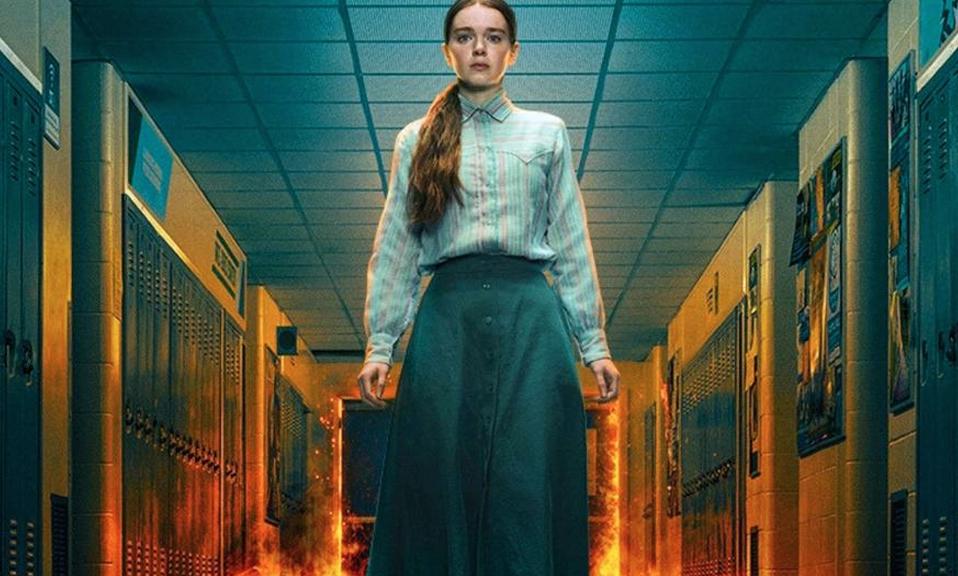
Prime Video’s Carrie, an eight-episode limited series from Mike Flanagan (The Haunting of Hill House, Midnight Mass), premiered on October 7, 2026. It stars Summer H. Howell as Carrie White, Samantha Sloyan as Margaret White, and Siena Agudong as Sue Snell. Flanagan serves as writer, executive producer, showrunner, and director of four episodes, with Stephen King himself on board as an executive producer.
King was initially resistant to yet another adaptation. When Flanagan approached him, the author reportedly responded bluntly: “Leave her alone”. But Flanagan had an answer — and it convinced King not just to allow the series, but to praise it as “brilliant” and its commentary on social media as “shocking and true”.
Here are the seven ways this Carrie updates the classic story for a new generation.
1. Social Media Replaces Face-to-Face Cruelty
The most significant update is also the most obvious. De Palma’s 1976 film reflected the social tensions of 1970s America — school bullying, religious extremism, and face-to-face cruelty. Flanagan’s series brings the story firmly into 2026, adding cyberbullying, social media harassment, and the constant threat of humiliating moments being recorded and shared online.
Flanagan explained his reasoning directly: “In the time that passed since King thought of these characters for the first time, we have seen a specific flavour of cruelty and bullying that has been born from anonymity on the internet. I think that gave a new shape to our world in a profound way”.
The series also incorporates modern high school realities like metal detectors and active shooter drills, reinforcing the idea that “modern society has made life so much more complicated and dangerous for children”.
2. The “TK Gene” Expands Carrie’s Powers Into a Wider Universe
In De Palma’s film, Carrie’s telekinesis is presented as a unique supernatural phenomenon. The series introduces something far more expansive: a hereditary “TK gene”, suggesting that Carrie is one of several women around the world with similar abilities.
This change opens the door to a much larger mythology. Flanagan has spoken about how King’s later work — particularly The Shining — uses the term “the Shining” for psychic abilities. If King had written Carrie just a few years later, Flanagan speculated, Carrie’s abilities “might’ve been called ‘the Shining'”.
The series introduces a wider universe of telekinetic characters beyond the original story, leaving the door open for future developments.
3. Carrie Survives — and That Changes Everything
This is the biggest change from King’s novel, and it’s the one that has generated the most conversation.
Major spoilers ahead.
In King’s book and most adaptations, Carrie dies after her final confrontation with her mother. In the 2026 series, Carrie survives. The finale sees her being driven away by Emaline — a character who turns out to be real — to somewhere she can be among others with powers and learn to harness them properly.
The change was made deliberately to leave the door open for more seasons. Flanagan has expressed hopes for a three-season arc for the series. It also gives the story a more defiant arc than the pure tragedy of King’s original, transforming Carrie from a victim into someone with a future.
4. Margaret White Becomes a Tragic Figure, Not Just a Monster
Margaret White has always been one of horror’s most terrifying mothers — a religious fanatic whose abuse of her daughter is as frightening as any telekinetic outburst. The 2026 series makes her more nuanced.
Samantha Sloyan’s Margaret is described as a “far more nuanced character,” one who elicits “a certain amount of pity and sympathy” even as she uses her righteousness as a cudgel. The series also reveals that Margaret has similar powers to Carrie, and that she saves herself from the wreckage of the house during the final confrontation.
That change to the lore illustrates one of the show’s most significant updates: Margaret is now “more of a tragic figure” than a simple villain.
5. The Documentary Format Returns to King’s Novel
One of the most faithful elements of the series is also one of its most structurally interesting. King’s novel wasn’t a straightforward narrative — it was built from interviews, news reports, book excerpts, and eyewitness accounts looking back at the tragedy. De Palma’s film largely abandoned that structure.
Flanagan returns to it. The series uses survivors and locals to reflect on what happened, giving the story “a more layered structure” and making the tragedy “feel like an event that has continued to haunt the community”. The finale opens with Sue Snell being interrogated by a documentarian about Carrie, echoing the novel’s epistolary style.
6. A New Backstory: The Death of Carrie’s Father
The series begins with a new element that puts grief at the centre of the story from the very first episode: the death of Carrie’s father, Ralph White, in a workplace accident. His absence shapes the family dynamic from the start, adding a layer of tragedy that the original novel and film didn’t explore in the same way.
7. It Connects to the Wider Stephen King Universe
Flanagan has confirmed that his Carrie series will have connections to the wider Stephen King universe — including the new Dark Tower adaptation he’s developing. The introduction of the TK gene and the existence of other powered individuals is the first step toward that larger world.
The series ends with Carrie driving off with Emaline toward a community of people with powers — a direct setup for stories that could intersect with other King properties. Flanagan has said he wants the show to unfold across three seasons, potentially connecting the telekinetic teenager to the broader mythology of King’s interconnected universe.
Mike Flanagan didn’t
just remake Carrie. He found a reason to tell the story again — and that reason is the world we live in now. The cruelty that King wrote about in 1974 hasn’t gone away. It’s just found new tools: the anonymity of the internet, the permanence of a shared video, the relentless surveillance of social media.
Summer H. Howell’s Carrie is a Carrie for 2026. Samantha Sloyan’s Margaret is a Margaret for 2026. And the story — about a girl who is bullied, abused, and pushed until she breaks — is as relevant now as it has ever been.
King was wrong to say “leave her alone.” Carrie White has something left to say. And Flanagan, it turns out, was the right person to let her say it.
Carrie is streaming now on Prime Video. All eight episodes are available.