When we hear the word “powerful,” our minds usually jump to the biggest, most aggressive predators we know: lions, bears, or sharks.
But in the animal kingdom, “power” isn’t a single metric. It’s a masterpiece of evolutionary engineering. Power can mean the ability to lift thousands of times your own body weight. It can mean a bite that crushes bone, a strike that boils water, or sheer, unstoppable mass.
If we measure power by the laws of physics, biology, and raw force, the true champions of the animal kingdom might surprise you.
Here are the 6 most powerful animals in the world, ranked by the specific, mind-bending type of strength they possess.
🏆 1. The Pound-for-Pound Champion: The Dung Beetle
The Superpower: Unmatched relative strength.
The Stats: Can pull 1,141 times its own body weight.
The Stats: Can pull 1,141 times its own body weight.
If you want to talk about pure, unadulterated strength relative to size, no animal on Earth comes close to the dung beetle. To put that into human terms, that is the equivalent of an average-sized man pulling six double-decker buses filled with people.
The Science: This incredible strength is an evolutionary necessity. Male dung beetles use their powerful horns and legs to wrestle rivals and roll massive balls of dung (which serve as food and nurseries for their young) across rough terrain. Their exoskeletons and muscle attachments are perfectly optimized for generating maximum torque, making them the undisputed weightlifting champions of the planet.
🐘 2. The Absolute Terrestrial Titan: The African Elephant
The Superpower: Unstoppable, raw physical mass.
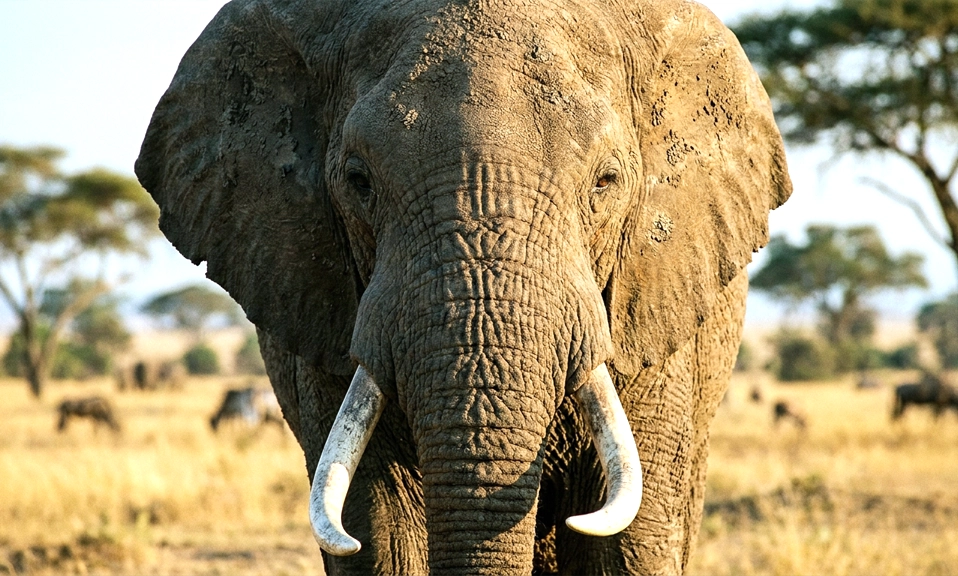
The Stats: Can weigh up to 14,000 pounds (6,350 kg) and lift over 600 pounds with its trunk alone.
The Stats: Can weigh up to 14,000 pounds (6,350 kg) and lift over 600 pounds with its trunk alone.
When it comes to absolute, brute-force strength on land, the African bush elephant is the undisputed king. An adult elephant’s trunk contains over 40,000 individual muscles (humans have about 600 muscles in their entire body).
The Science: This muscular hydrostat allows an elephant to delicately pick up a single blade of grass or violently uproot a full-grown acacia tree. Combined with their massive skeletal structure, elephants can push over vehicles, break through thick brush, and carry immense loads. They are living, breathing bulldozers, and their power is matched only by their surprising gentleness and high intelligence.
🐊 3. The Hydraulic Jaws: The Saltwater Crocodile
The Superpower: The most devastating bite force on Earth.
The Stats: A bite force of roughly 3,700 PSI (pounds per square inch).
The Stats: A bite force of roughly 3,700 PSI (pounds per square inch).
For comparison, a human bite is about 160 PSI, and a lion’s bite is around 650 PSI. The saltwater crocodile’s jaws are essentially industrial hydraulic presses.
The Science: Crocodiles have evolved some of the most powerful jaw-closing muscles in the vertebrate world, designed to clamp down on struggling prey and never let go. Interestingly, the muscles that open their jaws are incredibly weak (a human can easily hold a crocodile’s mouth shut with their bare hands). But once those teeth close, the locking mechanism and sheer crushing power can shatter turtle shells, crush bone, and drag a 1,000-pound animal underwater in the infamous “death roll.”
🦐 4. The Kinetic Striker: The Peacock Mantis Shrimp
The Superpower: The fastest, most powerful punch in the ocean.
The Stats: Strikes with the acceleration of a .22 caliber bullet (over 10,000 times the force of gravity).
The Stats: Strikes with the acceleration of a .22 caliber bullet (over 10,000 times the force of gravity).
Don’t let the vibrant, rainbow colors fool you. The peacock mantis shrimp is a tiny, underwater heavyweight boxer. It hunts by punching its prey with specialized, club-like appendages.
The Science: The mantis shrimp’s strike is so fast (clocking in at around 50 mph) that it literally boils the water around it. The strike creates a “cavitation bubble”—a vacuum pocket that collapses almost instantly, producing a shockwave, a flash of light (sonoluminescence), and a burst of heat nearly as hot as the surface of the sun. Even if the shrimp misses its target, the shockwave from the collapsing bubble is often enough to stun or kill the prey instantly.
🦅 5. The Aerial Assassin: The Harpy Eagle
The Superpower: Devastating grip strength and aerial lifting power.
The Stats: Talon grip strength of 400+ PSI (stronger than a grizzly bear’s bite) and can lift prey equal to its own body weight.
The Stats: Talon grip strength of 400+ PSI (stronger than a grizzly bear’s bite) and can lift prey equal to its own body weight.
The skies belong to the raptors, and the Harpy Eagle is the apex predator of the tropical rainforest canopy. With a wingspan of up to 7 feet, it is built for one thing: snatching heavy prey out of the trees.
The Science: A Harpy Eagle’s talons are the size of a grizzly bear’s claws (up to 5 inches long). When it locks its grip onto a sloth, monkey, or large bird, the tendons automatically tighten, requiring almost no muscular effort to maintain a crushing hold. This “tendon locking” mechanism allows the eagle to carry heavy, struggling prey through dense branches without tiring, delivering a fatal blow with terrifying efficiency.
🐋 6. The Ultimate Force of Nature: The Blue Whale
The Superpower: Sheer, incomprehensible mass and propulsion.
The Stats: Weighs up to 200 tons (equivalent to 33 elephants) and its heart is the size of a bumper car.
The Stats: Weighs up to 200 tons (equivalent to 33 elephants) and its heart is the size of a bumper car.
Power isn’t always about aggression; sometimes, it’s just about being so massively powerful that the environment bends to you. The blue whale is the largest animal known to have ever existed on Earth, surpassing even the largest dinosaurs.
The Science: The power required to move a 200-ton body through water is staggering. A single swipe of a blue whale’s tail fluke generates enough thrust to propel the massive creature at speeds up to 30 mph in short bursts. Their vocalizations (low-frequency pulses) are so powerful they can travel hundreds of miles underwater, and their aorta is wide enough for a human to swim through. They are the ultimate testament to the sheer physical power of biological engineering.
Nature’s Perfect Engineering
When we look at the animal kingdom, it’s easy to measure power by who would win in a fight. But true power is about specialization.
The dung beetle didn’t evolve to fight elephants; it evolved to dominate its specific niche with unparalleled efficiency. The mantis shrimp didn’t need to be big; it just needed to be fast. Evolution doesn’t care about a universal “strongest” title; it cares about what works.
And looking at these six creatures, it’s clear that nature’s engineering is far more creative, diverse, and awe-inspiring than any superhero comic book.