What’s Really Happening Behind the Scenes
Many people ask a simple question:
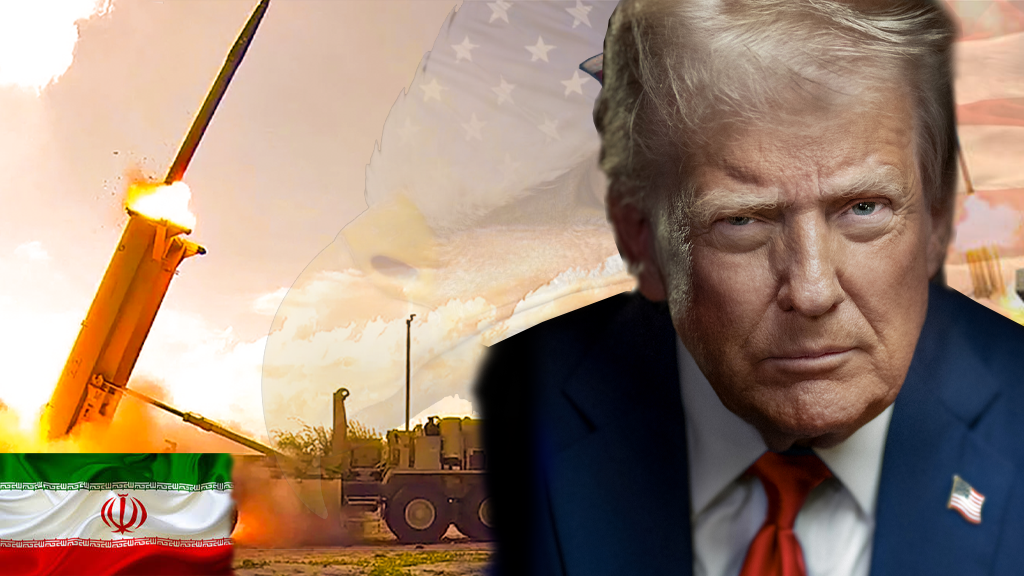
Why did Donald Trump hesitate to go to war with Iran, despite strong rhetoric and rising tensions?
The answer is not simple — and what we see publicly may have very little to do with what happens behind the curtain.
The Hidden Power of Business and Family Politics
To understand Trump’s hesitation, we must first understand how deeply business and family are intertwined with politics in his administration.
Trump did not treat the presidency strictly as a political office — he often treated it like a family business operation.
His son-in-law, Jared Kushner, became one of the most powerful figures in foreign policy, especially in the Middle East. Major diplomatic responsibilities were handed directly to family members, which raised serious concerns worldwide.
Many sensitive negotiations, including relations with Gulf nations, were controlled through family channels, not traditional diplomatic institutions.
This created a situation where:
National decisions were influenced by personal financial interests and private business relationships.
Qatar: The Silent Power Player
One of the strongest hidden forces behind Trump’s Iran policy is Qatar.
Qatar has deep political and economic connections with:
The United States
Trump-linked business interests
Regional power brokers
Qatar also maintains complex ties with Iran, including shared gas fields and regional coordination.
Because of this, Qatar strongly opposes a war against Iran — not publicly, but strategically.
And when business interests, regional stability, and elite alliances align, war becomes very inconvenient.
Business Deals Behind Diplomacy
During Trump’s presidency, major real estate and development projects connected to Trump-linked companies were active in Qatar and Saudi Arabia.
In many cases, Trump-related companies succeeded where others failed, particularly through family business networks.
This created a dangerous overlap:
Political power + family influence + massive foreign investments
Such financial entanglements naturally discourage military conflict — especially against a country like Iran, whose instability could collapse regional investment structures.
Why Trump Never Truly Wanted War with Iran
Despite aggressive public statements, Trump consistently avoided direct military confrontation.
Examples:
Cancelled air strikes after Iranian drone attacks
Avoided escalation after U.S. base missile strikes
Preferred sanctions and economic pressure over invasion
This suggests that war was never truly his goal.
The risks were too high:
Economic collapse in the Gulf region
Energy market instability
Collapse of sensitive business networks
Regional chaos affecting investments
Iran’s Regional Role: A Dangerous Balance
Iran is widely known as:
The primary supporter of Hamas
The main backer of Hezbollah
A key player in regional proxy conflicts
If Iran’s regime collapsed:
Power vacuums would explode
Regional wars could spread uncontrollably
Gulf economies could destabilize
Ironically, some Gulf states fear Iran’s collapse more than Iran itself, because instability threatens their survival.
This explains why:
Qatar strongly opposed attacking Iran — and likely influenced U.S. restraint.
The Qatar Crisis: Evidence of Trump’s Influence
One of the strongest examples of Trump’s behind-the-scenes influence occurred just before Joe Biden took office.
At that time:
Saudi Arabia, UAE, Bahrain, and others were preparing military action against Qatar.
Thousands of troops were reportedly positioned near borders.
Regional war was dangerously close.
Trump personally intervened and stopped the operation.
This confirmed two things:
Qatar had extraordinary influence.
Trump prioritized regional business stability over military conflict.
Why Trump Hesitated — The Real Summary
Trump’s hesitation to attack Iran was shaped by:
Business interests
Family diplomatic control
Gulf state economic alliances
Qatar’s strategic influence
Fear of regional collapse
This was not about peace, but about protecting financial and political ecosystems.
A Balanced Reflection
Many of us voted for Trump.
And to be honest:
👉 He achieved many positive outcomes.
👉 But he also made serious strategic mistakes — especially in the Middle East.
Truth requires us to acknowledge both sides.
Onto that;
What we see on television is only theater.
The real decisions happen:
Behind closed doors, through business deals, family channels, and elite alliances.
And that is why Trump hesitated to attack Iran — not because he couldn’t, but because he shouldn’t, from his personal strategic perspective.