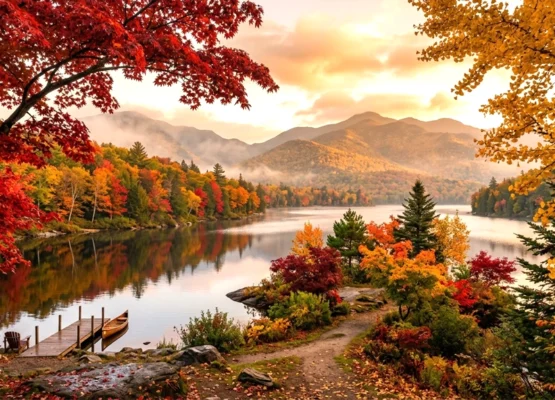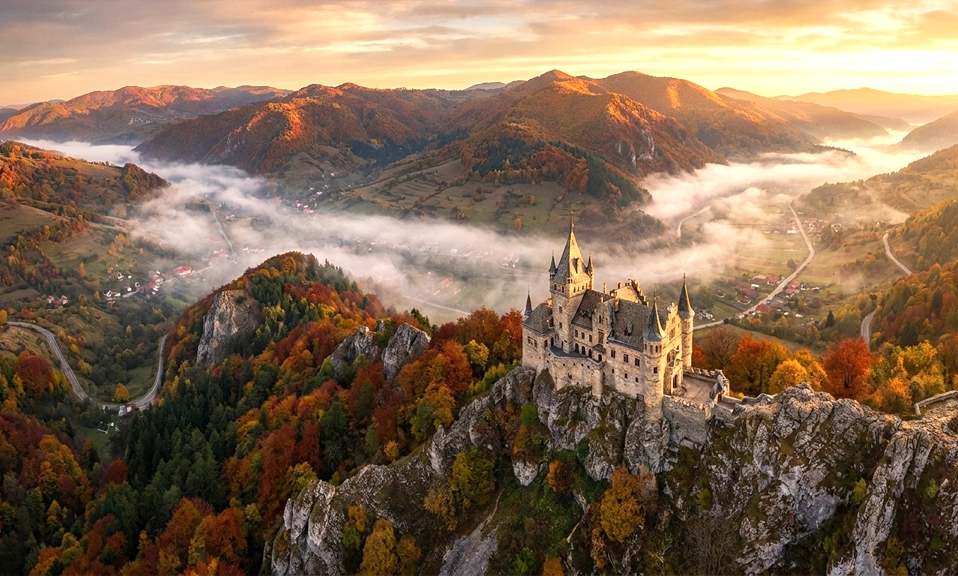
October is when Transylvania becomes itself. The fog rolls in, the forests turn gold and rust, and the legends feel a little less like stories and a little more like warnings. Bran Castle gets the crowds — and the Dracula branding — but the real mysteries of this region are scattered across forgotten villages, haunted forests, and subterranean worlds that most travellers never see.
National Geographic named Romania one of the best destinations to visit in October 2026, singling out Transylvania and the Transfăgărășan as essential autumn experiences. Here are 10 mysterious places worth exploring beyond the castle that tourism built.
1. Hoia Baciu Forest: The Bermuda Triangle of Transylvania
Why it’s mysterious: Called “the world’s most haunted forest” by The Guardian, Hoia Baciu is a square mile of twisted trees, unexplained lights, and a clearing where a UFO was photographed in 1968. Visitors report phones dying, camera equipment failing, unexplained rashes, disembodied whispers, and hands grabbing them in the dark.
Why October: The forest’s atmosphere is at its most intense in autumn. Night tours run from 6:00 PM to 9:30 PM, taking visitors along a 3.5-kilometre path to the famed Poiana Rotunda (Round Clearing), where the vegetation is bizarrely circular and locals say the veil between worlds is thinnest. The tour company offers overnight camping for the particularly intrepid.
Where: Outskirts of Cluj-Napoca.
2. Corvin Castle: The Gothic Fortress With a Torture Chamber
Why it’s mysterious: Corvin Castle is widely considered the most beautiful castle in Transylvania — and one of the most haunted. Paranormal accounts range from a monk bricked alive into the Capistrano Tower whose spirit still lingers, to phantom footsteps and unseen hands brushing past visitors in the corridors. The castle’s underground torture chambers and the “well of prisoners” add to its chilling reputation.
Why October: The castle hosts evening concerts and cultural events throughout October, including a performance on October 9, 2026, in the “Iancu de Hunedoara” musical season. The castle feels “even more magical lit up at night” according to visitors.
Where: Hunedoara, western Transylvania.
3. Sighișoara: Dracula’s Real Birthplace and the Halloween Citadel
Why it’s mysterious: Sighișoara is the real birthplace of Vlad the Impaler — the historical figure who inspired Dracula. Its medieval citadel, a UNESCO World Heritage Site, is one of the most atmospheric towns in Europe. The Church on the Hill sits atop a dark, wood-covered walkway built in the 1600s, and the hilltop cemetery is a deeply eerie place to wander.
Why October: The second edition of the “Halloween în Cetate” festival takes place from October 30 to November 1, 2026, transforming the medieval walls, towers, and historic buildings into a canvas for 3D video-mapping, architectural lighting, and immersive installations. There’s a Parade of Shadows, street animation with vampires and witches, fire shows, and guided tours. A Great Dracula Ball is also held on Halloween night.
Where: Sighișoara, Mureș County.
4. Turda Salt Mine: A Subterranean World 115 Meters Underground
Why it’s mysterious: Turda Salt Mine is one of the oldest salt mines in the world, first documented in 1271. It has been transformed into a surreal underground theme park, complete with a ferris wheel, a boating lake, and even a cinema — all located 115 metres beneath the surface. The temperature inside stays at 10–12°C year-round, and the walls are carved from salt that glitters in the artificial light.
Why October: The mine is expanding with a €25 million investment, including a cinema at 115 metres depth. October visits avoid the summer queues, and the cold, damp atmosphere feels appropriately subterranean.
Where: Turda, near Cluj-Napoca.
5. Rónay Mansion: The Abandoned Ruin Haunted by a Young Woman
Why it’s mysterious: Not far from Timișoara, the Rónay Mansion is a deserted ruin being swallowed by wild vegetation. Built in 1896, it was once a symbol of elegance with 11 rooms, a library of over 4,000 books, and ornamental tiled stoves. Today, only bare walls remain — along with the chilling legend of a young woman said to haunt the empty rooms.
Why October: Abandoned mansions are at their most atmospheric in autumn, when the vegetation that’s reclaiming them turns brown and the shadows lengthen. The Rónay Mansion is hidden from the eyes of the world — and that’s the point.
Where: Between the villages of Șag and Utvin, Timiș County.
6. Saschiz Refuge Fortress: A 14th-Century Peasants’ Fortress With Secret Tunnels
Why it’s mysterious: Built in 1347 by the Saxons of seven Transylvanian villages as a refuge against invading armies, the Saschiz Refuge Fortress was recently restored and opened to visitors. It has inspired numerous local legends, including one claiming that a secret underground passage links it to the Evangelical church in the centre of the village, and another that every merchant passing through was required to transport a cartload of stone up the hill for its construction.
Why October: The fortress is open daily from 10:00 AM to 5:00 PM, and autumn is the perfect time to explore its ship-shaped walls and imagine the villagers who once fled here for safety.
Where: Saschiz, Mureș County.
7. Castle of Magyarózd: The Poet’s Secret Hidden for a Century
Why it’s mysterious: This small Renaissance-era castle in Magyarózd was home to Kata Szidónia Petrőczy, the first female Hungarian poet. She wrote poems that no one knew about during her lifetime — they lay hidden in the castle for over a century before being discovered and recognised for their literary value. The castle later burned down, was rebuilt, and today serves as a drug addiction rehabilitation centre.
Why October: The castle sits on a hill in a tiny village accessible only through a dirt road, where horse-drawn carriages still share the way with cars. Getting there is an adventure in itself — and the GPS may not work.
Where: Ozd, Mureș County.
8. Poienari Fortress: The Real Dracula’s Castle (and 1,480 Steps)
Why it’s mysterious: Forget Bran Castle. Poienari Fortress is the real castle of Vlad the Impaler — the place where he reportedly hid the country’s gold and where his wife threw herself from the towers rather than be captured. The ruins stand high on a cliff overlooking the Argeș River, at the foothills of the Carpathian Mountains. Reaching them requires climbing 1,480 steps through the forest.
Why October: The hike is cooler and the autumn colours make the climb spectacular. The fortress is accessible via the Transfăgărășan, which is open through October before seasonal closures.
Where: Poienari, Argeș County.
9. Scărișoara Ice Cave: A Glacier Underground
Why it’s mysterious: Scărișoara Ice Cave contains the second-largest underground glacier in the world, after Eisriesenwelt in Austria. The cave’s internal temperature stays around 0°C year-round — even in summer — and the ice formations date back thousands of years. It was first mentioned in 1863 by Austrian geographer Arnold Schmidl.
Why October: The cave is most visited during winter, but October offers a quieter experience. Dress warmly — layers are essential.
Where: Apuseni Mountains, Alba County.
10. Transfăgărășan: The Road Through the Clouds
Why it’s mysterious: The Transfăgărășan is a 90-kilometre road that winds through the peaks and valleys of the Southern Carpathians. October is the last month it’s fully open to tourists before winter closures, and the autumn landscapes offer some of the most spectacular images of the mountains. National Geographic describes it as one of the last periods when travellers can drive the entire route before the snow arrives.
Why October: The road becomes a corridor of gold, rust, and crimson — one of the most spectacular drives in Romania. But check weather conditions and seasonal closure rules before you go.
Where: Făgăraș Mountains, between Wallachia and Transylvania.
Transylvania in October
isn’t just about Dracula. It’s about fog-shrouded forests where the trees grow in impossible patterns, abandoned mansions where the walls remember what happened, salt mines that descend into the earth like portals to another world, and mountain roads that cut through clouds of autumn colour.
Bran Castle is worth seeing. But the real Transylvania — the one that lives in legends and whispers — is waiting in the places most travellers drive past.
Go beyond the castle. The mysteries are deeper than you think.