When your monthly electricity bill arrives and the number makes your jaw drop, your first instinct is probably to check the thermostat. Did someone leave the AC on? Is the heater running too high?
But while your HVAC system is the undisputed king of energy consumption, it’s rarely the culprit behind a sudden, unexplained spike in your bill.
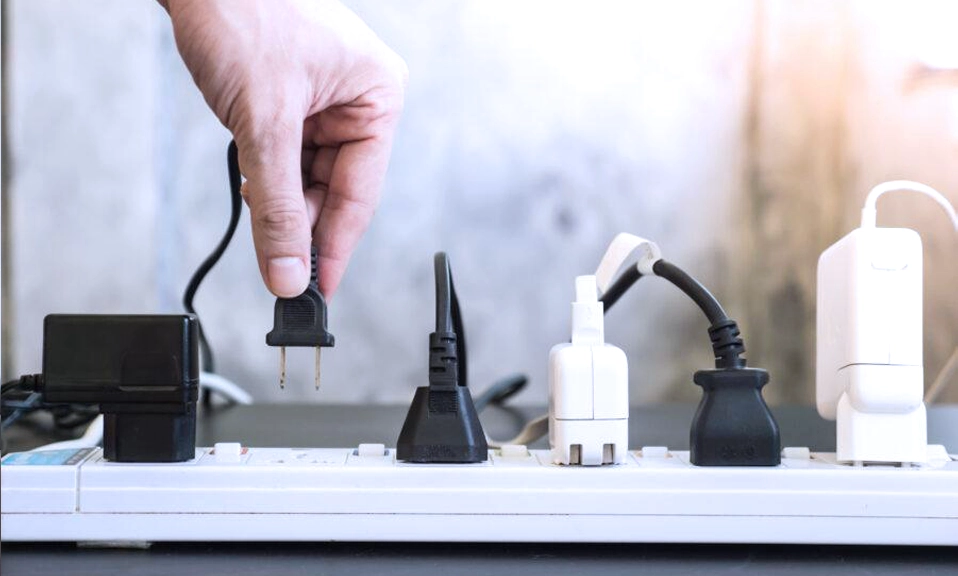
The real thieves are hiding in plain sight. They are the appliances you use every day, the gadgets you leave plugged in “just in case,” and the machines that are silently sucking power even when they are turned “off.” This phenomenon is known as vampire power (or standby power), and it accounts for up to 10% of your total home energy use.
If you’re tired of overpaying the utility company, it’s time to hunt down the hidden energy hogs. Here are 12 appliances that could be secretly inflating your electricity bill, and exactly how to stop them.
🍺 1. The “Garage Beer Fridge” (Secondary Refrigerator)
The Secret Cost: That old, hand-me-down fridge you put in the garage to keep drinks cold is one of the biggest energy hogs in your house. Older refrigerators are incredibly inefficient, and because they are in an uninsulated garage, the compressor has to work overtime to fight the ambient heat and cold. It can cost you up to $150 extra a year to run it. The Fix: If you don’t strictly need a second fridge, unplug it. If you do need one, recycle the old beast and buy a modern, Energy Star-rated compact freezer or fridge. It will pay for itself in energy savings within a few years.
📺 2. The Cable / Set-Top Box
The Secret Cost: You turn off your TV, but the cable box stays on. Because it needs to receive signals for On-Demand viewing and record DVR content, set-top boxes rarely go into a true “sleep” mode. They draw power 24/7, costing the average household about $20 to $30 a year per box. The Fix: If you don’t use the DVR or On-Demand features, ask your provider for a basic box that can be fully powered down. Alternatively, plug your entertainment center into a smart power strip that cuts power to the box when the TV is turned off.
🎮 3. Gaming Consoles (In “Instant On” Mode)
The Secret Cost: Modern consoles like the PlayStation 5 and Xbox Series X are incredibly powerful, and their default “Instant On” or “Standby” settings allow them to download updates and wake up quickly. The catch? In this mode, they draw almost as much power as they do when you are actively playing a game. The Fix: Go into your console’s settings and change the power mode to “Energy Saver” (or “Shutdown”). It will take an extra 10 seconds to boot up, but it will slash the console’s standby power consumption by up to 80%.
🐠 4. The Aquarium
The Secret Cost: A beautiful fish tank is a stunning piece of decor, but it’s essentially a massive, running appliance. Between the water pump, the heater, the filter, and the lights, a large aquarium can add $50 to $100+ to your annual electric bill. The Fix: Switch to LED aquarium lighting (they use a fraction of the power of fluorescent tubes). Ensure your heater is the correct wattage for your tank size, and put your pump and lights on a programmable timer so they aren’t running at maximum capacity 24/7.
☕ 5. The Coffee Maker
The Secret Cost: It’s not just the brewing that uses power. The digital clock on the front is on 24/7, and if you use a machine with a glass carafe, the heating plate underneath stays hot for hours, drawing a massive amount of continuous electricity. The Fix: Unplug the coffee maker when you aren’t using it, or plug it into a switched outlet. Better yet, brew your coffee into a thermal, insulated carafe so you can turn the machine off completely the second it finishes brewing.
🖨️ 6. The Inkjet Printer
The Secret Cost: Inkjet printers are notorious for using electricity even when they are “asleep.” To prevent the ink nozzles from drying out and clogging, the printer periodically wakes itself up to run a micro-cleaning cycle. If you rarely print, you are paying for cleaning cycles that yield no results. The Fix: If you don’t print every week, plug the printer into a power strip and physically turn it off when not in use. If you print frequently, make sure you actually use it regularly so the cleaning cycles aren’t wasted.
🍽️ 7. The Dishwasher (Specifically, the “Heated Dry” Setting)
The Secret Cost: The dishwasher itself is relatively efficient, but the heated dry cycle is an energy nightmare. The heating element at the bottom of the tub gets incredibly hot to bake the water off your dishes, using a massive spike of electricity at the end of every single cycle. The Fix: Go into your dishwasher’s settings and turn off “Heated Dry.” Instead, open the dishwasher door a few inches right after the final rinse cycle. The ambient air will dry your dishes perfectly in 20 minutes, using zero extra electricity.
💻 8. The Desktop Computer
The Secret Cost: Laptops are highly optimized for battery life, but desktop computers are power guzzlers. If you leave your desktop running overnight, or rely on a “screensaver” instead of putting the monitor to sleep, you are wasting a significant amount of power. A high-end gaming PC left idling can cost over $60 a year. The Fix: Stop using screensavers (they were invented for old CRT monitors, not modern screens). Set your PC and monitor to go to “Sleep” after 10 minutes of inactivity, and physically shut the computer down when you go to bed.
💧 9. The Dehumidifier
The Secret Cost: If you run a dehumidifier in a damp basement, the compressor uses a lot of power. But the real waste happens when the humidity bucket gets full. Many older models will keep the compressor running, blowing hot air and using electricity, but failing to pull any water out of the air because the internal sensor has tripped. The Fix: Clean the filter regularly, and if possible, hook up a continuous drain hose so the machine never stops working due to a full bucket. If you must use a bucket, empty it daily.
📶 10. The Older Wi-Fi Router
The Secret Cost: Your router is the only appliance in your house that is designed to run 24 hours a day, 7 days a week, 365 days a year. If you are still using the router provided by your ISP five years ago, it is likely highly inefficient, drawing more power and providing worse coverage than modern alternatives. The Fix: Upgrade to a modern, energy-efficient mesh Wi-Fi system. Today’s routers use a fraction of the electricity of older models while providing vastly superior coverage.
🗣️ 11. Smart Speakers and Displays
The Secret Cost: Devices like the Amazon Echo Show or Google Nest Hub are always listening, always processing, and often keeping their screens illuminated. While a single device doesn’t use a massive amount of power, having one in every room of the house adds up to a noticeable “always-on” drain. The Fix: Go into the device settings and set the screen to turn off after 10 or 30 seconds of inactivity. Turn off “Wake word” responses in rooms where you don’t actively use it.
🔌 12. “Wall Wart” Chargers and Power Strips
The Secret Cost: You unplugged your phone, but the charger is still in the wall. You turned off your TV, but the soundbar, gaming console, and lamp are still plugged into a power strip with a red light glowing. This is the classic “vampire load.” Individually, a single charger uses pennies. Collectively, having 20 “wall warts” and idle power strips in your home can cost you $100+ a year. The Fix: Smart power strips are the ultimate weapon. They detect when the main device (like a TV or PC) is turned off and automatically cut power to the peripheral devices (soundbar, monitor, lamp), completely eliminating vampire draw.
Take Back Your Power
You don’t need to live in the dark to save money on your electric bill. The goal isn’t to stop using your appliances; it’s to stop them from using you.
By simply changing a few settings (like turning off “Heated Dry” and “Instant On”), unplugging the garage fridge, and investing in a few smart power strips, you can easily shave 10% to 15% off your monthly bill. That’s hundreds of dollars a year that you can keep in your own pocket, rather than handing it over to the power company for electricity you didn’t even use.
Which of these hidden energy hogs surprised you the most? Do you use smart plugs or power strips to fight vampire power? 💡🔌💰