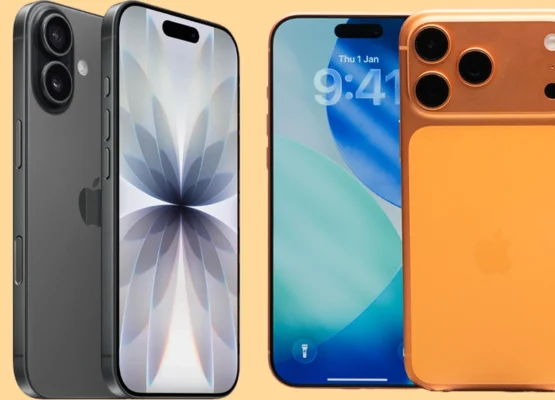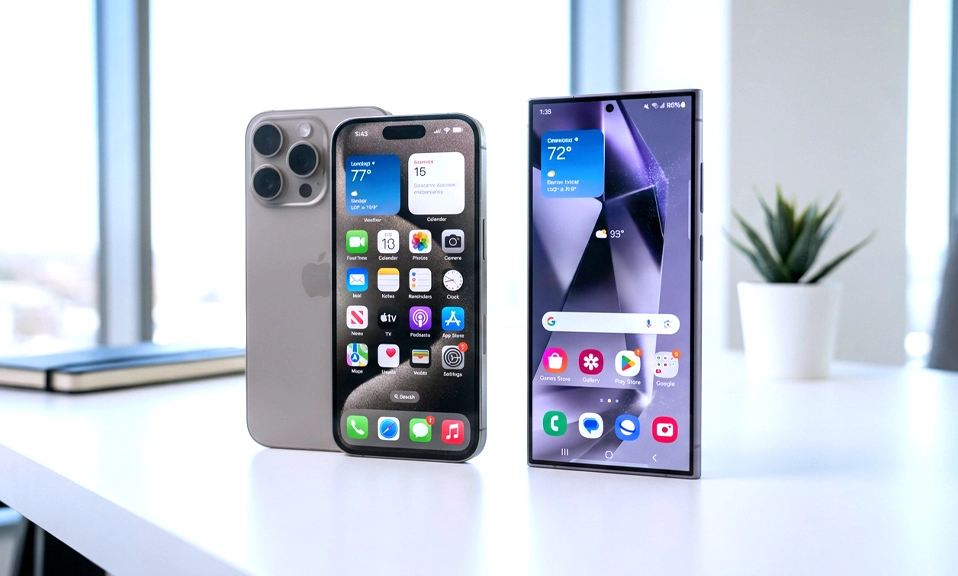
The Apple vs. Samsung debate is older than most smartphones. Every year, both companies release excellent devices, and every year, fans on both sides declare victory. But the truth is simpler: Apple and Samsung are not trying to win the same game. They are playing different ones. And each does certain things better than the other.
Here are five areas where Apple still leads — and five where Samsung has the edge.
5 Things Apple Does Better
1. Silicon and Performance Consistency
Apple’s custom chips are the benchmark for mobile performance. The A20 Pro in the iPhone 18 Pro is built on a 2nm process, with a 6-core CPU, 7-core GPU, and a neural engine designed for on-device AI. It doesn’t just win benchmarks — it wins them while running cooler and drawing less power than most rivals.
Samsung’s Galaxy S26 Ultra uses Qualcomm’s Snapdragon 8 Elite Gen 5, which is an excellent chip. But Apple’s vertical integration — designing both the hardware and the software — gives it an efficiency advantage that’s hard to match. iPhones consistently deliver smoother sustained performance, better thermal management, and longer battery life for the same workload.
Why it matters: If you want the fastest, most efficient phone on the market, Apple still sets the pace.
2. Ecosystem and Continuity
No one does seamless integration like Apple.
AirDrop, Handoff, Universal Clipboard, Continuity Camera, iMessage, FaceTime, Find My, and the ability to answer calls on your Mac or unlock your iPhone with your Apple Watch — these features aren’t flashy individually. But together, they create an experience that no other company has replicated.
Samsung has its own ecosystem with Galaxy Buds, Galaxy Watch, and DeX, and it works well within the Android world. But Apple’s ecosystem is tighter, more reliable, and more deeply integrated across devices.
Why it matters: If you own a Mac, iPad, Apple Watch, and AirPods, an iPhone makes all of them better. That lock-in is real — and it’s the reason so many people never leave.
3. Privacy and Security
Apple has built its brand on privacy. App Tracking Transparency, on-device processing, end-to-end encryption for iMessage and FaceTime, and the ability to lock down your data from advertisers — these are genuine differentiators.
Samsung has improved its privacy game with Knox Security and One UI’s privacy dashboard, but it doesn’t have the same public commitment or track record. Apple’s business model doesn’t depend on advertising, which gives it less incentive to harvest your data. Samsung’s does, through its ad-supported services and partnerships.
Why it matters: If privacy is a priority, Apple is still the safer bet.
4. Long-Term Software Support
Apple supports iPhones for 5–7 years with regular iOS updates. And when Apple releases an update, it rolls out to every eligible device on the same day, regardless of carrier or region.
Samsung now promises 7 years of updates for its flagship phones, which is genuinely impressive. But the rollout is slower, and carrier-dependent in some markets. Apple’s update cadence is still the gold standard.
Why it matters: A phone you can keep for five or six years without losing features or security is a better investment.
5. Video Recording and Resale Value
Apple’s video recording is still the best in the business. The iPhone 18 Pro can shoot 4K at 120fps in Dolby Vision, with sensor-shift stabilization and cinematic mode. Samsung’s video is good, but Apple’s is more consistent, more color-accurate, and more reliable in challenging conditions.
And then there’s resale value. iPhones hold their value better than any other smartphone brand. A two-year-old iPhone is worth significantly more than a two-year-old Samsung flagship. That matters if you upgrade often.
Why it matters: Apple gives you the best video tools and the best return on your investment.
5 Things Samsung Does Better
1. Displays
Samsung makes the best displays in the world. The Galaxy S26 Ultra’s 6.9-inch Dynamic AMOLED 2X panel is brighter, more color-accurate, and more advanced than anything Apple ships. Samsung has pushed peak brightness to 6,000 nits, with anti-reflective coatings and higher refresh rates on the way.
Apple’s Super Retina XDR displays are excellent — but they’re often supplied by Samsung. When Samsung keeps the best panel technology for its own phones, it has a genuine advantage.
Why it matters: If you care about the screen — and you should, it’s what you look at most — Samsung often has the edge.
2. Camera Versatility and Zoom
Samsung’s camera systems are more versatile than Apple’s.
The Galaxy S26 Ultra has a 200MP main sensor, a 50MP ultrawide, a 50MP 5x telephoto, and a 10MP 3x telephoto. That’s four rear cameras covering every focal length. Apple’s iPhone 18 Pro has a 48MP main and a 48MP ultrawide — no dedicated telephoto. The iPhone Duo doesn’t have one either.
Samsung also leads in zoom quality. Its 5x optical and 10x hybrid zoom are genuinely useful. Apple’s digital zoom can’t compete.
Why it matters: If you want a camera that can shoot everything from macro to telephoto, Samsung gives you more tools.
3. Charging Speed
Samsung charges faster than Apple.
The Galaxy S26 Ultra supports 60W wired charging and 25W wireless charging. The iPhone 18 Pro supports 40W wired and 25W MagSafe. That’s not a huge gap, but it’s real — and Samsung’s 45W–60W charging can top up a phone in under an hour.
Samsung has also adopted Qi2 magnetic charging natively, while Apple’s MagSafe is proprietary.
Why it matters: Faster charging means less time tethered to a wall. Samsung wins on convenience.
4. Foldables
Samsung has been making foldables for seven generations. Apple just released its first, the iPhone Duo. Samsung’s Galaxy Z Fold 8 is thinner, lighter, and more refined than Apple’s debut foldable. It also supports DeX, which turns the phone into a desktop computer when connected to a monitor.
Apple’s iPhone Duo is impressive for a first attempt, but it’s heavier, thicker, and more expensive. Samsung’s head start shows.
Why it matters: If you want a foldable that feels like a mature product, Samsung is still the king.
5. Customization and Choice
Samsung gives you more options.
One UI is deeply customizable, with Good Lock modules that let you change everything from the lock screen to the navigation gestures. DeX turns your phone into a desktop. Themes, Always-On Display, Edge Panels, and routines give you control that iOS simply doesn’t offer.
Samsung also offers a wider range of phones — from the budget Galaxy A-series to the flagship S-series and the foldable Z-series. Apple’s lineup is narrower and more expensive.
Why it matters: If you want a phone that adapts to you, rather than the other way around, Samsung gives you more freedom.
Apple does integration,
performance, privacy, video, and long-term value better. Samsung does displays, cameras, charging, foldables, and customization better.
Neither company is “better” overall. They’re optimized for different people.
Choose Apple if: you want the smoothest experience, the best ecosystem, the strongest privacy, and the highest resale value.
Choose Samsung if: you want the best screen, the most versatile camera, faster charging, a foldable, and more control over your device.
The best phone for you depends on what you value most. And in 2026, both companies are making some of the best phones they’ve ever made.