In a year crowded with sequels, remakes, and familiar franchises, one of 2026’s most anticipated releases is a new IP from a Chinese studio that most Western players had never heard of a few years ago. Phantom Blade Zero arrives on October 29, 2026, for PlayStation 5 and PC, and it has already built a level of buzz that rivals the biggest blockbusters of the fall. With over three million wishlists on Steam, pre-orders that have “far exceeded expectations,” and hands-on previews comparing its combat to Sekiro, this dark martial-arts action RPG is not just another Soulslike-adjacent title. It is a statement.
Here is why Phantom Blade Zero has become one of the year’s most anticipated releases—and what players need to know before they step into the Wulin.
The “Kung Fu Punk” Aesthetic: Where Wuxia Meets Steampunk
The first thing that sets Phantom Blade Zero apart is its visual identity. Developer S-GAME describes the style as “kung fu punk” —a collision of traditional Chinese martial arts with steampunk machinery and body modification. It is a world where ancient grudges and shifting alliances play out against a backdrop of steam-powered iron towers and dark experiments.
The result is a setting that feels both timeless and alien. S-GAME founder and director Soulframe Liang describes the Wulin as “a martial underworld forged in blood and belief” , populated by guardians of righteousness, those who have fallen to darkness, and warriors whose hopes have been broken. It is a world that takes its martial arts seriously—Donnie Yen, who serves as creative consultant, described it as being “rooted in the traditions of Chinese martial arts”—while also embracing a bold, fantastical imagination.
The Story: 66 Days to Live
The narrative hook of Phantom Blade Zero is as sharp as its protagonist’s blade. Players control Soul, one of the Order’s most feared assassins, who is framed for his leader’s murder and betrayed by his childhood blood brother, Zuo Shang. Zuo Shang drives a blade through Soul’s heart, and he dies—but not permanently. A mysterious figure called the Flesh Sculptor brings Soul back to life with an artificial heart that will only keep him alive for 66 days.
With that countdown ticking, Soul must uncover the truth behind his betrayal and confront the growing threat to the Wulin. Choices made along the way can change his path through the story, adding a layer of narrative agency to the brutal combat. The premise is simple but effective: a dying assassin with nothing left to lose, hunting the people who killed him. It is the kind of setup that lends itself to both emotional weight and relentless action.
The Combat: “The Best Since Sekiro”
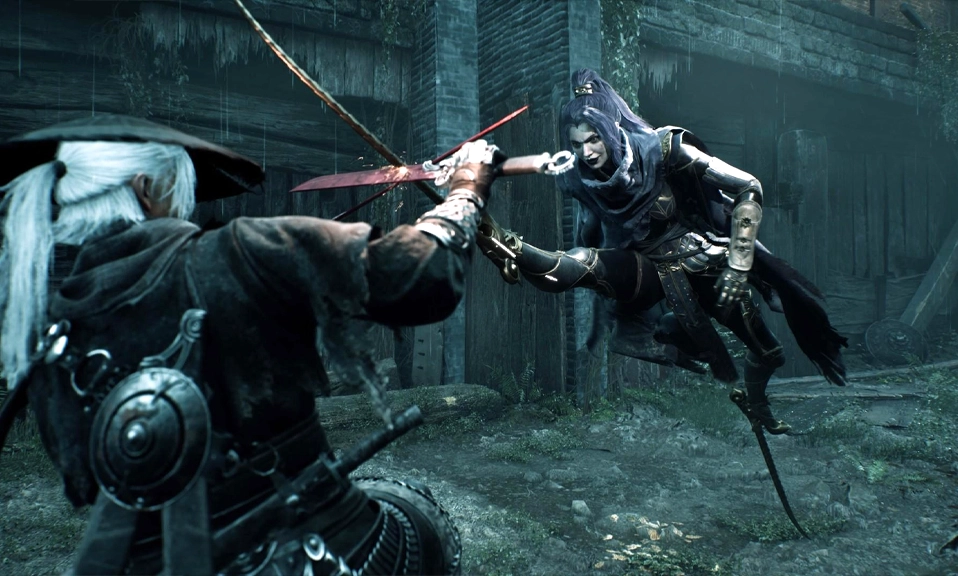
If there is one thing that has defined the conversation around Phantom Blade Zero, it is the combat. Preview after preview has reached for the same comparison: Sekiro: Shadows Die Twice. GameRant called it “the best combat since Sekiro,” and IGN described it as “the most smooth and satisfying action since Sekiro”. But the game is not a clone. It builds on that foundation with its own ideas.
At its core, combat revolves around parrying and dodging, draining an enemy’s Sha-Chi stamina gauge to stagger them and open them up to a one-hit execution. Unlike Sekiro, however, Phantom Blade Zero features a full combo system, where light and heavy attacks string together to reduce an enemy’s stamina faster. Enemy attacks are color-coded: blue-flash attacks must be parried, while red-flash attacks must be dodged, and doing either successfully delivers a powerful counterattack.
The depth comes from the weapon-switching system. Soul can equip multiple weapons, and switching mid-combo refills his Sha-Chi meter, allowing players to chain devastating attacks across different styles without pause. Polygon compared it to discovering how transforming your trick weapon mid-combo in Bloodborne can unleash a heavy blow. With over 30 main weapons and 25 secondary “Phantom Edges” —including ranged options and combat summons—the variety of playstyles is substantial.
Donnie Yen: More Than a Celebrity Cameo
The involvement of Donnie Yen has been a major driver of Phantom Blade Zero‘s buzz, but S-GAME has been careful to emphasize that this is not a paid endorsement. Producer Soulframe Liang addressed the concerns directly: “This collaboration is not another case of a star doing paid promotion for a game” .
Yen has served as a creative consultant on the game’s kung fu choreography since 2023, working with a team of 15-20 stunt performers to choreograph the action. He also plays Mó Yuan, Soul’s father and a hidden final boss, performing full facial and motion capture and recording his own English voice lines. The character first appeared as the masked man protecting a baby in the game’s original trailer, and his identity as Soul’s father has been hidden in plain sight for years.
For Yen, the project is something of a full-circle moment: he directed the intro cinematic for Capcom’s Onimusha 3 over two decades ago. For players, it means the combat has been shaped by one of the most respected martial artists in cinema—not just marketed with his name.
The Bosses: A Highlight Reel of Ideas
If the combat is the star of Phantom Blade Zero, the bosses are its supporting cast, and they are extraordinary. Previews have described encounters that range from a Chinese lion dance grandmaster whose movements carry the rhythm of the traditional dance, accompanied by drums and cymbals, to a foe who conjures additional arms mid-battle and becomes a sickle-wielding whirlwind.
One early boss, Jagged Steel, the Frenzied Brute, waits at the top of a valley beneath a waterfall, wielding a gigantic serrated sword. Later fights include a woman who flits through the air and summons paper-mache dragons from the ground, and a two-phase battle against dancers controlling a lion-head puppet. Every boss has a distinct visual design, moveset, and personality, and they are the moments where the game’s combat system truly shines.
The Difficulty: Something for Everyone (and Something for No One)
S-GAME has confirmed three difficulty modes, a notable choice for an action game that wears its Sekiro influences on its sleeve.
Wayfarer is for players who want to focus on the story.
Hellwalker offers tougher, more adaptive enemy AI.
Sixty-Six Days is described simply as “not for the faint of heart” .
The Sixty-Six Days mode is the most unusual. In this mode, death costs Soul one of his 66 days of life. When the counter reaches zero, permanent death occurs. It is a roguelike-adjacent twist on the standard action formula, raising the stakes of every encounter and forcing players to weigh risk against reward. It is the kind of bold design choice that could define the game’s legacy—or drive players to frustration—depending on how it is balanced.
Why It Matters
Phantom Blade Zero is arriving at a moment when the action genre is crowded but increasingly homogeneous. The success of Black Myth: Wukong proved that Chinese-developed action games can compete on the global stage, and Phantom Blade Zero is poised to build on that momentum with a distinctly different vision. Its “kung fu punk” aesthetic is unlike anything else in the AAA space. Its combat is being spoken of in the same breath as Sekiro. And its involvement of Donnie Yen is substantive, not superficial.
The game is not without risks. Previews have noted framerate hitches on high-end PCs close to launch, a yellow flag for a game that demands precision. The story, while intriguing in its setup, has not yet demonstrated the emotional depth of its premise in the opening hours. And the Sixty-Six Days mode may prove too punishing for all but the most dedicated players.
But those are caveats, not dealbreakers. The overwhelming impression from hands-on previews is of a game that is confident, stylish, and mechanically rich—a game that makes you feel like a martial arts legend every time you parry a blade or chain a combo across three different weapons. As Polygon put it, Phantom Blade Zero “looks to carve out its own space among sword-slashing action games”. After four hours, it became their most-anticipated action game of 2026.
Phantom Blade Zero launches on October 29, 2026, for PlayStation 5 and PC. It is a 12-month console exclusive on PS5. If you have been waiting for an action game that feels genuinely new—one that takes the lessons of Sekiro and Bloodborne and filters them through the lens of wuxia cinema—this is the one to watch. The Wulin is waiting. And Soul only has 66 days.