Motorola hasn’t been a serious contender in the premium flagship race for years. The Edge series came close, but always fell short in one crucial area—software support, camera consistency, or raw performance. The Motorola Signature changes that. Launched in January 2026, it is the company’s most deliberate, most confident attempt yet to sit at the same table as Samsung and Apple. And on paper, it has the specs to do it.
But the flagship market is not won on paper. It is won on trust, ecosystem, and the thousand small details that separate a good phone from a great one. So the real question is not whether the Signature is a good phone—it is. The question is whether it is good enough to make someone choose it over the Galaxy S26 Plus or the iPhone 17. The answer is more complicated than a spec sheet suggests.
The Design: Thin, Light, and Genuinely Different
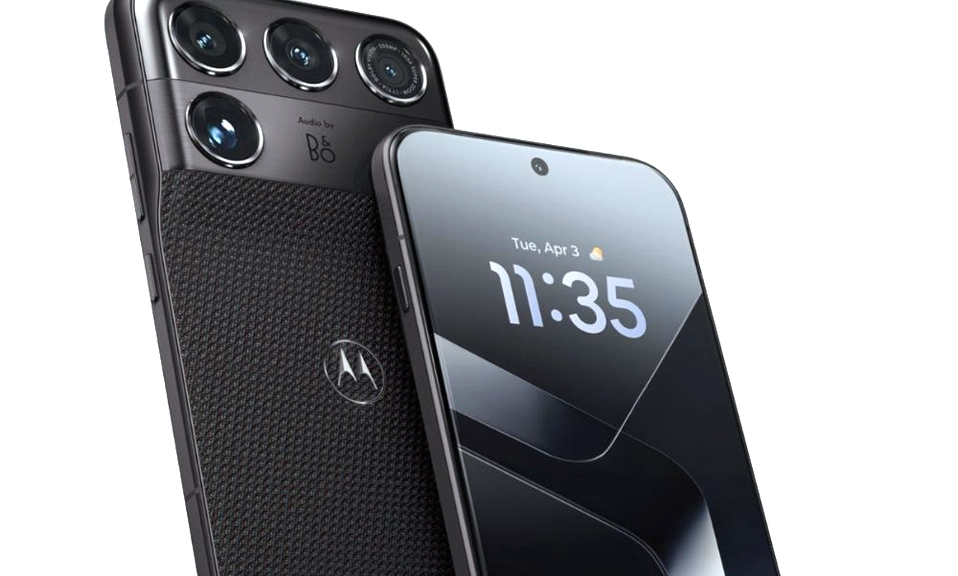
The Signature’s most immediate advantage is its physicality. At 6.99mm thick and 186 grams, it is one of the slimmest and lightest flagship phones on the market . The aluminum frame is paired with a backplate that emulates twill fabric, offering grip that glass-backed phones lack . It is IP68 and IP69 rated, and MIL-STD 810H certified, meaning it can survive drops and high-pressure water jets that would destroy most rivals .
The design language is unmistakably Motorola, with gently curved edges and a camera island that slopes rather than protrudes . It is not a radical departure, but it is a refined one—a phone that feels more expensive than its price tag suggests.
The Display: Bright, Fast, and Smooth
The 6.8-inch LTPO AMOLED display is a genuine strength. It has a 1,264 x 2,780 resolution and a 165Hz refresh rate, with the ability to drop to 1Hz for always-on display functionality . Peak brightness reaches 6,200 nits, making it legible in any lighting condition . In practice, reviewers found it “pleasing” for video, social media, and reading, indoors and out .
The resolution is not quite as high as the Galaxy S26 Ultra’s, but it is more than sufficient for a phone of this size. The 165Hz refresh rate is a specification that few apps currently exploit, but it future-proofs the device and makes scrolling feel exceptionally fluid.
The Cameras: The Signature’s Strongest Argument
Motorola has never been known for camera excellence, but the Signature is a deliberate break from that history. It features a quad 50MP camera system, with a 50MP main sensor (Sony LYTIA 828, 1/1.28″), a 50MP ultra-wide, a 50MP 3x telephoto (Sony LYTIA 600), and a 50MP front-facing camera .
The headline achievement is the DXOMARK Gold Label for visual quality. In DXOMARK’s benchmark, the Signature beat the Google Pixel 10 Pro and ranked in the top 10 smartphones for camera performance at the time of testing . It trails the iPhone 17 Pro, OPPO Find X9 Pro, and Xiaomi 17 Ultra, but the gap is narrower than Motorola’s previous efforts .
The camera system supports 8K video recording with Dolby Vision, 100x Super Zoom Pro, and a suite of AI-driven enhancement features . For a brand that has historically been an also-ran in mobile photography, this is a remarkable leap.
The Performance: Fast, But Not the Fastest
The Signature runs on Qualcomm’s Snapdragon 8 Gen 5 (3nm), paired with 16GB of LPDDR5X RAM and 512GB of UFS 4.1 storage . This is a powerful configuration, and in day-to-day use, reviewers reported no issues with multitasking or gaming .
But it is not the absolute top-tier chip. That designation belongs to the Snapdragon 8 Elite Gen 5, which powers the Galaxy S26 series in some markets . More concerning is the heat generation: Notebookcheck noted that “anyone who frequently uses the smartphone for gaming will likely be disappointed” due to high heat under load . The Signature is fast enough for almost everyone, but it is not a gaming phone, and it does not pretend to be.
The Battery: Good, Not Exceptional
The 5,200mAh silicon-carbon battery supports 90W wired charging and 50W wireless charging . In real-world testing, it comfortably lasted a full day on medium use, with some reviewers reporting seven hours of screen time and others pushing it to two days with light usage . PCQuest found it “average for a flagship”—a normal day of use is fine, but heavy use drains it faster than expected .
The charging speeds are excellent, with 90W wired charging filling the battery quickly. But the battery capacity itself is not class-leading. The OnePlus 15, for example, has a 7,300mAh cell . The Signature’s battery is good, but it is not a reason to choose it over the competition.
The Software: A Seven-Year Promise
Perhaps the most significant change is Motorola’s commitment to seven years of Android OS updates and seven years of security patches . This is a first for Motorola, and it puts the Signature on equal footing with Samsung and Google in terms of long-term software support .
The phone ships with Android 16 and Motorola’s Hello UI, a comparatively clean interface with useful Moto gestures (twist to open the camera, chop to toggle the flashlight) . There is a dedicated Moto AI Key on the left side, which can trigger Perplexity or Microsoft Copilot, but reviewers found it limited and requiring a Motorola account to use . The AI experience is described as “messy” by some reviewers, and the key cannot be remapped to other functions .
The Price: The Signature’s Secret Weapon
The Motorola Signature is priced aggressively. In Europe, it starts at €899.99 (approximately £899.99 in the UK) . In India, it launched at ₹59,999 (about $660**), undercutting the iPhone 17, Pixel 10, and OnePlus 15 by **$150 or more . In Australia, it is AU$1,499** (temporarily **AU$1,199 at launch), which is $100 cheaper than the base Galaxy S26 and more expensive than the standard iPhone 17 .
This pricing is the Signature’s most disruptive quality. It is not trying to be a ultra-premium flagship that competes with the Galaxy S26 Ultra or iPhone 17 Pro Max. It is targeting the “flagship killer” segment—phones like the Galaxy S26 Plus, Pixel 10 Pro, and iPhone 17 that offer premium experiences at slightly lower prices. And in that segment, the Signature is aggressively positioned.
Can It Challenge Samsung and Apple?
On hardware and price, yes. On ecosystem and trust, not yet.
The Signature beats the Galaxy S26 Plus and iPhone 17 on several key metrics: it has a brighter display with a higher refresh rate, a more versatile camera system (quad 50MP vs. triple or dual setups), faster charging, and a lighter, thinner design . It matches them on software support with its seven-year promise, and it undercuts them on price in most markets.
But Samsung and Apple offer something Motorola cannot yet match: ecosystem integration and brand trust. Samsung has its Galaxy ecosystem—watches, buds, tablets, and a seamless continuity between devices. Apple has iOS, iMessage, AirDrop, and a decade of consumer loyalty. Motorola has a clean Android experience and a few useful gestures, but it does not have an ecosystem. For many buyers, that matters more than a brighter screen or a faster refresh rate.
There is also the availability problem. The Signature is not officially sold in the United States . That immediately limits its addressable market and its ability to challenge Apple and Samsung on their home turf. In Europe, India, and Australia, it is a genuine contender. In the US, it is a phone you have to import.
The Motorola Signature
is the best flagship Motorola has ever made. It is slim, light, durable, and genuinely beautiful. Its camera system is a revelation for the brand, its display is excellent, and its seven-year software commitment is a long-overdue correction. At its price point, it is a compelling alternative to the Galaxy S26 Plus and the iPhone 17.
But it is not a Samsung or Apple killer. It is a flagship alternative—a phone for people who want premium hardware without paying the ecosystem tax. It challenges Samsung and Apple by offering a different set of priorities: camera versatility over ecosystem lock-in, thinness over battery capacity, and price over brand prestige.
For Motorola, that is enough. The Signature is not meant to dethrone the giants. It is meant to prove that Motorola can compete at the highest level again. And on that measure, it succeeds. The question now is whether buyers will trust a Motorola flagship enough to give it a chance. The hardware is ready. The brand still has work to do.