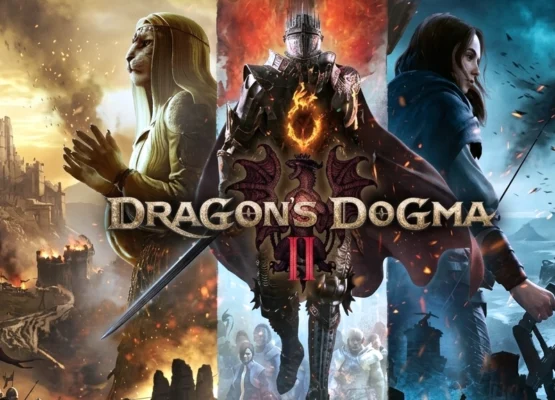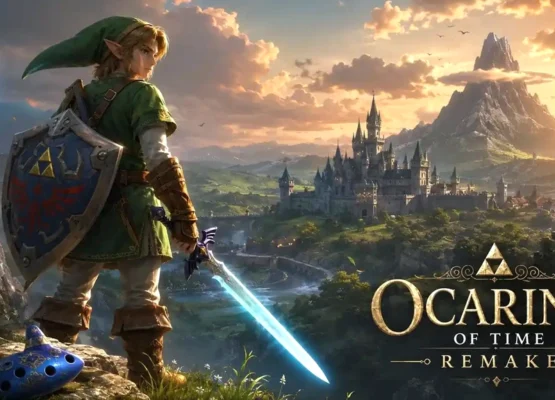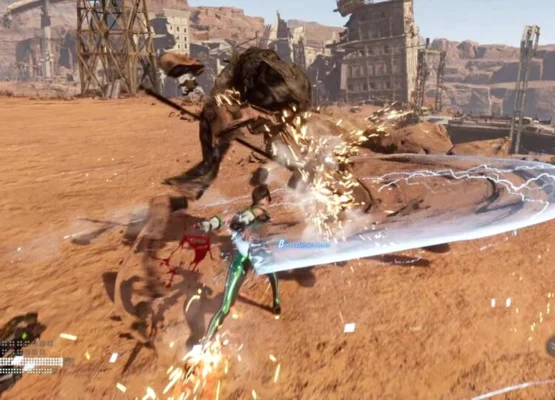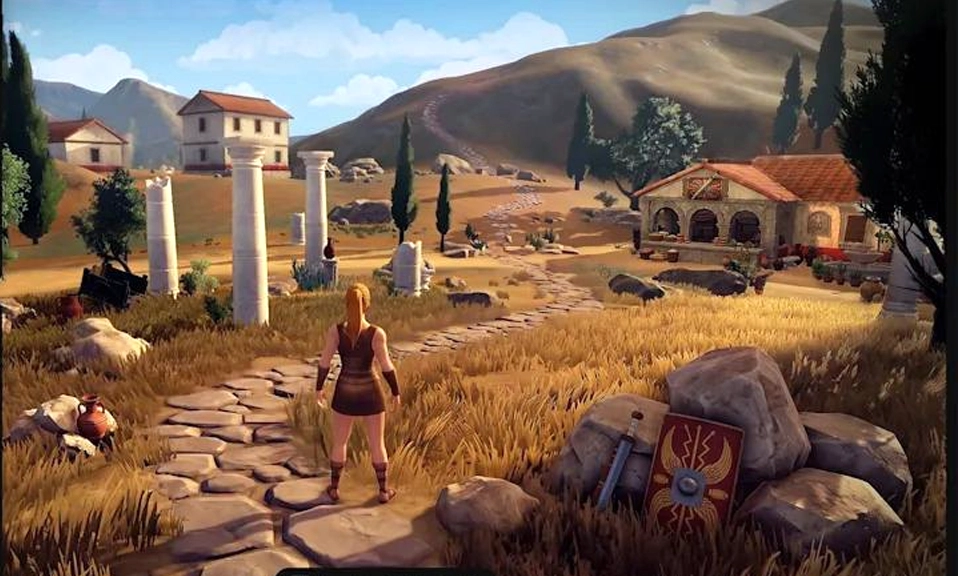
The pitch is irresistible: describe the game you want to play, and watch it appear. No code, no engine, no three-year development cycle. Just a prompt, a world, and you at the centre of it.
For years, this was the stuff of tech demos and fever dreams. In 2026, it is becoming a product. Google, Roblox, and a wave of startups are betting that the next generation of games will not be made for players, but by them — with AI doing the heavy lifting. The question is no longer whether players can build their own worlds. It is whether those worlds are worth visiting.
The Platforms: From Playgrounds to Genies
The tools arriving in 2026 fall into two broad categories: world generators that create explorable spaces on demand, and game builders that let you assemble, publish, and share a playable experience. The line between them is blurring fast.
Google’s Two-Pronged Bet
Google has launched not one but two AI game-creation projects, and they represent very different philosophies.
Project Genie, rolled out as a prototype in January 2026, is the more radical of the two. It generates playable 3D worlds from a text prompt or an uploaded image, in real time, as you move through them. You can define how your character moves, whether the world is first- or third-person, and “remix” existing worlds by changing art styles or characters. It is available to Google AI Ultra subscribers in the US, who pay $250 a month for access.
But Project Genie is explicitly a prototype, and Google is candid about its limitations. Generated worlds “might not look completely true-to-life or always adhere closely to prompts or images, or real-world physics,” and players can only explore each world for 60 seconds.
Google Playground, launched in October 2026, is the more practical counterpart. It is a browser-based platform where users create, play, and share 2D and 3D games using simple text instructions — no programming required. Creation happens through a chat interface: you describe your idea, start with a template, or follow a step-by-step process, and the AI generates a playable result that you can then refine with further instructions. You can adjust rules, characters, environments, and physics. You can upload images and have the AI convert them into graphical elements that match the game’s style. Finished games can be exported as HTML, JavaScript, and CSS files, shared via a link, or published in a public gallery.
Playground is free to play, and AI-powered creation is free but limited: users without a paid Google AI subscription join a waiting list and receive a weekly token quota; subscribers get immediate access and higher limits. It is initially available only in the US for users 18 and over. A partnership with Unity, called Unity Spark, is planned to bring more sophisticated mechanics, higher-quality 3D graphics, and access to the Unity Asset Store.
Roblox Build: Mobile-First, Prompt-Driven
Roblox, which already hosts millions of user-generated experiences and 132 million daily active users, launched Build in July 2026 — a mobile-first AI toolset inside the Roblox app that lets users generate environments, characters, visual styles, gameplay mechanics, and sound from natural-language prompts. The pitch, as Roblox put it, is simple: “Somewhere right now, someone has an idea for a game. They know exactly what it would feel like to play. They just don’t know how to build it. Today, that changes”.
Build is powered by a broad set of AI models, including Roblox’s own proprietary models trained on 3D data. Users can playtest their creations, refine the output, and share the final product. The initial test phase began in New Zealand, with a broader rollout planned. Build is available for age-checked users 9 and older, with published games subject to safety checks for users 16 and older.
Voyage: AI-Powered RPGs With Memory
Latitude, the company behind AI Dungeon, launched Voyage in April 2026 — a platform for creating AI-driven text RPGs where players design their own worlds, characters, quests, and villains. The AI generates the necessary code to bring those ideas to life, and players can customise further before sharing.
What sets Voyage apart is its World Engine, a system Latitude spent five years developing. It leverages multiple AI systems to narrate actions, manage gameplay, track characters and objects, and remember backstories and relationships, ensuring continuity across sessions. NPCs are not generic quest-givers with repetitive lines; they remember previous interactions. If you betray a character’s trust, they may avoid you or become a rival in future encounters. Voyage is free to play, with subscription plans priced at $15, $30, and $50 for advanced AI features and unlimited actions.
Astrocade: The TikTok of AI Games
Astrocade is the platform that best captures the scale — and the chaos — of the AI game-creation moment. It allows users to build and share AI-generated games and interactive experiences, and it has reached 10 million monthly users, doubling from roughly 5 million in just four months. Its structure is similar to Roblox, but its feed is more like TikTok: an endless, algorithmically curated stream of playable experiences, many of them vertical and designed for quick consumption.
The most popular games on Astrocade are, by CEO Amir Sadeghian’s own admission, heavily derivative: copies of Minecraft, games featuring copyrighted characters, and clones of viral Roblox hits like Steal a Brainrot. But that has not stopped users from embracing them. Some of the platform’s most popular games have been played hundreds of thousands or even millions of times.
Minecraft: The AI Agent Frontier
Minecraft, the most successful player-creation game of all time, is being reshaped by AI from a different angle. Rather than generating worlds wholesale, developers are building AI agents that can play alongside you, build structures from natural-language prompts, and even design on real terrain from your existing world.
EthosLM, an open-source project, turns a single sentence into a place in Minecraft — an AI agent designs it on real terrain and builds every block into your save file. Steve AI is described as “Cursor for Minecraft”: instead of helping you write code, it gives you AI agents that actually play the game with you, mining iron, locating ore veins, and extracting resources on command. COBBLE drops a Mineflayer bot into your server that can chat, build a house next to you, and respond to in-game chat. And Minecraft Education MCP lets a model build in Minecraft Education, with dry-run previews, batched block placement, and symmetry/composition assessment.
ModCraft: AI-Generated Mods
ModCraft, a startup that recently raised tens of millions in funding, is taking a different approach: using AI to let players create mods — modifications to existing games — through natural language, and then discover, play, and share other players’ mods on its platform. The insight is that game art, mechanics, worldbuilding, and community already exist, providing rich context for AI to work with.
The Reality Check: What AI Worlds Still Can’t Do
The tools are real. The platforms are live. The user numbers are growing. But the gap between “a playable world” and “a good game” remains enormous, and the industry’s most experienced voices are sceptical.
The Quality Ceiling
Project Genie may generate a world in real time, but it is not a game engine. Take-Two’s president said generated worlds still lack objectives, persistence, and gameplay depth. An analysis by StraySpark Studio put it bluntly: Genie is “not text-rendering-capable” — signs, UI, and in-world readable text are still mangled — and it is “not exportable,” meaning there is no “art bible” for creators to build on. ExtremeTech noted that Genie “isn’t capable of producing worlds of the same quality as video game makers,” and that the AI sometimes struggles to generate correct images, leading to issues gamers don’t encounter with top-tier engines.
A 2026 benchmark paper, CEGame-Bench, quantified the gap. AI agents building games earned most integration points but usually scored under half the gameplay points, and their games reached the ending in only 16% of runs. Reference games built by engineers with coding agents scored near the maximum. The artifact-to-play gap is real, and it is large.
The Derivative Flood
Masahiro Sakurai, the creator of Super Smash Bros., predicts that generative AI will trigger an explosion of lookalike games — but most of them will be unprofitable. The technology will “mass-produce poor-quality content,” with most AI games replicating gameplay mechanics players have already experienced elsewhere.
Astrocade’s most popular games — Minecraft clones, copyrighted characters, Roblox derivatives — are evidence of this pattern in action. The ease of creation does not automatically produce originality. It produces volume.
The Copyright Minefield
The legal questions around AI-generated games are unresolved, and they are not going away.
The US Copyright Office has reaffirmed that works generated entirely by automated systems are not eligible for protection. The global consensus currently leans against copyright protection for fully AI-generated content, though AI-assisted works enjoy broader support. This creates a paradox: players can create worlds, but they may not be able to own them.
Meanwhile, AI-generated output can occasionally contain infringing material, because the models were trained on copyrighted works — in many cases without consent. A viral video of an AI-generated, playable Pokémon-style game sparked a heated debate about copyright, with warnings that if AI content too closely mimics existing IP, it could lead to legal disputes and deepen player distrust in the “AI-made content flood”. Activision and Bethesda have sent cease-and-desist notes to “vibe coders” for AI recreations.
The Creative Vision Gap
The most fundamental limitation is not technical. It is creative.
“For all their advancements, world models like Google’s Project Genie can’t replace creative vision,” one analyst concluded. Paramount Games’ creative head pushed back heavily against generative AI, stating that the tools lack maturity and do not offer truly meaningful time or cost savings. The technology can generate a world. It cannot decide what that world should mean.
From UGC to AGC: The Shift That Matters
The deeper story behind these platforms is a shift in how games are made — not just by whom.
For two decades, the industry has been moving from developer-generated content to user-generated content (UGC). Minecraft, Roblox, and Fortnite’s creative mode proved that players want to build, not just consume. Now, the industry is moving toward Agent Generated Content (AGC) — a term coined at GDC 2026 — where AI agents do the building, and players direct them.
This is not simply UGC with better tools. It is a different relationship between creator and creation. In UGC, the player learns the tools, masters the engine, and expresses themselves through the act of building. In AGC, the player describes what they want, and the AI builds it. The creative act shifts from making to directing.
Whether that is a democratisation or a diminishment depends on your perspective. For a 12-year-old who has a game in their head but no way to make it, AGC is liberation. For a developer who spent years mastering an engine, it is something more complicated.
Can players now build their own worlds?
Yes — but not yet the worlds they imagine.
The tools are real, accessible, and improving fast. Google Playground can turn a prompt into a shareable 2D or 3D game. Roblox Build can generate environments, characters, and mechanics from natural language. Voyage can create persistent RPG worlds with NPCs that remember you. Astrocade has 10 million monthly users building and sharing AI games. Minecraft agents can build alongside you. ModCraft can generate mods on demand.
But the quality ceiling is low. The derivative flood is real. The copyright questions are unresolved. And the creative vision — the thing that makes a game worth playing, rather than just worth generating — remains stubbornly human.
The most honest way to describe 2026 is this: AI has made it possible for anyone to make a game. It has not yet made it possible for anyone to make a good one. That gap is narrowing. But it is still the gap that matters.
The players are building their own worlds. The question is whether those worlds will be worth the visit — or whether they will be just another feed, endless and forgettable, generated faster than anyone can care.