The pitch is seductive: a small device that clips to your shirt, sits on your wrist, or hangs around your neck, quietly listening to every conversation, meeting, and passing thought—then turning it all into searchable transcripts, summaries, and action items. No more scrambling for a pen. No more “I’ll remember that.” No more forgetting the name of the person you met at the conference.
The reality is more complicated. These devices work—sometimes brilliantly. But they also raise uncomfortable questions about consent, privacy, and whether the convenience is worth the cost. Here’s what the 2026 crop of AI note-taking wearables actually delivers, and whether you should buy one.
The Devices: Four Approaches to the Same Problem
The market has settled into a handful of distinct form factors, each with its own trade-offs.
The Leader: Plaud NotePin S ($179)
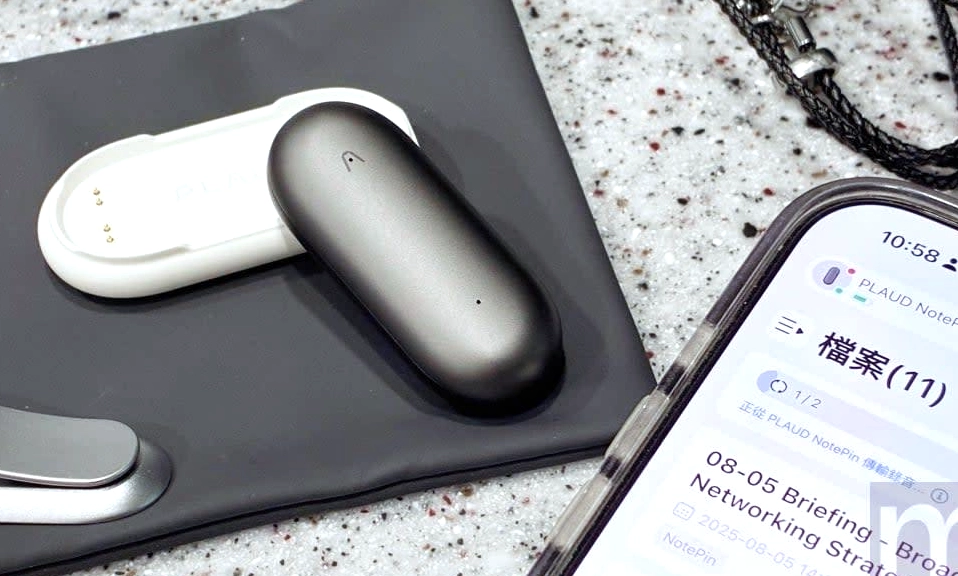
The Plaud NotePin S is the most polished and widely recommended device in the category. It’s a small, pill-shaped recorder that can be worn as a magnetic pin, clip, lanyard, or wristband. It weighs just 17.4 grams and packs 20 hours of continuous recording, 40 days of standby, and 64GB of internal storage.
Its transcription service supports 112 languages, with speaker labels, custom vocabulary, summaries, mind maps, and searchable notes. The free plan includes 300 transcription minutes per month; Pro is $99.99/year** for 1,200 minutes, and Unlimited is **$239.99/year.
The verdict from reviewers: The New York Times‘ Wirecutter called it “an intriguing but not category-defining device” that “does an excellent job of recording accurate transcripts and distinguishing among multiple speakers,” though summaries had “occasional errors” and it “doesn’t integrate with many apps”. ZDNET’s AI expert called it “the most convincing hardware I’ve tried at CES,” praising the tactile “instant-highlight button” that lets you mark key moments in real time.
The Open-Source Alternative: Omi ($129–$179)
Omi is a pendant-style wearable aimed at developers and tinkerers rather than mainstream users. It offers unlimited on-phone transcription plus 300 cloud minutes per month, and its open-source software allows for custom workflows and integrations.
The catch: NBC News found it “more noticeable” than other devices, and it is always listening unless powered off. The Omi app holds a 3.89-star average on the App Store, and the free plan allows only a few “Ask Omi” questions. This is a device for people who want to build, not just use.
The Value Pick: SwitchBot AI MindClip ($119.99)
SwitchBot’s offering is the budget option, with the same 300 free transcription minutes per month and up to 20 hours of battery as the Plaud, but a simpler clip-only form factor. It’s the “best value” pick for buyers who want the core functionality without the premium price.
The Ring: Vocci AI Ring ($249)
Vocci is the smallest option—a recorder worn on your finger. It offers 300 free minutes per month but only 8 hours of battery, making it the least practical for all-day use. It’s for people who prioritize discretion above all else.
The Discontinued: Limitless Pendant ($99)
The Limitless Pendant was arguably the most credible product in the category—a small magnetic clip with ~100 hours of battery and a built-in consent chime that pauses recording if the people around you haven’t confirmed consent. But Meta acquired Limitless, and new sales stopped on December 5, 2025. Existing owners are supported through 2026, but this is no longer a viable purchase for new buyers.
What These Devices Actually Do Well
They capture what you’d otherwise lose. The core value proposition is real. If your day is a blur of meetings, hallway conversations, and phone calls, a wearable that records and transcribes without you having to think about it is genuinely useful. Wirecutter’s reviewer, who developed neuropathy that made handwriting painful, found the Plaud “a genuine time-saver” that “gave my hands a rest when they needed it most”.
They distinguish speakers. The Plaud NotePin S does “an excellent job” of separating voices in multi-person conversations. That’s a meaningful improvement over phone-based dictation, which produces “a mashup of sentence fragments”.
They search across weeks of conversation. The Limitless review noted that “the value is not the raw transcript—it is the ability to search across weeks of it”. If you need to recall what was decided in a meeting three weeks ago, a searchable archive is powerful.
The Problems Nobody Wants to Talk About
Consent Is a Minefield
These devices record everyone in the room, not just you. The person sitting across from you at lunch, the colleague in the hallway, the stranger on the train—they are all being captured, whether they know it or not.
Some devices have consent mechanisms. The Limitless Pendant had a Consent Mode that played a chime and paused recording if the people around you hadn’t confirmed consent. But that device is discontinued. The Plaud NotePin S, Omi, and most competitors do not have built-in consent workflows. The responsibility falls entirely on the wearer—and in many jurisdictions, recording a conversation without all parties’ consent is illegal.
Nature published a warning in October 2026 that AI wearables are “normalizing non-consensual recording in everyday spaces,” citing a Boston police report in which a registered sex offender used smart sunglasses to film children at a public pool. The article called for “consent-conscious spaces”—schools, hospitals, courts—where covert recording is prohibited by law.
Privacy Is a Leap of Faith
When you use one of these devices, you are sending your conversations—intimate, confidential, sometimes sensitive—to a cloud service. The Plaud NotePin S uses GPT-4o or Claude 3.5 to generate summaries. The Omi connects to ChatGPT. The Limitless used Anthropic and OpenAI models.
The TicNote review gave the Limitless a privacy confidence score of 5.5/10, noting that “long-term value depends on how much you trust the system with sensitive context” and that it is “less ideal for regulated work, sensitive meetings, task-heavy workflows”. If your conversations involve client confidentiality, legal privilege, or medical information, these devices are a compliance risk.
The Summaries Aren’t Perfect
The generative AI that turns transcripts into summaries is impressive, but it is not reliable. Wirecutter found “occasional errors” in summaries and failures in multi-language discussions. The text “still requires proofreading”. If you rely on these summaries without checking them, you will eventually miss something important.
The Ecosystem Is Fragmented
These devices are not fully integrated into the tools you already use. Wirecutter noted that the Plaud NotePin S “doesn’t integrate with many apps—at least, not yet”. If your workflow revolves around Notion, Slack, or a CRM, you may find yourself manually exporting and importing transcripts rather than having them flow automatically.
The Verdict: Are They Worth Trying?
Yes—if you have a specific use case, and you’re willing to navigate the privacy trade-offs.
Buy the Plaud NotePin S if: you regularly attend meetings, lectures, or interviews that you need to recall later, and you want the most polished, reliable device in the category. It’s the safest bet for most people. At $179, it’s not cheap, but the hardware is solid and the transcription service is mature.
Buy the SwitchBot AI MindClip if: you want the core functionality for less. At $119.99, it undercuts the Plaud by $60 while offering similar battery life and the same free transcription allowance.
Buy the Omi if: you’re a developer who wants to build custom workflows, or you specifically value open-source software and are willing to tolerate a less polished experience.
Skip them all if: you work in a regulated industry, you regularly discuss confidential information, or you’re not prepared to have awkward conversations about consent every time you wear the device. These are not passive tools. They require active ethical management.
Wait for the next generation if: you want a device with built-in consent workflows, seamless app integrations, and better summary accuracy. The category is young, and the Limitless Pendant’s discontinuation shows how quickly the landscape can shift.
AI note-taking wearables
are no longer science fiction. They work. They capture conversations, produce transcripts, and generate summaries that are genuinely useful—if imperfect. For the right user, they can be a meaningful productivity tool.
But they are not neutral gadgets. They are recording devices that capture the people around you, and they raise questions about consent and privacy that the industry has not fully answered. The technology is ahead of the norms and the laws that should govern it.
If you buy one, buy it with your eyes open. Use it transparently. Ask for consent. Don’t record what you wouldn’t want recorded. And remember that the best note-taking tool is still the one that doesn’t make the people around you uncomfortable.