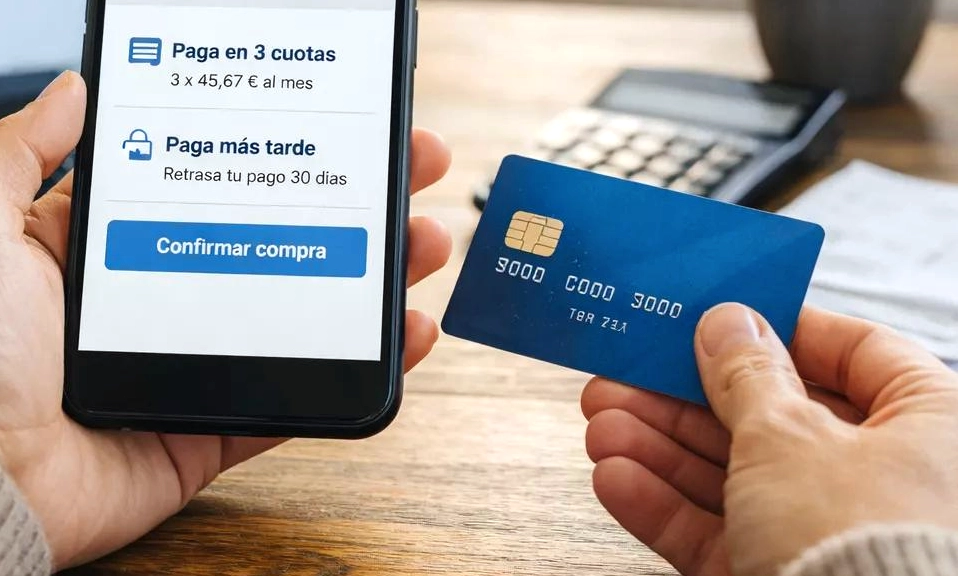
Buy Now, Pay Later was sold as a convenience—a way to split the cost of a new couch or a pair of sneakers into four interest-free payments. In 2026, it has become something else entirely: a paycheck-to-paycheck credit system for people who are struggling to afford groceries.
The numbers are staggering. Nearly half of all Americans have taken out a BNPL loan, and roughly 47% of BNPL users have been late on a payment in the past year—up from 34% in 2024 and 41% in 2025 (see Figure 1). The global BNPL market is projected to grow from $342 billion in 2025 to $492 billion in 2026, a 43.7% compound annual growth rate. And the share of users relying on BNPL for essentials has more than doubled in two years: 29% now use it for groceries, up from roughly 14% in 2024.
The question is no longer whether BNPL is changing how people spend. It is whether it is quietly creating a debt trap—and who is most at risk.
The Shift: From Discretionary to Desperate
BNPL was built for one-off purchases. The classic model—pay-in-four—splits a $200 purchase into four $50 payments over six weeks, with no interest if you pay on time. It was designed for a couch, a flight, a pair of shoes. It was never designed for food.
That is exactly what it is being used for now. One in five Americans used BNPL to pay for food from major chains or delivery apps in the past year. 54% of BNPL users say they would not be able to make ends meet without the loans. And 18% have used BNPL for car repairs, while 13% have used it for rent.
The pattern is clear: BNPL is no longer replacing discretionary spending. In a growing number of households, it is replacing the emergency fund.
“Buy Now, Pay Later has become so common that many consumers don’t really think of it as debt anymore,” says Ashley Morgan, a debt and bankruptcy lawyer in Northern Virginia. “A $200 purchase may feel expensive, but four payments of $50 somehow feels affordable”. The problem, she explains, is loan stacking: one in four BNPL users have had three or more active BNPL loans at one time, and 68% say the loans enable them to overspend.
“Suddenly several hundred dollars from your next paycheck is already committed before you even get paid,” Morgan says. “If you need BNPL to regularly make ends meet, the problem isn’t the payment plan; the underlying budget no longer works”.
Figure 1: The Rising Tide of Late Payments
| Year | Share of BNPL Users Late on a Payment |
|---|---|
| 2024 | 34% |
| 2025 | 41% |
| 2026 | 47% |
Source: LendingTree surveys, via Protect Borrowers and NCLC testimony
The trend is unmistakable, and it is accelerating. The share of users falling behind has grown by 13 percentage points in two years—a sign that the product is reaching people whose budgets cannot absorb even small shocks.
The Trap: How “0% Interest” Becomes 100% APR
The pay-in-four model is not the whole market anymore. Interest-bearing installment loans accounted for over 37% of BNPL issuance in 2026, with some carrying APRs of up to 36% and terms of up to two years. As of 2026, as many as 36% of BNPL plans are interest-bearing, some with biweekly payments.
And then there are the late fees. A $7 late fee on a $50 installment sounds trivial. Annualised, it is the equivalent of an interest rate of 100% APR or more, because the fees stack on top of each other. Some lenders charge fees as high as 25% of the missed payment, turning a product marketed as “free” into a debt trap.
64% of late payers are charged extra fees. The CFPB calculated that late fees averaged around $10 on an average BNPL loan—not a disaster on its own, but a significant burden when stacked across multiple loans and multiple missed payments.
The result is a product that can cost borrowers more than a revolving credit card balance, and even some payday loans, when fees are converted to an APR.
Who Is Most at Risk?
The debt trap is not distributed evenly.
Gen Z borrowers are the most likely to fall behind: 57% were late on a BNPL payment in the past year, compared to 15% of Baby Boomers. Parents with children under 18 are also disproportionately affected: 61% were late in 2026, compared to 42% of adults without children.
The racial disparities are stark. Civil rights leader Al Sharpton noted that Black and Hispanic consumers are more likely to use BNPL loans and warned that “buy now, pay later loans sound like a lifeline, but for too many Black and Brown Americans, they’ve become a debt trap”. Nearly one in four Black women and Latinas have used a BNPL loan, according to a Federal Reserve survey, and as of 2024, Black and Latino/a Americans were roughly twice as likely to use BNPL as other groups.
The Federal Reserve found that over half of BNPL borrowers have less than $2,000 in savings, and nearly two in three BNPL originations go to users with subprime credit scores (619 and below). These are not people using BNPL for convenience. They are people using it because they have run out of other options.
The Regulatory Patchwork
2026 has been the year regulators finally started to catch up—but the response has been uneven.
In the UK, BNPL came under full Financial Conduct Authority (FCA) regulation on July 15, 2026. Providers must now conduct affordability checks, disclose costs, and offer access to the Financial Ombudsman. Unauthorised operations are a criminal offence.
In the US, the picture is more fragmented. The CFPB’s attempt to regulate BNPL as credit cards was overturned, leaving no federal protections. The Trump-led CFPB has “pulled back significantly on oversight,” leaving consumers “largely vulnerable to predatory practices”. New bills like the Buy Now Pay Later Consumer Protection Act aim to extend credit-card safeguards to BNPL, and states such as New York are advancing licensing, disclosure, and underwriting rules—creating a costly compliance patchwork for providers.
The National Consumer Law Center has called on Congress to codify the CFPB’s 2024 BNPL rule and go further, to “protect people from a new form of debt trap”. Consumer advocates argue that voluntary codes have not been effective in curbing harm from unaffordable BNPL.
The Counterargument: Is BNPL Really a Systemic Risk?
Not everyone is convinced that BNPL is a looming catastrophe.
A Richmond Fed analysis concluded that, given its current scale, debt outstanding, and observed default rates, “the impact of BNPL on financial stability appears limited at present”. Relative to other consumer credit products, BNPL is associated with much smaller amounts of outstanding debt and lower default rates. Klarna’s global unpaid loan rate rose from 0.51% in 2024 to just 0.54% in 2026—a small increase, even if the absolute number of late payments is rising.
The Federal Reserve Board economists put 2025 BNPL issuance at $156.7 billion** across the six largest lenders—large, but still a fraction of the **$18.2 trillion in total US consumer debt. And 38% of Klarna’s and Affirm’s users are now high-income earners (top 20%), using BNPL to optimise cash flow rather than to survive.
The gap between low default rates and high late-payment incidence is the key nuance. Many consumers struggle—but they eventually pay. The question is what that struggle costs them, and whether the product is making their financial situation worse over time.
Convenience or Trap?
BNPL is not inherently predatory. For a financially stable person, splitting a purchase into four interest-free payments is a sensible cash-flow tool. The problem is that the product has been normalised to the point where it no longer feels like debt—and it has expanded into the very categories where people have the least financial slack.
The data tells a clear story: nearly half of users are late on payments, nearly a third are using BNPL for groceries, and the share of interest-bearing loans is rising. The people most likely to fall behind are the ones with the least cushion: Gen Z, parents, Black and Latino/a borrowers, and those with subprime credit scores.
The regulatory response is moving in the right direction—the UK’s FCA rules are a meaningful step—but the US is lagging, and the product is evolving faster than the rules can keep up.
The debt trap is not inevitable. But it is real, and it is growing. The question for consumers is simple: if you need BNPL to make ends meet this month, the problem is not the payment plan. The problem is the budget. And the question for regulators is whether they will act before the next wave of late payments becomes a crisis.