For years, the affordable electric car was a promise that never quite arrived. Every auto show brought a concept with a sub-$25,000 price tag and a production date that kept slipping. In 2026, the promise is finally being kept—not by one manufacturer in one market, but by a wave of models spanning from $6,000 city cars in China to €25,000 hatchbacks in Europe and $30,000 compacts in the United States. The affordable EV is no longer a future prospect. It is a product you can order today, or will be able to within the next twelve months.
The shift is being driven by a confluence of forces: falling battery costs, the maturation of dedicated small-car EV platforms, and a strategic realization among automakers that the mainstream market cannot be won with $50,000 vehicles. The result is a new generation of cars that make the electric transition accessible to buyers who were previously priced out—and a market that is finally beginning to look like the one the industry has been promising for a decade.
Here are ten budget-friendly EVs worth watching, from the cheapest city cars on the planet to the value-focused family SUVs that could bring electric driving to the masses.
1. Wuling Hongguang Mini EV: The Cheapest Car in the World
There is no cheaper way to get into an electric car than the Wuling Hongguang Mini EV. Available in China from 44,800 CNY—around $6,220—it is by far the cheapest EV on the planet, and arguably the most influential vehicle in the global affordable EV story.
For that price, you get a genuinely usable urban runabout with 205 km of range and DC fast charging. It is not a car designed for highway cruising or long-distance travel. It is a car designed for the reality of most daily driving: short trips, city streets, and the school run. The Mini EV proved that there was enormous latent demand for a cheap, simple electric car, and it inspired a wave of competitors in China and beyond.
Why it matters: It is the benchmark against which every affordable EV will be measured, and proof that the lowest price point is not a theoretical exercise.
2. Dacia Spring: Europe’s Affordability Champion
Europe’s cheapest electric car has entered its second generation, and it remains the most accessible route into electric driving on the continent. The new Spring is priced below €18,000 across the range, with the entry-level model starting at around €17,500 before incentives—and dropping to €11,720 in France with the maximum ecological bonus.
The second-generation Spring is a significant improvement over its predecessor. It moves to Renault Group’s RG-EV small platform, is built in Slovenia rather than China (avoiding EU tariffs), and is 18 cm wider than before, addressing one of the original’s key weaknesses. Power comes from a 60 kW (80 hp) motor with 175 Nm of torque, and the 27.5 kWh LFP battery delivers up to 250 km of WLTP range. A more powerful 100 hp version is also available, accelerating from 0 to 60 km/h in under 6.5 seconds.
Why it matters: It is the car that proves affordable EVs can be sold profitably in Europe, and its move to European production makes it a template for how to compete with Chinese imports.
3. BYD Seagull: The Global Disruptor
The BYD Seagull is the car that has sent shivers through the global auto industry. In China, it starts at 69,900 CNY—around $9,800—for a five-seat hatchback with a 30.1 kWh battery and 320 km of CLTC range. Higher trims get a 39.2 kWh pack and 420 km, plus flash charging that can go from 10% to 70% in five minutes on compatible hardware. In Europe, it is sold as the Dolphin Surf, and while tariffs push the price higher, it remains one of the most competitive small EVs on the market.
The Seagull is not a stripped-down compliance car. It has grown significantly from its predecessor, now measuring 4,205 mm in length with a 2,650 mm wheelbase and a switch to rear-wheel drive. It offers a level of space, equipment, and refinement that was previously unavailable at this price point.
Why it matters: It is the most credible challenger to the established order in the affordable EV segment, and its European arrival signals that the Chinese price advantage is not confined to China.
4. Volkswagen ID. Polo: The People’s EV Grows Up
Volkswagen’s long-awaited affordable electric car has finally arrived, and it carries a name that is synonymous with accessible motoring. The ID. Polo starts at €24,995 (around $29,000), and it is built on the MEB+ platform that was designed to bring costs down without sacrificing the brand’s core strengths.
The entry-level models use a 37 kWh LFP battery with 329 km of range and support 10-80% charging in 23 minutes. The top-spec Style model gets a 52 kWh NMC battery and 454 km of range, with charging taking one minute longer. Crucially, the ID. Polo is shorter than 4.1 metres but has a wheelbase only 20 mm shorter than the Golf, and its boot is 25% larger than the combustion Polo’s—441 litres versus 351.
Why it matters: It is the car that brings Volkswagen’s scale and dealer network to the affordable EV segment, and it sets a benchmark for what a European mainstream EV can offer at a sub-€25,000 price.
5. Renault Twingo E-Tech: The Value Benchmark
The Renault Twingo E-Tech has been one of the most acclaimed affordable EVs of 2026, and it is easy to see why. Priced from £19,990 (around €23,000) in the UK, it offers a claimed range of 163 miles and a level of driving enjoyment that has made it a favourite among reviewers.
The Twingo’s appeal lies in its balance. It is more refined than the Dacia Spring, more engaging to drive than the Citroën ë-C3, and priced competitively against both. It is not the cheapest car in this list, but it may be the one that offers the best combination of price, comfort, and everyday usability.
Why it matters: It demonstrates that affordable does not have to mean compromised, and it gives European buyers a genuinely desirable option at the lower end of the market.
6. Nissan Sakura: Japan’s Kei Car Revolution
Japan has its own approach to affordable electric mobility, and it is defined by the kei car class—tiny, tax-advantaged vehicles designed specifically for Japanese cities. The Nissan Sakura is the cheapest EV in Japan, costing around $12,000 after local subsidies.
Kei cars are a uniquely Japanese solution: they are small enough to navigate narrow streets, cheap to run, and eligible for tax breaks that make them significantly more affordable than conventional vehicles. The Sakura brings electric propulsion to this formula, offering a practical, low-cost urban vehicle that is perfectly suited to its market.
Why it matters: It shows that affordability is not a single global formula. Different markets require different solutions, and the kei car is one of the most effective.
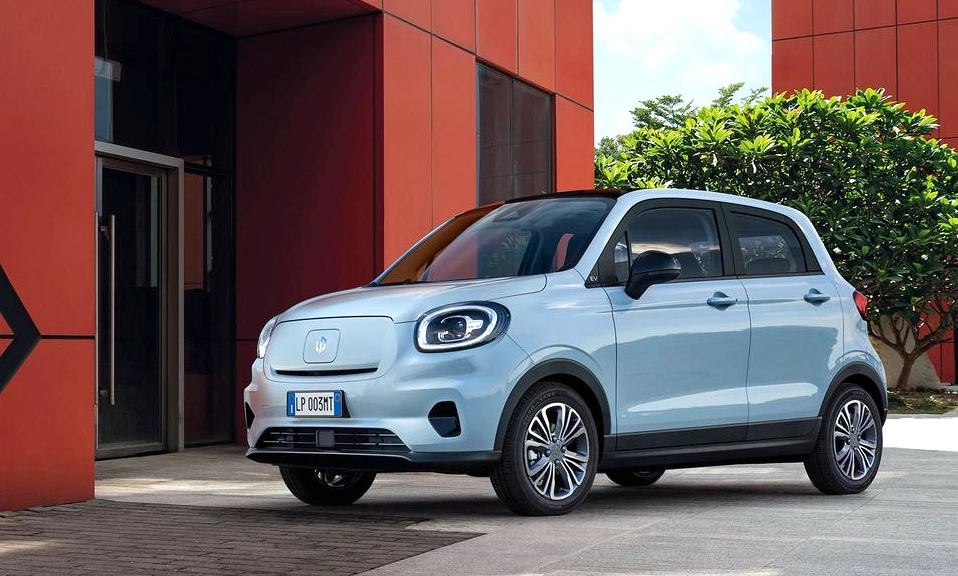
7. Leapmotor T03: The Chinese Value Proposition, Europeanized
The Leapmotor T03 is another Chinese import that has been adapted for the European market, and it offers one of the most compelling price-to-equipment ratios in the segment. In some European countries, it is priced below or around $15,000–$17,000, undercutting most of its rivals.
The T03 is a five-door city car with a surprisingly generous interior for its size, and it has been praised for its level of standard equipment. It is not as refined as the Renault Twingo or as spacious as the Dacia Spring, but it offers a genuinely usable EV experience at a price that few competitors can match.
Why it matters: It represents the growing influence of Chinese manufacturers in the affordable segment, and it puts pressure on European incumbents to compete on price.
8. Geely EX2: Five Seats and a Proper Boot
The Geely EX2—also sold as the Xingyuan or Star Wish—has been one of the surprise successes of the affordable EV market. It finished 2025 as China’s best-selling car, with 226,465 units sold in 2026 so far, and it has earned a five-star ANCAP rating under the stricter 2026 protocols.
What sets the EX2 apart is its practicality. It offers five seats and a 375-litre boot, making it one of the few genuinely family-friendly cars at this price point. It is not as cheap as the Wuling Mini EV or the Dacia Spring, but it offers significantly more space and versatility—and it has been praised by reviewers for its refinement and ride quality.
Why it matters: It proves that affordable EVs can be practical family cars, not just city runabouts.
9. Hyundai Inster: The Longer-Range Compact
The Hyundai Inster is the most expensive car on this list, but it earns its place because it offers something the others do not: a longer-range version with up to 229 miles (369 km) of claimed range. That makes it a viable option for buyers who need their affordable EV to do more than just commute.
The Inster is a compact SUV with a practical interior and Hyundai’s proven electric powertrain technology. It is not cheap—pricing will vary by market, but it sits above the Dacia Spring and Renault Twingo—but it offers a combination of range, space, and brand trust that few rivals can match.
Why it matters: It shows that the affordable EV segment is not just about the lowest possible price. There is a market for cars that are affordable relative to the mainstream, and the Inster targets it effectively.
10. Citroën ë-C3: Space and Comfort at a Price
The Citroën ë-C3 rounds out the list as the most spacious option in the European affordable segment. It offers five seats and a comfortable ride, and it is priced under €20,000 in its entry trim, with a battery around 30 kWh and a range that is shorter than some rivals but sufficient for urban use.
The ë-C3’s strength is its comfort and practicality. It is not the fastest, the longest-range, or the cheapest car here, but it offers a level of space and ride quality that is rare at this price point. For families who need a usable second car, it is a compelling proposition.
Why it matters: It demonstrates that affordability and practicality are not mutually exclusive, and it gives European buyers a family-friendly option at the lower end of the market.
Affordable EVs Are Here, But the Revolution Is Uneven
The affordable electric car has arrived. The Wuling Mini EV proves that a usable EV can be sold for under $7,000. The Dacia Spring proves that a European-built EV can be sold for under €18,000. The BYD Seagull proves that a Chinese EV can offer space, equipment, and fast charging at a price that undercuts established rivals. The Volkswagen ID. Polo proves that a legacy manufacturer can compete in this segment without sacrificing quality or practicality.
But the revolution is not uniform. The cheapest cars are concentrated in specific markets—China and Japan in particular—and they are not available everywhere. The European and American markets are served by a different tier of vehicles, priced between €18,000 and $30,000, that offer more space and range but are not as radically cheap. And even the most affordable EVs still face barriers: charging infrastructure, insurance costs, and the residual-value uncertainty that comes with any new technology.
What the 2026 lineup demonstrates is that the affordable EV is no longer a hypothetical. It is a product, and it is getting better with every model year. The cars on this list are not compromises or compliance specials. They are genuine attempts to make electric mobility accessible to the mainstream buyer—and for the first time, they are succeeding.
The affordable electric car is coming. In many markets, it is already here.