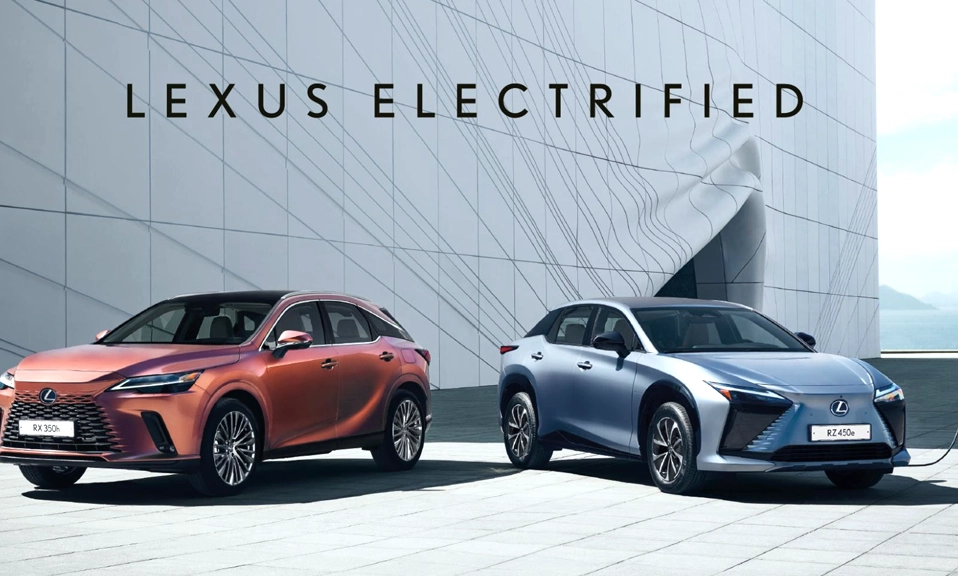
The electric versus hybrid SUV debate has moved beyond ideology. In 2026, it is a practical question about money, infrastructure, and the kind of driving you actually do. The answer is not the same for everyone, and the data reveals a surprising truth: for many modern drivers, the hybrid SUV is still the smarter financial and practical choice, even as electric SUVs become more capable than ever.
The Cost Reality: Depreciation Is the Silent Killer
The sticker price is only the beginning. The real cost of ownership is shaped by depreciation, fuel, insurance, and fees—and here, hybrids have a decisive advantage.
A detailed 2026 comparison between the Subaru Solterra EV and the Subaru Crosstrek Hybrid—two vehicles with nearly identical passenger space—found that the hybrid started with a $6,430 price advantage on day one**. By year five, that gap widened to **$9,370, almost entirely due to depreciation. The study noted that EVs have an average five-year depreciation of 57%, while hybrids retain value far better, with the Crosstrek Hybrid losing just 33.1% over the same period.
This is not an isolated finding. AAA’s 2026 “Your Driving Costs” study found that hybrids were the cheapest to own in all four vehicle categories, including compact and medium SUVs. In compact SUVs, EVs cost about $687 more per year** than hybrids; in medium SUVs, the gap was **$634. The reason is not fuel—EVs do save on energy—but depreciation, insurance, financing, and registration fees, which together “more than erase any gains EVs get in gas savings”.
The bottom line on cost: If you are buying with your head and plan to keep the car for five years or more, the hybrid SUV is almost always the cheaper proposition. The EV’s lower running costs are real, but they rarely overcome the depreciation gap.
Charging, Range, and the Anxiety That Won’t Quit
The emotional and practical barrier to EV ownership remains charging. Despite years of infrastructure investment, the anxiety is not irrational—it is data-driven.
A 2026 study by HERE Technologies and SBD Automotive found that 54% of EV owners have avoided a trip because they were unsure they could find a charger along the way. The share of EV drivers planning to buy a hybrid next rose to 28% in 2026, up from 23% in 2025, driven by a desire for “flexibility on long trips or in areas where charging is unreliable”. AAA surveys confirm the same pattern: consumers who prefer hybrids over EVs most often cite fewer concerns about driving range and charging access.
For drivers with a home charger and a predictable daily routine, an EV SUV is entirely viable. But for anyone who rents, lives in an apartment, or regularly travels beyond the radius of reliable fast charging, the hybrid removes a layer of planning and stress that the EV cannot yet match. The EV is improving—ranges of 400 to 500 miles are now available on models like the BMW iX3 and Volvo EX60, and fast charging is getting quicker. But the infrastructure is not uniform, and the confidence gap remains.
The Environmental Question: Closer Than You Think
The assumption that the electric SUV is always the greener choice is being challenged by lifecycle analysis. Green NCAP’s 2026 testing highlighted that environmental differences between hybrid and electric SUVs are narrowing. The hybrid Dacia Bigster and the fully electric Cadillac Optiq both achieved three-and-a-half star ratings, scoring 63% and 67% respectively.
The Optiq’s advantage was eroded by the environmental cost of its 80 kWh battery and a kerb weight approaching 2.4 tonnes. Battery production is energy-intensive, and the heavier the vehicle, the more energy it consumes in real-world driving—especially in cold weather and at motorway speeds. The Bigster’s hybrid system, by contrast, avoids the production and weight penalties of a large battery pack while still delivering strong efficiency in urban use.
This does not mean hybrids are “better” for the planet in absolute terms. Over a full lifecycle, a smaller, lighter EV charged from a clean grid will outperform a hybrid. But for large, heavy SUVs—the segment in question—the EV’s battery-related footprint is significant, and the gap is not as wide as marketing materials often suggest.
The Driving Experience: Silence vs. Seamlessness
The EV SUV offers something no hybrid can replicate: silence, instant torque, and a single-speed smoothness that makes every journey feel effortless. There is no engine to fire up, no transmission to shuffle through ratios, no vibration. For drivers who value refinement above all else, the EV is the superior experience.
The hybrid, however, is not without its charms. Modern hybrids are remarkably smooth in urban driving, switching between electric and petrol power almost imperceptibly. The Hyundai Tucson Hybrid, for example, returns around 36-37 mpg combined while offering a seamless driving experience. The Honda CR-V Hybrid achieves up to 40 mpg. And the Toyota RAV4 Hybrid remains the fuel-efficiency benchmark at 47 mpg combined.
Where the hybrid falls short is in the occasional “reminder” of its complex drivetrain—a slight shudder or hesitation when the engine engages under hard acceleration. It is a minor flaw, but it is a reminder that the hybrid is a compromise, however well-executed.
The Middle Ground: The EREV Option
There is a third path that deserves mention: the Extended-Range Electric Vehicle (EREV). An EREV drives its wheels exclusively with electric motors, but carries a small petrol generator on board to recharge the battery when it depletes. It offers the electric driving experience for daily use—often covering 70% or more of miles on electricity—while eliminating range anxiety entirely.
For drivers who want the EV experience but are not ready to commit to a charging-dependent lifestyle, the EREV is a compelling bridge. It is heavier and more complex than a pure EV, and its highway efficiency can suffer when the battery is depleted, but it solves the two biggest barriers to EV adoption—range and charging access—without asking the driver to change their habits overnight.
The Verdict: Which Makes More Sense?
The answer depends on your circumstances, not on which technology is “better” in the abstract.
Choose a hybrid SUV if:
You do not have reliable access to home charging.
You regularly drive long distances or in areas where charging infrastructure is sparse.
You prioritise lower total cost of ownership and strong resale value.
You want to reduce fuel consumption and emissions without changing your routine.
You are buying a large SUV, where the weight and battery penalty of an EV is most pronounced.
Choose an electric SUV if:
You have a home charger and a predictable daily routine.
You value silence, instant torque, and the smoothest driving experience.
You want the lowest possible running costs and are prepared to accept higher depreciation.
Your daily driving is within the range of the vehicle, and you are comfortable planning longer trips around charging.
You are buying a smaller, lighter SUV, where the EV’s efficiency advantage is most meaningful.
Consider an EREV if:
You want the electric experience but are not ready to rely on charging infrastructure.
You make frequent long trips but want to drive electric for most of your daily miles.
You are willing to accept the complexity of a dual-powertrain vehicle in exchange for the flexibility it provides.
The electric SUV
is the future. It is quieter, smoother, and—when charged from clean energy—genuinely cleaner over its full lifecycle. But the future is not evenly distributed. The charging infrastructure, the depreciation curves, and the upfront costs still favour the hybrid for a large share of modern drivers.
The hybrid SUV is not a compromise born of weakness. It is a pragmatic, efficient, and increasingly refined machine that delivers the majority of the benefits of electrification without the barriers. For the driver who wants to reduce their fuel use, lower their running costs, and avoid the anxiety of planning every journey around a charger, the hybrid remains the smarter choice.
The best SUV is the one that fits your life, not the one that wins an argument online. And in 2026, for more drivers than the EV evangelists would admit, that SUV still has a petrol engine under the bonnet—and a hybrid badge on the tailgate.