The average American checks their phone nearly 186 times a day—11.6 times an hour. Nearly half of teenagers say they are online “almost constantly.” And 68% of Gen Z adults describe themselves as addicted to their devices. Against that backdrop, a counter-movement is gaining real momentum: people are choosing to downgrade. Not to a cheaper smartphone, but to a “dumbphone”—a device that calls, texts, and little else. In 2026, the dumbphone is no longer a punchline. It is a growing market, a cultural statement, and for a surprising number of people, a genuine solution.
The numbers tell the story of a shift that has moved from niche curiosity to measurable commercial trend. Clearpay recorded a 24% increase in dumbphone sales in the year to June 2026. In France, sales of “dumb phones”—keypad and flip phones—jumped 23% in a year. In the United States alone, these phones are selling around 2.8 million units annually. The global feature-phone market, valued at $39.11 billion in 2025**, is projected to reach **$49.66 billion by 2030. Traffic on Dumbphone Finder, a website dedicated to these devices, jumped twelve-fold from 2022 to 2025, and the r/dumbphones subreddit now draws 184,000 weekly visitors.
This is not a rejection of technology. It is a rejection of a specific kind of technology—the attention-extraction machine that the modern smartphone has become.
The Data: A Market Moving Faster Than Expected
The dumbphone revival is being driven by a generation that grew up with smartphones and is now actively trying to escape them.
Gen Z is the epicenter of the trend. A Morning Consult survey found that 28% of Gen Z adults want a “dumb phone,” compared with just 9% of baby boomers. CivicScience found that 39% of Gen Z smartphone owners are at least somewhat likely to swap to a flip phone, versus 23% of all smartphone owners. And the typical customer for Dumb.co, a startup selling flip phones without social media, is a 24-year-old woman.
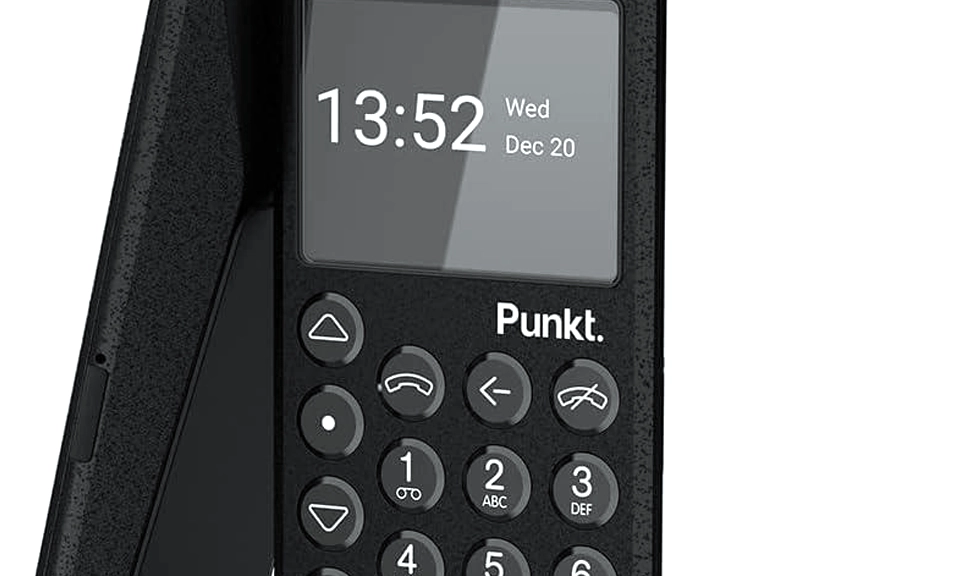
The demand is strong enough to support a growing ecosystem of companies. Light, the U.S. startup behind the Light Phone series, has over 100,000 users across its three generations of models and experienced 100% growth between 2023 and 2024. Its flagship Light Phone III, a 3.92-inch black-and-white device with no browser, no app store, and no social media, launched at $599** and now retails for **$799. The company has also announced the Light Flip, a $299 clamshell phone aimed at 18-to-30-year-olds, with shipping expected in 2027. Punkt, the Swiss maker of the minimalist MP02, sells 50,000 phones a year. And HMD Global, which licenses the Nokia brand, has revived the Y2K-era Nokia 3210 and reported that flip phone sales doubled between 2022 and 2023, a surge it attributed in part to the #bringbackflipphones hashtag on TikTok.
The irony is not lost on anyone: social media is driving the sale of devices designed to escape social media.
Why People Are Ditching Their Smartphones
The reasons are not uniform, but they cluster around a few consistent themes.
Digital overload and mental health. The most common motivation is a desire to reduce screen time and break the cycle of compulsive scrolling. The average American checks their phone 186 times a day, and 46% say they are addicted to their devices. Research has linked heavy social media use to heightened levels of depression, anxiety, and stress in young adults. For many, the dumbphone is not a statement—it is a tool for regaining control. As one 23-year-old who switched to a flip phone put it: “The second that my iPhone was gone, it was just like heaven on earth.”
Parental concern. A significant share of the market is parents buying dumbphones for their children. Nearly two-thirds of UK parents whose child already has a smartphone have considered technology to limit their child’s access to social media and the internet, according to a Clearpay survey. Dumbphones offer a middle ground: a way to stay in touch without opening the door to the entire internet. As one parent framed it, giving a child a smartphone is like “giving them a Ferrari with a lock on it” —the temptation is built in, and the lock is easily broken.
The luxury of being offline. For a certain segment of affluent professionals and executives, the dumbphone has become a status symbol of a different kind—a signal that you are important enough to be unreachable. “Offline is the new luxury,” as Business Insider declared, and the ultra-rich are increasingly turning to minimalist or encrypted devices to reduce their digital exposure against surveillance, burnout, and data harvesting.
The aesthetic and the ritual. There is also a cultural dimension that goes beyond utility. The dumbphone is part of a broader “newtro” movement—a revival of analogue and retro technology that includes vinyl records, film cameras, wired headphones, and mechanical watches. For Gen Z, the appeal is partly nostalgic (a connection to a pre-smartphone era they never experienced) and partly aesthetic (the tactile satisfaction of a physical keypad, the deliberate inconvenience of a device that does not demand your attention). As one analyst put it: “We have a desire for resistance. We aspire to the smell of aged paper, the feeling of scratching a pen on a page, or the weight of a vinyl record. It anchors us.”
The Counter-Argument: When Doing Less Becomes a Problem
The dumbphone trend is not without its critics, and the criticisms are practical rather than ideological.
The friction problem is real. A dumbphone can make modern life genuinely harder. Banking apps, two-factor authentication codes, ride-hailing, maps, and messaging apps like WhatsApp are increasingly essential infrastructure. Many people who switch find themselves digging their old smartphone out of a drawer to approve a login or order a taxi—and then losing forty minutes to the very apps they were trying to escape. The most successful dumbphone users are those who adopt a hybrid approach: a dumbphone for daily use, and a smartphone kept at home for the tasks that require it.
The price paradox. Dumbphones are supposed to be cheaper, but the premium end of the market tells a different story. The Light Phone III costs $799**—more than many mid-range smartphones—for a device that does dramatically less. The **Light Flip is $299, and the Balance Phone is £379. These are not budget devices. They are premium products for people who can afford to pay for simplicity.
The “performance” critique. Some argue that the dumbphone trend is less about genuine digital wellbeing and more about signalling. Buying a $799 minimalist phone is a way of performing a certain kind of values—a rejection of consumerism that is itself a form of consumption. That critique has merit, but it misses the lived experience of the people who make the switch. For many, the device is not a statement; it is a boundary.
The dumbphone
is not going to replace the smartphone. It is not trying to. What it represents is something more interesting: a correction. The smartphone became the default device for everything—communication, entertainment, work, banking, navigation, photography—and in the process, it became a source of chronic distraction and low-grade anxiety for millions of people. The dumbphone is a refusal of that default. It is a choice to carry a device that does one thing well, rather than a hundred things compulsively.
The market data suggests this is not a fleeting trend. The feature-phone market is growing, the premium dumbphone segment is attracting serious investment, and the cultural conversation around digital minimalism is becoming more mainstream. The smartphone will remain the centre of most people’s digital lives. But for a growing number of people, the centre is no longer the only place to be.
The dumbphone is back. Not because it is better. Because it is enough.