Protein has become the star nutrient of the weight-loss world. Social media is full of high-protein breakfasts, protein desserts, shakes, bars and “what I eat in a day” videos. The appeal is understandable: protein can make meals more filling, helps support muscle, and fits naturally into a calorie-controlled diet.
But high-protein does not automatically mean healthy, and eating more protein is not a shortcut that cancels out total calories, food quality, sleep or physical activity. The most useful question is not “How much protein can I eat?” It is “How can I include enough protein in a balanced eating pattern that I can maintain?”
Why protein may help with weight loss
Protein can support weight management in several ways. First, protein-rich meals may improve fullness, which can make it easier to eat less without feeling constantly hungry. Clinical reviews have identified satiety and the energy cost of digestion as possible reasons higher-protein diets sometimes help with short-term weight loss.
Second, protein provides amino acids needed to build and repair body tissue. During weight loss, the body can lose both fat and lean tissue. Resistance training and adequate protein can help shift the result toward preserving more lean mass, although the effect is not unlimited.
Third, protein foods can make meals more structured. A breakfast containing yoghurt and fruit, eggs with whole-grain toast, or tofu with vegetables may be more satisfying than a meal built mainly from refined carbohydrates. The benefit comes from what protein replaces and what it is eaten with, not simply from adding more food on top of an existing diet.
What counts as a high-protein diet?
There is no single legal or universal definition of “high protein.” The term may describe anything from a modest increase above usual intake to a very restrictive diet dominated by meat and protein products.
For healthy adults, the general protein Recommended Dietary Allowance is 0.8 grams per kilogram of body weight per day. The American Heart Association gives this as the adult RDA and notes that protein may account for roughly 10% to 35% of daily calories.
That RDA is a population-level minimum intended to meet the needs of most healthy adults. It is not necessarily the perfect target for every person who is dieting, strength-training, older, pregnant, highly active or recovering from illness.
Research on muscle and resistance training often examines higher intakes. One systematic review and meta-analysis found small increases in lean body mass from additional protein, particularly when protein was combined with resistance exercise. In the studies reviewed, some younger adults benefited at intakes of at least 1.6 g/kg/day, while evidence in older adults at 1.2 to 1.59 g/kg/day was more marginal and sensitive to individual studies.
These findings should not be interpreted as a universal prescription. They show that context matters. A person’s age, body size, exercise programme, health status, current diet and weight-loss plan all affect the appropriate amount.
A practical way to think about your protein intake
If you are a healthy adult and want a simple starting point, review whether your current meals contain a recognizable protein source. You do not need to begin by weighing every ingredient.
A 70-kilogram adult using the 0.8 g/kg RDA would need about 56 grams of protein per day. A higher research range of 1.2 to 1.6 g/kg would equal about 84 to 112 grams for that same body weight. Those numbers are examples, not personal medical recommendations, and body weight is not always the best basis for calculation in people with obesity or certain medical conditions.
A practical meal pattern is to include protein at breakfast, lunch and dinner, with an optional protein-containing snack if needed. Spread across meals, this may be easier than trying to consume most of the day’s protein in one shake or one very large dinner.
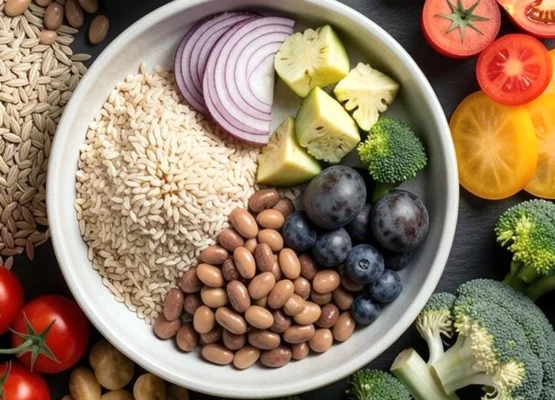
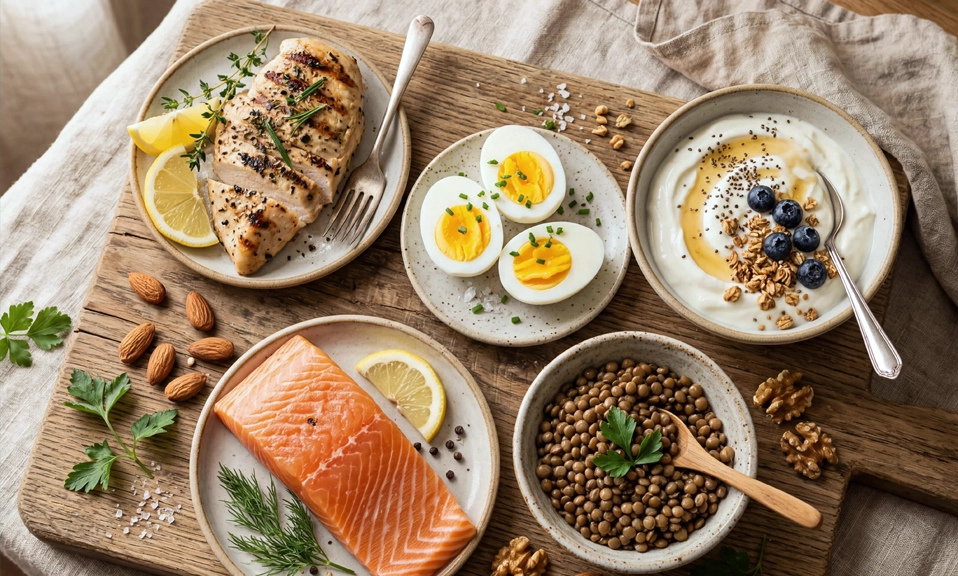
Useful options include beans, lentils, chickpeas, tofu, tempeh, eggs, fish, seafood, yoghurt, milk, cottage cheese, poultry, lean meat, nuts and seeds. Plant proteins also contribute fibre and other nutrients, although individual foods differ in their protein density.
Protein will not create weight loss without an energy deficit
Protein can support a weight-loss plan, but it does not override energy balance. A high-protein diet can still provide more calories than the body uses, especially when the extra protein comes from large portions of cheese, fatty meats, desserts, bars, shakes or restaurant meals.
This is one reason some people do not lose weight despite following a diet they describe as “high protein.” They may have improved protein intake but also increased total calories. Or they may have replaced nutritious carbohydrates with high-fat foods and reduced their fibre intake.
The goal is usually substitution, not endless addition. Add beans to a salad instead of adding them to an already oversized meal. Choose yoghurt and fruit instead of a pastry. Use tofu, fish or lean poultry in place of some processed meat. A protein shake may be convenient, but it should normally replace part of a meal or snack rather than become an extra dessert.
Protein and appetite: helpful, but not magic
Many people report feeling fuller after increasing protein. That can be useful if it reduces grazing or makes a calorie deficit more comfortable. But appetite is influenced by sleep, stress, food texture, fibre, meal timing, habits and individual preference.
A protein product can also be easy to overconsume. A shake may contain more calories than expected, and “high-protein” labels do not guarantee low sugar, low saturated fat or good overall nutrition. Check the serving size and nutrition panel rather than relying on the front of the package.
If a high-protein diet leaves you constantly thirsty, constipated, nauseated or preoccupied with food, it may be too restrictive or poorly balanced. Increasing vegetables, fruit, legumes, whole grains and fluids may solve some problems more effectively than adding another supplement.
Protein and muscle: why strength training matters
Weight loss can reduce lean mass, especially when the calorie deficit is large, the diet is very restrictive or activity is low. Protein is part of the solution, but muscle responds to a training stimulus as well.
Include resistance exercise at least twice per week if it is safe for you. This could involve weights, machines, resistance bands or body-weight exercises such as squats, lunges, push-ups against a wall, rows and carries. Progress gradually and allow recovery.
The evidence does not show that protein alone guarantees stronger muscles. In the meta-analysis cited above, additional protein had its clearest lean-mass signal when combined with resistance exercise, while effects on strength and physical function were small or inconsistent.
For older adults, preserving strength and function may be more important than pursuing a number on a protein-tracking app. A clinician or physiotherapist can help design an appropriate programme if balance, joint pain or chronic illness is a concern.
Choose protein quality, not only protein quantity
The food source matters. The American Heart Association recommends emphasizing plant proteins such as beans, lentils, nuts, seeds and soy, along with fish and seafood, and choosing lean or skinless poultry and lower-fat dairy if eating animal foods.
This pattern can improve the nutritional quality of a high-protein diet because legumes, nuts, seeds and soy can also provide fibre, minerals and unsaturated fats. Fish can provide beneficial polyunsaturated fats. Low-fat dairy can supply protein and calcium.
Be cautious with diets that rely heavily on processed meats such as bacon, sausages, salami and deli meats. Some high-protein plans also contain large amounts of fatty red meat, butter and full-fat cheese. Mayo Clinic warns that these choices can increase saturated-fat intake and may raise LDL cholesterol.
A protein target should not crowd out vegetables, fruit, whole grains or healthy fats. A diet can be high in protein and still be low in fibre and micronutrients if it is built mainly from meat and packaged products.
Do protein shakes and bars work?
They can be convenient, especially for people who struggle to prepare meals, travel frequently or need a quick option after exercise. They are not inherently better than ordinary food.
Use them as tools, not as proof that a diet is working. Look for a product with a reasonable calorie count, enough protein for the purpose, limited added sugar and a short ingredient list you tolerate well. Compare it with alternatives such as milk, yoghurt, soy milk, eggs, canned fish, tofu or beans.
Protein bars are often closer to confectionery than to a complete meal. Some contain substantial sugar alcohols or fibre additives that can cause digestive symptoms. Read the whole label, including serving size and calories.
Is a high-protein diet safe?
For many healthy adults, a moderate increase in protein can fit safely into a balanced eating pattern. However, long-term safety depends on the total diet and a person’s health.
Mayo Clinic advises particular caution for people with kidney disease because a high-protein diet may worsen kidney function. Anyone with kidney disease should ask a healthcare professional for an individualized protein target rather than copying a fitness influencer’s intake. People with diabetes and other chronic conditions should also discuss a major dietary change with their clinician.
Pregnancy, breastfeeding, advanced age, liver disease, digestive disease and a history of eating disorders may also require tailored guidance. Do not assume that a diet is safe simply because the foods are marketed as natural or the plan is popular online.
Common mistakes in the high-protein trend
Mistake 1: Treating protein as a free food
Protein still contains calories. Large portions can prevent weight loss, even when the food is nutritious.
Mistake 2: Cutting out all carbohydrates
Carbohydrates are not automatically fattening. Beans, fruit, vegetables, oats and whole grains can contribute fibre and useful nutrients. The problem is usually the overall diet pattern and calorie intake, not the existence of carbohydrates.
Mistake 3: Ignoring fibre and fluids
A meat-and-shake diet may provide protein but too little fibre. Constipation and poor diet quality can follow. Include plant foods and drink enough fluid unless a clinician has given you different instructions.
Mistake 4: Assuming more protein can replace exercise
Protein supports muscle, but resistance training provides the stimulus that tells the body to maintain or build it.
Mistake 5: Expecting rapid results
A protein increase may reduce hunger and make a diet easier to follow, but body-fat loss still takes time. Changes in water, glycogen and digestion can also move the scale up or down in the short term.
A balanced high-protein day could look like this
A practical day might begin with yoghurt, oats and fruit; include beans, lentils, tofu, fish, eggs or chicken in a lunch or dinner; and use nuts, milk, soy yoghurt or cottage cheese as a snack if needed. Add vegetables, fruit, whole grains and healthy fats rather than treating them as optional.
The exact menu is less important than the structure. Each main meal should be satisfying, contain a protein source and fit the person’s calorie needs. It should also be affordable, culturally familiar and realistic to prepare.
Protein is receiving attention
because it can improve fullness and help preserve lean mass during weight loss, especially when paired with resistance training. The evidence supports a thoughtful increase for some people, not an unlimited intake or an all-meat diet.
Start with protein-rich whole foods, distribute them across meals, keep vegetables and fibre on the plate, and choose lower-saturated-fat sources more often. If you have kidney disease, diabetes, are pregnant, take medication or have another chronic condition, get personalized advice before making a large change.
The best high-protein diet is not the one with the highest number. It is the one that helps you eat an appropriate amount, protect your health and maintain the habits after the trend disappears.
This article is for general education and is not medical advice. Speak with a qualified healthcare professional or registered dietitian for an individualized protein and weight-loss plan, especially if you have kidney disease, diabetes, are pregnant or breastfeeding, take prescription medication, or have a history of disordered eating.