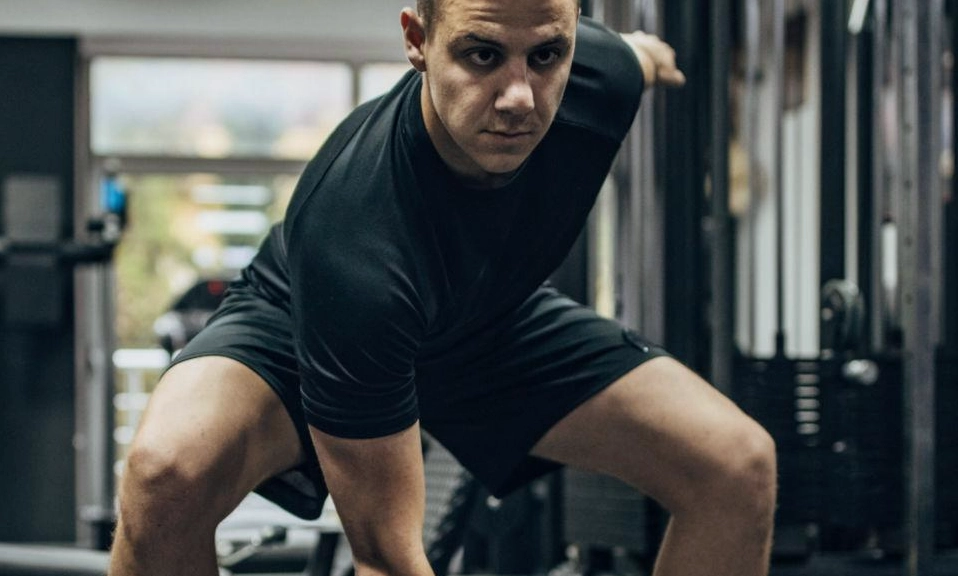
If you walk into a commercial gym, you’ll likely see two types of people.
The first group is doing “bro-splits”: Monday is Chest Day, Tuesday is Back Day, Wednesday is Leg Day, and so on. They spend 90 minutes doing five different variations of bicep curls.
The second group is wandering aimlessly, hopping from the treadmill to the elliptical, doing a few random stretches, and leaving feeling like they didn’t actually accomplish anything.
If you are a beginner, you might think you need to copy the first group to get results. You don’t.
In fact, the most effective, time-efficient, and scientifically backed way to start your strength training journey is the exact opposite. It’s called Full-Body Strength Training, and it is the ultimate hack for building muscle, burning fat, and transforming your body in just three days a week.
If you are intimidated by the weight room, confused by the machines, or just don’t know where to start, this is your definitive, jargon-free guide to building your first full-body routine.
🏆 Why Full-Body Training is the Ultimate Beginner Strategy
Before we get to the exercises, you need to understand why this approach works so well, especially for beginners.
1. You Hit Every Muscle More Frequently When you do a “body part split” (like Chest Day), you only stimulate your chest muscles once a week. With full-body training, you are hitting your entire musculature 3 times a week. More frequent stimulation equals more frequent signals for your body to grow and adapt.
2. It Maximizes the “Hormonal Response” Full-body workouts rely on “compound movements” (exercises that use multiple joints and muscle groups at once, like squats and rows). These large movements require massive amounts of energy, which triggers your body to release muscle-building and fat-burning hormones like testosterone and growth hormone.
3. It’s Highly Time-Efficient You don’t have 90 minutes to spend in the gym every day. A well-designed full-body workout takes 45 to 60 minutes. You get in, you do the heavy lifting, and you get out.
4. It Builds “Real World” Strength Isolating your biceps is great for looking good in a t-shirt, but it doesn’t help you carry all the groceries in one trip. Full-body training teaches your muscles to work together as a coordinated unit, making you stronger in everyday life.
🧱 The 5 Fundamental Movement Patterns
To build a full-body routine, we don’t think about “muscles” (like the pecs or the lats). We think about movements. Every effective strength program is built on these five fundamental human movement patterns:
- Squat (Knee-Dominant): Bending the knees to lower the body (targets quads and glutes).
- Hinge (Hip-Dominant): Bending at the hips while keeping the legs mostly straight (targets hamstrings, glutes, and lower back).
- Push (Upper Body): Pushing weight away from the body (targets chest, shoulders, and triceps).
- Pull (Upper Body): Pulling weight toward the body (targets back and biceps).
- Core/Carry: Stabilizing the torso or carrying heavy weight (targets the abs, obliques, and grip).
If you include one exercise for each of these five patterns, you have a complete full-body workout.
🏋️♂️ The Ultimate Beginner Full-Body Routine
Here is your blueprint. You will perform this exact workout three times a week (e.g., Monday, Wednesday, Friday). Always take at least one rest day between sessions to allow your muscles to recover and grow.
Instructions: Perform 3 sets of 8 to 12 repetitions for each exercise. Rest for 90 seconds between sets.
1. The Squat Pattern: Goblet Squat
Why: Barbell back squats are highly technical. The Goblet Squat is much easier to learn, forces you to keep your chest up, and deeply targets your quads and core. How to do it: Hold a single dumbbell or kettlebell vertically against your chest with both hands (like you’re holding a heavy goblet). Stand with feet shoulder-width apart. Push your hips back and bend your knees to lower down until your thighs are parallel to the floor. Drive through your heels to stand back up.
- Beginner Mod: Use a light weight, or just do bodyweight sit-to-stands from a chair.
2. The Hinge Pattern: Dumbbell Romanian Deadlift (RDL)
Why: This is the king of posterior chain (back of the body) exercises. It builds strong hamstrings and glutes, and bulletproofs your lower back. How to do it: Hold a dumbbell in each hand in front of your thighs. Keep a slight, soft bend in your knees. Push your hips straight back toward the wall behind you, sliding the dumbbells down your legs. Keep your back completely flat. Stop when you feel a deep stretch in your hamstrings (usually just below the knee), then squeeze your glutes to stand back up.
- Beginner Mod: Practice the hip-hinge movement with no weight, just pushing your butt back to tap a wall behind you.
3. The Push Pattern: Dumbbell Bench Press or Push-Ups
Why: Builds the chest, front deltoids (shoulders), and triceps. How to do it:
- Dumbbell Press: Lie on a flat bench holding a dumbbell in each hand. Press them straight up over your chest, then lower them slowly until your elbows are at a 90-degree angle.
- Push-Ups: Keep your body in a straight line from head to heels. Lower your chest to the floor and push back up.
- Beginner Mod: Do push-ups with your hands elevated on a bench, a sturdy chair, or even a wall.
4. The Pull Pattern: Dumbbell Bent-Over Row
Why: We live in a hunched-over world (looking at phones and computers). Rows pull your shoulders back, build a strong upper back, and fix your posture. How to do it: Hold a dumbbell in each hand. Hinge forward at the hips about 45 degrees, keeping your back flat and core tight. Let the weights hang down. Pull the dumbbells up toward your hip pockets, squeezing your shoulder blades together at the top. Lower with control.
- Beginner Mod: Use the Lat Pulldown machine at the gym, or use resistance bands anchored to a door.
5. The Core Pattern: The Farmer’s Carry
Why: Planks are great, but the Farmer’s Carry builds dynamic core stability, improves your posture, and builds massive grip strength. It’s the ultimate “functional” exercise. How to do it: Pick up the heaviest dumbbells or kettlebells you can safely hold in each hand. Stand tall, pull your shoulders back, and brace your abs like you’re about to be punched in the stomach. Walk forward in slow, controlled steps for 30 to 40 seconds. Don’t let the weights swing or your shoulders slump.
📈 The Secret Sauce: Progressive Overload
If you do the exact same workout, with the exact same weights, for the exact same reps, for six months… you will look exactly the same in six months.
Your body is an adaptation machine. It only changes if you force it to. This is called Progressive Overload, and it is the most important concept in fitness.
Every week, you must try to do slightly more than you did last week. You can achieve this by:
- Adding Weight: If you squatted with 20 lbs last week, try 25 lbs this week.
- Adding Reps: If you did 8 reps with 20 lbs last week, try to get 9 or 10 reps this week.
- Improving Form: If you did 10 reps, but the last 3 were sloppy and shaky, doing 10 reps with perfect, slow control this week is a form of progressive overload.
Keep a simple note on your phone. Write down the weights and reps you did. Beat that logbook next time.
🚫 3 Beginner Mistakes to Avoid
- Ego Lifting: The gym is not the place to prove anything to anyone. If you have to swing your back, jerk the weight, or cut the range of motion short to lift a heavier dumbbell, the weight is too heavy. Form always beats weight.
- Skipping the Warm-Up: Never walk into the gym and immediately load up your working weight. Do 5 minutes of light cardio to get a sweat going, then do 1-2 “warm-up sets” with very light weight to groove the movement pattern.
- Program Hopping: Beginners often get bored and switch to a new workout routine every two weeks. Don’t. Stick to this exact 5-exercise routine for at least 8 to 12 weeks. The magic happens in the consistency and the gradual addition of weight over time.
Strength is a Lifelong Journey
The weight room can feel like a boys’ club, or an intimidating maze of confusing machines. But at its core, strength training is beautifully simple.
Pick up a heavy thing, put it down, and repeat.
By focusing on these five fundamental movements, three times a week, you will build a foundation of muscle, burn stubborn body fat, improve your bone density, and cultivate a level of physical confidence that bleeds into every other area of your life.
You don’t need a fancy split. You don’t need 10 different bicep exercises. You just need this plan, a little bit of grit, and the willingness to show up.
Grab some dumbbells, trust the process, and go build some strength.