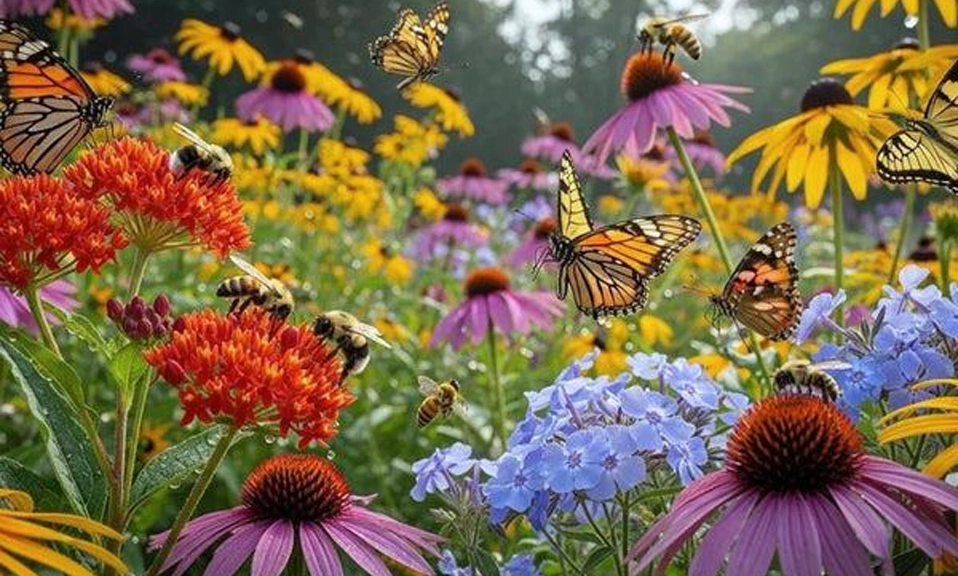
There is a sound that used to be the background noise of summer. A low, gentle hum that filled the air as you sat on your porch, walked through a meadow, or leaned over a garden bed.
The sound of bees.
Over the last two decades, that hum has grown quieter. Bee populations have plummeted due to habitat loss, pesticide use, and climate change. Monarch butterfly numbers have dropped by over 80% in some regions. The insects that pollinate one in every three bites of food we eat are in serious trouble.
But here is the beautiful, empowering truth: you can help fix this, starting in your own backyard.
You don’t need to be a master gardener. You don’t need acres of land. A few pots on a balcony or a small flower bed by your front door can become a vital refuelling station for pollinators. And as a bonus, pollinator gardens are some of the most vibrant, lively, and joyful spaces you can create.
If you want to turn your outdoor space into a buzzing, fluttering haven, here are 12 stunning flowers that bees and butterflies absolutely cannot resist—and how to grow them.
🐝 Why Pollinator Gardening Matters (Beyond the Pretty Blooms)
Before we get to the flowers, let’s talk about why this matters.
Pollinators are responsible for reproducing roughly 75% of the world’s flowering plants and 35% of global food crops. Without them, we lose apples, almonds, blueberries, chocolate, coffee, and countless other foods.
But it’s not just about food. A garden alive with pollinators is a garden that feels alive. You’ll watch butterflies perform their aerial dances, observe bees going about their busy work, and attract birds that feed on the seeds and insects your flowers support. You’re not just planting flowers—you’re rebuilding a tiny, functioning ecosystem.
🌸 The 12 Best Flowers for Bees and Butterflies
These flowers have been chosen because they are nectar-rich, widely available, and genuinely irresistible to pollinators. They’re arranged by bloom season so you can plan for colour all year long.
🌷 Spring Bloomers
1. Lavender (Lavandula) The Vibe: The fragrant, silvery staple of every pollinator garden. Why pollinators love it: Bees are absolutely obsessed with lavender. The tubular flowers are perfectly shaped for their tongues, and the high nectar content keeps them coming back all day. How to grow it: Full sun, well-drained soil, and almost zero watering once established. It’s drought-tolerant, deer-resistant, and smells incredible. Pro tip: Plant it near a walkway or seating area so you can enjoy the scent (and watch the bees) every time you pass by.
2. Columbine (Aquilegia) The Vibe: The delicate, bell-shaped woodland charmer. Why pollinators love it: Its long, tubular spurs are perfectly designed for long-tongued bees and hummingbirds. How to grow it: Partial shade to full sun. It self-seeds gently, so you’ll get new plants popping up each year.
3. Lilac (Syringa) The Vibe: The nostalgic, fragrant shrub that signals spring has arrived. Why pollinators love it: The dense clusters of flowers produce massive amounts of nectar. Bees will swarm a blooming lilac bush. How to grow it: Full sun, well-drained soil. It’s a long-lived shrub that will become a centrepiece of your garden for decades.
🌻 Summer Bloomers (The Peak Season)
4. Bee Balm (Monarda) The Vibe: The fiery, spiky native that lives up to its name. Why pollinators love it: As the name suggests, bees adore it. But it’s also a magnet for hummingbirds and swallowtail butterflies. The tubular, firework-like flowers are pollinator catnip. How to grow it: Full sun to partial shade, moist soil. Look for mildew-resistant varieties like ‘Jacob Cline’ or ‘Raspberry Wine’. Pro tip: It spreads by underground runners, so give it space or plant it in a contained bed.
5. Coneflower (Echinacea) The Vibe: The tough, cheerful native that blooms for months. Why pollinators love it: The raised, cone-shaped centre provides a perfect landing pad for butterflies and bees. Goldfinches will also visit in autumn to eat the seeds. How to grow it: Full sun, well-drained soil. Extremely drought-tolerant once established. Pro tip: Leave the dried flower heads on over winter—they provide food for birds and shelter for overwintering insects.
6. Zinnias The Vibe: The bold, colourful annual that blooms non-stop until frost. Why pollinators love it: Butterflies consider zinnias their absolute favourite. The flat, open flowers make it easy for them to land and drink. How to grow it: Full sun, direct-sow seeds after the last frost. Deadhead (snip off) spent blooms to keep them flowering all summer. Pro tip: Choose single-flowered varieties (one ring of petals) over double-flowered ones. The doubles look pretty, but they produce far less nectar and are harder for bees to access.
7. Black-Eyed Susan (Rudbeckia) The Vibe: The golden, sun-facing classic of cottage gardens. Why pollinators love it: The dark central cone is rich in nectar and pollen, and the bright yellow petals act like a beacon for bees from a distance. How to grow it: Full sun, average soil. Virtually indestructible. They self-seed happily and will return year after year.
8. Milkweed (Asclepias) The Vibe: The non-negotiable hero of the butterfly world. Why pollinators love it: This is the only plant monarch butterflies will lay their eggs on. The caterpillars eat nothing else. Without milkweed, there are no monarchs. It also produces abundant nectar for all pollinators. How to grow it: Full sun. Choose native species for your region (Common Milkweed, Swamp Milkweed, or Butterfly Weed). Pro tip: Plant it in a dedicated spot—it can spread aggressively. But please, plant it. Monarchs depend on it.
9. Sunflowers (Helianthus) The Vibe: The cheerful, towering giants that follow the sun. Why pollinators love it: A single sunflower head is actually hundreds of tiny flowers, producing massive amounts of pollen and nectar. Bees will literally fall asleep in them. How to grow it: Full sun, direct-sow seeds after the last frost. They’re incredibly easy and fun to grow with kids. Pro tip: Choose pollen-heavy varieties like ‘Moulin Rouge’ or ‘Lemon Queen’ over the pollen-free ornamental types.
🍂 Autumn Bloomers (The Critical Finish Line)
10. Asters The Vibe: The daisy-like late bloomers that save the season. Why pollinators love it: Asters are one of the last nectar sources available before winter. They are absolutely critical for migrating monarch butterflies, who rely on them to fuel their journey to Mexico. How to grow it: Full sun to partial shade. They bloom from late summer into fall, providing colour when most other flowers have finished. Pro tip: Cut them back by half in early summer to encourage bushier growth and more blooms.
11. Sedum (Stonecrop) The Vibe: The succulent, low-maintenance fall favourite. Why pollinators love it: The flat, umbrella-like clusters of tiny flowers are late-season nectar stations. You’ll often see dozens of bees and butterflies piled onto a single sedum head. How to grow it: Full sun, extremely well-drained soil. It’s drought-tolerant and thrives on neglect. Pro tip: ‘Autumn Joy’ is the classic variety, but ‘Black Jack’ offers stunning dark purple foliage.
12. Goldenrod (Solidago) The Vibe: The unfairly maligned native that deserves a comeback. Why pollinators love it: Goldenrod is one of the most important late-season nectar sources for bees preparing for winter. It is NOT the cause of hay fever (that’s ragweed, which blooms at the same time). Goldenrod pollen is heavy and insect-carried, not wind-blown. How to grow it: Full sun, average soil. It’s a native powerhouse that supports over 100 species of butterflies and moths. Pro tip: Choose clump-forming varieties like ‘Fireworks’ or ‘Golden Fleece’ to keep it tidy in a garden setting.
🛠️ 5 Golden Rules for Designing a Pollinator Garden
Planting the right flowers is only half the battle. To create a garden that pollinators will actually use, follow these rules:
1. Plant in Clumps, Not Singles A single lavender plant is easy for a bee to fly past. A clump of five or seven is a beacon. Pollinators are more likely to visit (and efficiently pollinate) large patches of the same flower. Aim for groups of at least 3 to 5 plants of the same species.
2. Plan for Continuous Bloom Pollinators need food from early spring to late fall. If your garden only blooms in June, you’re leaving them hungry the rest of the year. Choose a mix of spring, summer, and autumn bloomers (like the 12 above) to keep the buffet open all season.
3. Ditch the Pesticides (Especially Neonicotinoids) This is non-negotiable. You cannot attract pollinators while simultaneously poisoning them. Avoid all synthetic pesticides, and especially avoid “neonicotinoids”—a class of chemicals that are absorbed into the plant’s tissues and make the nectar itself toxic. If you must treat a pest problem, use organic methods like neem oil, and only apply it at dusk when pollinators are inactive.
4. Include “Host Plants” for Caterpillars Adult butterflies drink nectar, but their babies (caterpillars) need specific plants to eat. Monarchs need milkweed. Swallowtails need parsley, dill, and fennel. Painted Ladies need hollyhocks. If you only plant nectar flowers, you’ll attract butterflies—but they won’t stick around to raise their families. Include a few host plants in a tucked-away corner.
5. Provide Water and Shelter Pollinators need to drink, but birdbaths are too deep for them. Create a “puddling station” by filling a shallow dish with pebbles and water. The bees and butterflies will land on the pebbles to safely sip. Also, leave some leaf litter and bare patches of soil—many native bees nest in the ground and need undisturbed spots to raise their young.
🚫 3 Common Pollinator Garden Mistakes
Mistake 1: Choosing “Double” or “Pom-Pom” Flowers Those fluffy, rose-like blooms with hundreds of petals look gorgeous, but they’ve been bred for looks, not function. The extra petals often replace the nectar-producing parts of the flower, or they physically block bees from reaching the nectar. Stick to single-flowered varieties whenever possible.
Mistake 2: Buying Plants Pre-Treated with Pesticides Some big-box garden centres sell plants that have been drenched in systemic pesticides (neonicotinoids) to keep them looking perfect on the shelf. When you plant them in your pollinator garden, you’re unknowing setting a trap. Ask your nursery if their plants are neonic-free, or buy from local, independent growers.
Mistake 3: Being Too Tidy A perfectly manicured, mulched, leaf-free garden is a pollinator desert. Leave some stems standing over winter (they provide shelter for hibernating insects). Leave some bare patches of soil for ground-nesting bees. Embrace a little wildness. The messier your garden looks to your neighbours, the happier your pollinators will be.
Plant a Little Paradise
You don’t need to convert your entire yard into a wildflower meadow to make a difference. Even a single pot of lavender on your balcony, or a small patch of coneflowers by your front door, creates a vital waypoint for a tired, hungry bee.
When you plant a pollinator garden, you’re doing something profound. You’re opting out of the sterile, chemical-dependent lawn culture, and opting into a living, breathing ecosystem. You’re providing food, shelter, and hope for the tiny creatures that keep our world in bloom.
And the best part? You get to sit back, sip your coffee, and watch the magic unfold. The bees will come. The butterflies will dance. And that gentle, summer hum will return to your corner of the world.
Go buy some seeds. Your pollinators are waiting.