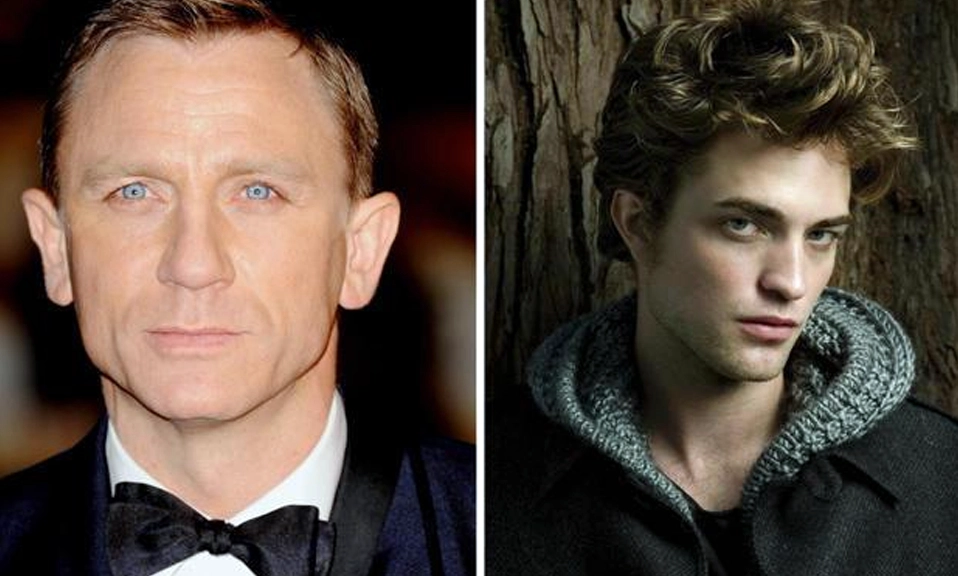
Daniel Craig didn’t just play James Bond. He broke him open, examined the pieces, and put him back together as something more fragile and more human than any 007 before him. Robert Pattinson inherits a character who has been deconstructed, killed off, and rebooted—and he inherits him at a moment when the franchise is no longer the sure thing it once was. The question isn’t whether Pattinson can be a good Bond. It’s whether he can be a Bond that matters.
The two actors represent opposite poles of the same character. Craig’s era was defined by physicality, trauma, and a deliberate rejection of the suave invincibility that had defined the role for four decades. Pattinson arrives with a reputation for eccentricity, arthouse risk, and a kind of internalized intensity that feels almost alien to the Bond template. One was the blunt instrument. The other might be the scalpel.
Here is how they compare—and who is likely to be the better Bond.
The Craig Legacy: The Man Who Broke the Mold
Daniel Craig was never supposed to work. He was blond. He was under six feet tall. He was a character actor best known for supporting roles in films like Lara Croft: Tomb Raider. The backlash to his casting in 2005 was vicious and sustained—and then Casino Royale came out, and the conversation changed forever.
Craig played Bond as a man who felt every punch, every betrayal, and every loss. His Bond was not invincible. He was not untouchable. He was a blunt instrument who bled, who grieved, and who, by the time of No Time to Die, had been broken so thoroughly that the only ending that made sense was death.
The numbers validate the impact. Craig’s five Bond films grossed a combined $3.96 billion worldwide**—more than any other Bond actor’s tenure. *Skyfall* alone made **$1.109 billion, the only Bond film to cross the billion-dollar mark, and it was voted the best Bond film ever in a poll of 3,500 fans. Spectre made $872 million; *No Time to Die* made $760 million.
Craig’s Bond was a cultural reset. He took a character who had become a campy relic and turned him into something raw and contemporary. The question for Pattinson is not whether he can match Craig’s box office. It’s whether he can match Craig’s impact—whether he can redefine the character in a way that feels as necessary and as timely as Craig’s reinvention did in 2006.
The Pattinson Proposition: The Weird One
Pattinson is a different kind of actor, and his Bond will be a different kind of Bond.
He is a range actor, not a specialist. Pattinson has spent the two decades since Twilight deliberately dismantling his own teen-idol image. He played a doomed bank robber in Good Time, a lighthouse keeper losing his mind in The Lighthouse, a criminal adrift in space in High Life, and a brooding vigilante in The Batman. He has made a career out of playing outsiders, misfits, and men on the edge of collapse. That is not the traditional Bond résumé. It is, however, a résumé that suggests a Bond with more interiority, more unpredictability, and more range than the character has traditionally been allowed.
He is the most accomplished actor to take the role in decades. The Associated Press noted that at 40, with multiple blockbuster franchises under his belt, Pattinson becomes “one of the most accomplished actors to play James Bond”. That is a double-edged compliment. It means he has the skill to deliver a complex performance. It also means he is an A-list star, and the Bond franchise has historically avoided A-list stars in favor of emerging actors it can mold.
He can be funny. One critic noted that Pattinson is “certainly the funniest and quickest to laugh James Bond we’ve had in decades”. The Craig era was many things—visceral, emotional, reinventing—but it was rarely funny. Pattinson’s natural wit and self-deprecating humor could bring a lightness back to the role without undermining its seriousness.
He has a director who understands atmosphere. Denis Villeneuve is not a franchise mercenary. He is a filmmaker defined by mood, tension, and visual ambition. Blade Runner 2049, Arrival, Sicario, Dune—these are films that trust the audience to sit with uncertainty. Pairing him with Pattinson suggests a Bond that is slower, stranger, and more visually ambitious than anything in the Craig era.
The Skepticism: Why It Might Not Work
Not everyone is convinced. The reaction to Pattinson’s casting was genuinely divided—more than 33,000 posts on X in the first hour, driving 50 million impressions. Some fans were thrilled. Others were blunt: “I’m really disappointed. While I like Pattinson, he doesn’t suit the role”.
The Batman problem. Pattinson is currently in production on The Batman Part II. He is the first actor to play both Batman and James Bond in major franchise films. The scheduling logistics are a genuine concern. The tonal overlap—two brooding, suited men with complicated relationships to violence—is an even bigger one. Piers Morgan called it a “bad call,” asking how Pattinson can lead two massive franchises at the same time. The answer, presumably, is that he is an actor, not the characters he plays. But the perception matters.
The A-list problem. The Bond franchise has historically been built on discovery—on finding actors who are not yet stars and letting the role make them one. Sean Connery was a relative unknown. George Lazenby had never acted in a film. Roger Moore was a television star. Even Craig was a character actor, not a leading man. Pattinson is already a star. He already has a fanbase. He already has a public persona. That changes the alchemy of the role. The Bond franchise has always been as much about the actor’s transformation into Bond as it is about Bond himself. Pattinson arrives fully formed.
The weirdness problem. Pattinson’s greatest strength—his willingness to be strange, unpredictable, and unlikable—is also his greatest risk in a role that demands a certain kind of magnetic likability. Bond can be cold. He can be ruthless. But he cannot be alienating. The question is whether Pattinson can modulate his instincts to fit the character, or whether the character will have to bend to fit him.
The Head-to-Head: Who Wins?
On physicality, Craig wins. Craig’s Bond was defined by his body—the muscles, the fights, the way he moved through space. He made Bond feel dangerous in a way that Pattinson, with his lean frame and art-house sensibility, may not be able to replicate. Pattinson can be intense, but he is not a physical presence in the same way. Craig’s Bond was a blunt instrument. Pattinson’s Bond will have to find a different kind of threat.
On range, Pattinson wins. Craig was excellent at one thing: the wounded, haunted, physically imposing Bond. Pattinson has shown he can do comedy, tragedy, strangeness, and charm. He is a more versatile actor. Whether that versatility is an asset or a liability in a franchise that demands consistency is the open question.
On impact, Craig wins—for now. Craig’s Bond changed the franchise. He made it relevant again. He brought in audiences who had never cared about 007. Pattinson inherits a franchise that has already been reinvented, and he has to find a way to reinvent it again. That is a harder task. Craig had the advantage of being the anti-Bond. Pattinson has to be the post-Craig Bond, which is a less clearly defined proposition.
On risk, Pattinson wins. Craig was a safe choice dressed up as a risky one. He was a character actor with the right pedigree and the right training. Pattinson is a genuinely unconventional choice—a former teen idol turned art-house darling turned Batman. His casting is a statement of intent from Amazon MGM Studios. It says the franchise is willing to take a real swing.
Pattinson Can Be Better, But Craig Was More Important
Daniel Craig was the better Bond for his moment. He took a character who had become a caricature and made him feel real. He brought a physicality and an emotional rawness that the franchise had never seen. He ended his tenure with a death that felt earned, and he left the role in a place where a reboot was not just possible but necessary.
Robert Pattinson could be the better Bond for this moment. He is a more versatile actor. He has a director who understands atmosphere and tension. He has the opportunity to take a character who has been deconstructed and rebuild him as something stranger, funnier, and more unpredictable. If he succeeds, he will not just be a good Bond. He will be a Bond that feels new.
But there is a difference between being better and being more important. Craig’s Bond mattered because he changed the conversation. Pattinson’s Bond will matter if he can change it again.
The odds are not against him. The talent is there. The director is there. The franchise is hungry for reinvention. The only question is whether Pattinson—the weird one, the risk, the A-list star—can do what Craig did: make us forget the Bond we thought we knew.
Bond 26 is expected in 2028. The Pattinson era begins then.