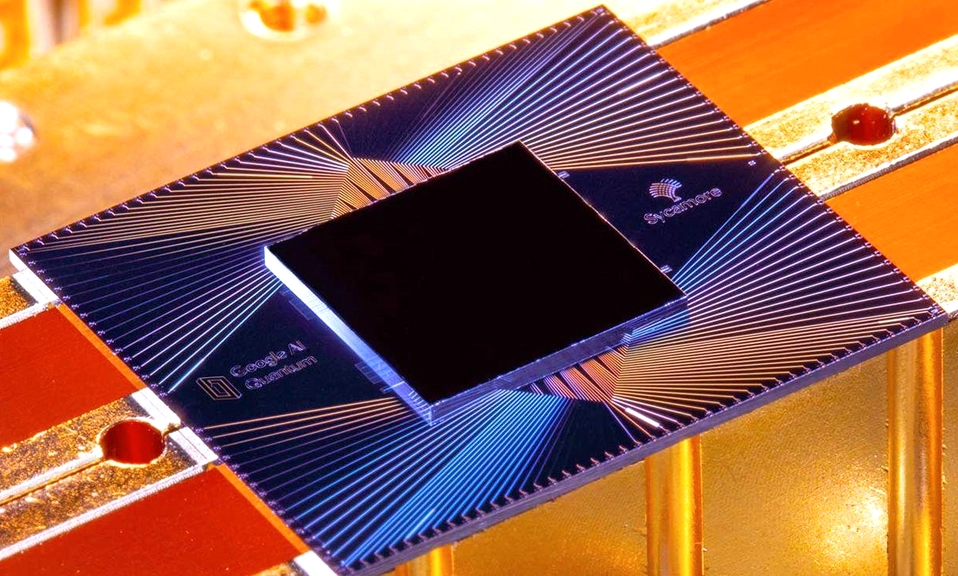
If you’ve read any tech news over the last few years, you’ve heard the buzzword: Quantum Computing.
Headlines promise that it will cure cancer, break all modern encryption, and solve climate change overnight. But then you hear from skeptics who say it’s decades away, fundamentally flawed, or just a massively overhyped science project.
So, what’s the truth? Is quantum computing about to change the world, or is it just the next “flying car” that never quite arrives?
To answer that, we need to strip away the sci-fi mystique, understand how it actually works (without a PhD in physics), and look at where the technology truly stands in 2026.
🧠 The Basics: How is a Quantum Computer Different?
Your laptop, smartphone, and the servers running the internet are classical computers. They process information using bits, which are like tiny light switches that can only be in one of two states: 0 or 1. Every photo, video, and app you use is ultimately just billions of these 0s and 1s being flipped incredibly fast.
A quantum computer uses qubits (quantum bits). Thanks to the bizarre rules of quantum mechanics, qubits can do things classical bits cannot. They rely on three mind-bending principles:
1. Superposition (The Spinning Coin)
A classical bit is a coin lying flat on a table: it’s either heads (0) or tails (1). A qubit in superposition is like a spinning coin. While it’s spinning, it exists in a probabilistic combination of both heads and tails simultaneously. This allows a quantum computer to explore multiple possibilities at the exact same time.
2. Entanglement (The “Spooky” Link)
Albert Einstein famously called this “spooky action at a distance.” When qubits become entangled, their states are linked, no matter how far apart they are. If you measure one entangled qubit and it lands on “heads,” you instantly know the state of its partner. This allows quantum computers to process highly complex, interconnected problems exponentially faster than classical machines.
3. Interference (The Maze Solver)
Imagine trying to find the exit to a massive maze. A classical computer tries every single path one by one until it finds the exit. A quantum computer uses interference to act like a wave of water flooding the maze: it amplifies the paths that lead to the correct answer and cancels out the dead ends, finding the solution almost instantly.
🌍 The “Killer Apps”: Why This Changes Everything
Quantum computers won’t replace your laptop. You won’t use one to browse the web or play video games. Instead, they will act as highly specialized co-processors for the world’s most intractable problems. Here is where they will change the world:
💊 1. Drug Discovery and Molecular Simulation
Classical computers are terrible at simulating nature because nature is fundamentally quantum. Simulating a complex molecule like caffeine pushes classical supercomputers to their absolute limits. Quantum computers can simulate molecular interactions natively. This means we could design life-saving drugs, personalized medicines, and novel materials in months instead of decades.
🔐 2. The Cryptography Earthquake (and the Fix)
Most of the world’s digital security (banking, messaging, national secrets) relies on RSA encryption, which is based on the fact that classical computers take thousands of years to factor massive prime numbers. A sufficiently powerful quantum computer running Shor’s Algorithm could crack this in hours. The good news? We saw this coming. The global tech community is already rolling out Post-Quantum Cryptography (PQC)—new mathematical algorithms that even quantum computers can’t easily break. The “Y2Q” (Year of Quantum) threat is being actively neutralized.
🌱 3. Climate Change and Material Science
Designing a better battery, a more efficient solar panel, or a catalyst that pulls carbon directly out of the atmosphere requires understanding chemistry at the atomic level. Quantum computing could unlock the exact chemical formulas needed to build hyper-efficient green technologies, potentially accelerating the transition to renewable energy by decades.
📦 4. Hyper-Optimization
From routing global shipping logistics to managing complex financial portfolios or optimizing city traffic grids in real-time, quantum algorithms can evaluate millions of variables simultaneously to find the absolute most efficient solution, saving billions of dollars and tons of CO2.
🛑 The Reality Check: Where Are We in 2026?
If quantum computing is so powerful, why isn’t it running your bank’s servers yet?
Because we are currently in the NISQ Era: Noisy Intermediate-Scale Quantum.
Today’s quantum computers have hundreds, and in some cases, a few thousand physical qubits. But there’s a massive catch: qubits are incredibly fragile.
Any tiny interaction with the outside world—a slight change in temperature, a stray electromagnetic wave, or even cosmic radiation—causes them to lose their quantum state. This is called decoherence, and it introduces “noise” (errors) into the calculations.
To build a truly world-changing, fault-tolerant quantum computer, we need logical qubits. This means grouping hundreds or thousands of “noisy” physical qubits together to act as one single, error-corrected, stable qubit.
In 2026, we are seeing incredible breakthroughs in quantum error correction, with major tech giants and research labs demonstrating early, small-scale logical qubits. But scaling this up to the millions of physical qubits required for breakthrough applications is an engineering challenge of monumental proportions.
🧊 The Hurdles We Still Must Clear
- The Cooling Problem: Most leading quantum architectures (like superconducting qubits) must be kept at temperatures close to absolute zero (-273.15°C), colder than deep space. This requires massive, energy-intensive dilution refrigerators.
- The Talent Gap: There is a severe global shortage of people who understand both quantum physics and classical software engineering.
- The “Quantum Winter” Risk: If the hype outpaces the actual engineering progress for too long, funding could dry up, slowing down the very research needed to make it work.
🏆 A Marathon, Not a Sprint
Is quantum computing about to change the world? Yes. But not tomorrow.
We are not going to wake up one day to find that quantum computers have solved everything. Instead, we will see a gradual, then sudden, integration.
First, we will see “quantum advantage” in highly specific, narrow niches—like optimizing a specific chemical reaction or a localized logistics network. Then, as error correction improves, the applications will explode outward into medicine, materials science, and AI.
Quantum computing is not a replacement for classical computing; it is the discovery of an entirely new dimension of computation. Just as the invention of the transistor didn’t immediately give us the internet, the early days of quantum computing are just the foundation.
The machines we are building today are the telescopes of the 21st century. We are just now pointing them at the universe of problems we previously thought were unsolvable. And what we are about to discover will redefine human progress.