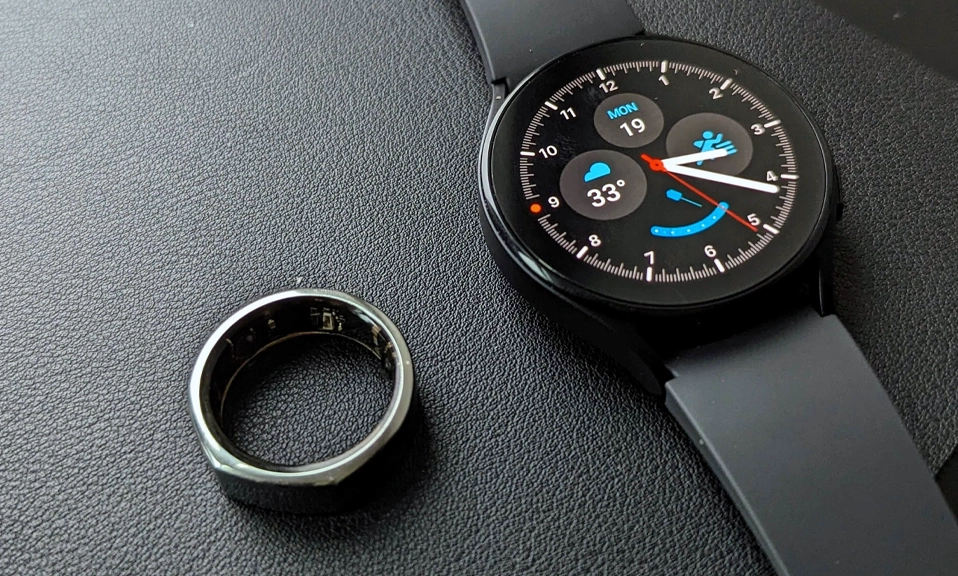
The choice between a smartwatch and a smart ring in 2026 is no longer about which is “better.” It’s about which philosophy fits your life. After years of testing both, the consensus is clear: they are not direct competitors but complements, each excelling at different things.
A smartwatch is a wrist-worn computer that happens to track your health. A smart ring is a passive health sensor that happens to be jewelry. The right choice depends entirely on whether you want an assistant on your wrist or a silent guardian on your finger.
⚖️ At a Glance: Smartwatch vs. Smart Ring
| Feature | Smartwatch (e.g., Apple Watch Series 11) | Smart Ring (e.g., Oura Ring 5) |
|---|---|---|
| Primary Focus | Active fitness, notifications, apps | Sleep, recovery, passive health trends |
| Form Factor | Bulky, screen on wrist | Tiny, screen-free, worn on finger |
| Battery Life | ~24-40 hours; needs daily charging | 6-9 days; minimal charging hassle |
| Key Strength | Extensive app support, GPS, safety features (ECG, fall detection) | Ultimate comfort for sleep tracking, discreet design |
| Key Weakness | Uncomfortable for sleep, screen can be distracting at night | Requires a monthly subscription for full data (Oura) |
| Price (Starting) | ~$249 (SE) to $399+ (Series 11) | ~$349-$399+ (Oura Ring 5) |
😴 The Sleep Specialist vs. The All-Rounder
This is the most significant difference. If sleep is your primary concern, the smart ring wins, almost by default.
Comfort is King: A smartwatch is a relatively bulky object strapped to your wrist. Many people find it uncomfortable or distracting to wear overnight. A smart ring, weighing as little as 2 grams, is virtually unnoticeable, making it far more likely you’ll wear it consistently.
Data Interpretation: While the Apple Watch Series 11 has a highly accurate sleep tracker that has outperformed the Oura Ring in some tests, the Oura Ring’s strength is in its app. It excels at analyzing long-term trends, flagging subtle changes related to illness, recovery, or cycle tracking, and presenting that data in a beautifully clear, actionable way.
The Subscription Catch: To access Oura’s full suite of insights, you need a membership, which costs about $5.99/month. The Apple Watch, by contrast, provides all its health data without an ongoing fee.
🏃 The Fitness Coach vs. The Silent Observer
For active fitness tracking, the smartwatch is the undisputed champion.
Exercise Tracking: A smartwatch provides real-time feedback on your wrist, has built-in GPS for outdoor runs, and offers extensive app support for everything from yoga to weightlifting. The Apple Watch Series 11 is a top-tier fitness tracker, with features like an FDA-cleared hypertension alert, ECG, and fall detection.
The Ring’s Role: A smart ring is a passive tracker. It’s excellent for monitoring your overall activity levels, recovery, and stress throughout the day, but it is not a device you’ll want to stare at during a workout. It’s also worth noting that a smart ring can be damaged by the knurling on barbells and dumbbells, making it a poor choice for serious weightlifters.
📱 The Smart Assistant vs. The Discreet Tracker
This comes down to whether you want a screen on your wrist.
Smartwatch as an Assistant: A smartwatch is an extension of your phone. You can take calls, reply to texts, control music, and use apps directly from your wrist. It’s a powerful convenience tool.
Smart Ring as a Discreet Object: A smart ring has no screen. It is for people who want to track their health and sleep without the constant pull of a digital display. It is the ultimate “set it and forget it” wearable, designed to be felt, not seen.
🔋 The Daily Chore vs. The Weekly Task
Battery life is a major practical differentiator. You will be charging a smartwatch every single day (or at best, every other day). You will charge a smart ring roughly once a week. For many, the freedom from a daily charging ritual is a decisive advantage of the ring.
🤔 Which One Should You Buy?
The decision is ultimately about your priorities. The most complete solution, which many reviewers adopt, is to use both, but that’s an expensive proposition. If you must choose one:
Choose a Smartwatch (like the Apple Watch Series 11 or Galaxy Watch 8) if:
You are an active person who wants to track workouts, runs, and gym sessions.
You want the convenience of notifications, calls, and apps on your wrist.
You value safety features like fall detection and ECG.
You prefer a one-time purchase without a monthly subscription.
You are deeply invested in a specific ecosystem (iOS or Android).
Choose a Smart Ring (like the Oura Ring 5 or Samsung Galaxy Ring) if:
Your primary health goal is improving your sleep and understanding recovery.
You prioritize comfort and discretion above all else.
You want a device that helps you disconnect rather than stay connected.
You dislike the feeling of wearing a watch to bed.
You want the best-in-class app for interpreting long-term health trends.
💎 In 2026, the smart ring
has matured into a genuine alternative, not a gimmick. It is the superior tool for the specific, vital job of sleep and recovery tracking. The smartwatch, however, remains the superior all-rounder for fitness, convenience, and safety.
If you must pick one, let your primary health concern be your guide: for sleep and recovery, go with the ring. For fitness and connectivity, go with the watch.