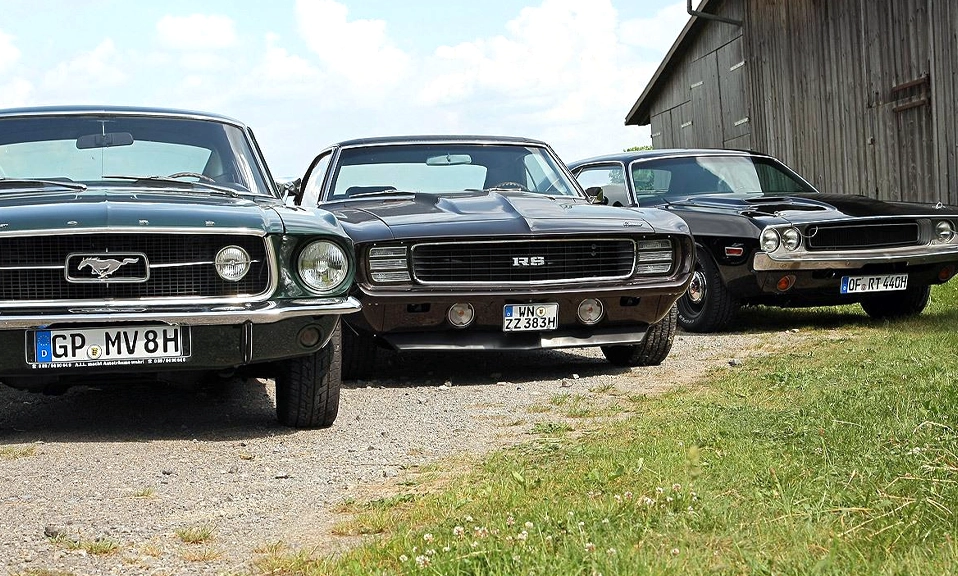
There is a particular sound that defines the petrol sports car. It is not one sound, but thousands—the flat-six howl of a Porsche 911 climbing past 7,000 rpm, the bassy woofle of a V8 on overrun, the mechanical snick of a gated manual shifter, the crackle of an anti-lag system spitting flames. It is a symphony of inefficiency, heat, and noise. And it is disappearing.
The electric sports car, by contrast, arrives in near silence. It delivers its torque instantly, accelerates with a linearity that feels almost surreal, and does so without a single explosion inside its powertrain. By every objective performance metric, it is superior. And yet, for a generation of enthusiasts, something essential is being lost. The question is not whether electric cars are faster. It is whether they can ever be as beautiful.
The Case for the Prosecution: What Electricity Cannot Replicate
The beauty of a traditional sports car is not a single thing. It is an accumulation of sensory details that together create an emotional experience. Electricity strips many of them away.
Sound is the most obvious casualty. The engine note is not just noise; it is feedback. It tells the driver how hard the engine is working, when to shift, and how close the car is to its limit. A Ferrari V12 at 8,500 rpm is a mechanical aria. An electric motor at full power produces a faint whine and a rush of wind. Lucid, Tesla, and Porsche have experimented with synthesized soundscapes, but they are exactly that—synthesized. They are a recording of emotion, not the thing itself.
The gearbox is another loss. The manual transmission is already endangered, but the electric car eliminates it entirely. There is no clutch to modulate, no shift to time perfectly, no reward for skill. The single-speed reduction gear delivers power seamlessly, which is efficient but monotonous. Driving an electric sports car fast is an exercise in point-and-squirt. Driving a petrol sports car fast is a conversation.
Weight is a quieter but equally profound problem. Batteries are heavy. The Rimac Nevera, for all its 1,914 horsepower, weighs over 2,150 kg. The Porsche Taycan Turbo S is around 2,300 kg. A Porsche 911 Carrera S weighs about 1,500 kg. Physics does not care about horsepower. A heavy car requires more energy to change direction, more force to stop, and more tyre to grip. Engineers can mask weight with active suspension, torque vectoring, and sticky rubber, but they cannot eliminate it. The lightness that defines the greatest petrol sports cars—the Lotus Elise, the Mazda MX-5, the Alpine A110—is fundamentally at odds with the battery pack.
And then there is the question of character. A petrol engine has a personality. It has quirks, a power band, a sound that changes with temperature and load. It can be tuned, modified, and improved. An electric motor is a commodity. It is smooth, linear, and identical from one car to the next. The difference between a Tesla Model S Plaid and a Lucid Air Sapphire is largely software and chassis tuning. The difference between a Ferrari 458 and a McLaren 720S is a universe of engineering philosophy, exhaust note, and visceral feedback.
The Case for the Defence: Electricity Has Its Own Beauty
And yet, to dismiss the electric sports car as soulless is to miss what it does well—and what it might become.
Instant torque is genuinely thrilling. The feeling of being pressed into the seat from zero rpm, with no lag, no downshift, no waiting for the turbo to spool, is a new kind of performance. The Rimac Nevera dispatches 0–60 mph in under two seconds. The Tesla Model S Plaid does it in around two seconds. These are numbers that petrol hypercars struggle to match, and they are available to anyone with the money, not just professional drivers. The electric sports car has democratised acceleration.
The silence is not always a loss. On a quiet mountain road at dawn, the absence of engine noise allows you to hear the tyres, the wind, the world around you. It is a different kind of driving experience—more serene, more connected to the environment, less aggressive. It is not better or worse. It is other.
And the packaging is revolutionary. Without an engine up front, designers have new freedom. The cabin can be pushed forward, the bonnet can be lower, the centre of gravity can be placed lower still. The Porsche Taycan, the Audi e-tron GT, and the Lotus Eletre all demonstrate that electric architecture can produce distinctive, beautiful shapes. The Lotus Evija is one of the most striking supercars of the decade, and it is electric.
The aftermarket and tuning culture is already adapting. Electric motors can be remapped. Battery cooling can be upgraded. Suspension and aero can be developed. The culture of modifying cars is not dying; it is moving to a new platform. It will take time to build the equivalent of a Milltek exhaust or a Cosworth engine, but the enthusiasm is there.
The Real Threat: Regulation, Not Electricity
The deeper question is not whether electric cars are killing the beauty of petrol sports cars. It is whether regulation will kill the petrol sports car before electricity has a chance to develop its own aesthetic.
Europe’s Euro 7 emissions standards, the UK’s 2030 ban on new petrol and diesel car sales, and similar mandates in California and China are already squeezing the internal combustion engine. Ferrari, Lamborghini, and Porsche have all announced hybridisation as a bridge, but the long-term future of the naturally aspirated V12 is bleak. The petrol sports car is not being killed by consumer preference. It is being regulated out of existence.
That matters because the beauty of the petrol sports car is not just about the car itself. It is about the culture that surrounds it—the shows, the meets, the drives, the shared knowledge of carburettors and camshafts. That culture will not disappear overnight. It will become a heritage movement, like classic car ownership today. The cars will survive in museums and private collections. The sound will survive on YouTube. But the experience of buying a new petrol sports car, of spec’ing it exactly how you want it, of breaking it in and learning its quirks—that is already becoming a thing of the past.
A Different Kind of Beautiful
Are electric cars killing the beauty of traditional petrol-powered sports cars? In one sense, yes. They are making the petrol sports car a relic, and in doing so, they are ending a chapter of automotive history that produced some of the most beautiful machines ever built. The V12 Ferrari, the flat-six Porsche, the high-revving Honda VTEC—these are not just cars. They are works of art, and their time is finite.
But beauty is not static. The electric sports car is still young, and it is already producing striking designs, extraordinary performance, and new kinds of driving pleasure. It will take decades for it to develop the depth of culture and character that the petrol sports car has accumulated. It may never replicate the sound, the smell, the vibration. But it will create its own beauty—quieter, smoother, and different.
The petrol sports car is not being killed by electricity. It is being retired by regulation, and replaced by something that is faster, cleaner, and less emotionally noisy. Whether that replacement is beautiful is a matter of taste. But the era of the petrol sports car is ending. The wise enthusiast will enjoy it while it lasts, and keep an open mind about what comes next. The future may not sound as good. But it might still be worth driving.